[Bio Talk] The CNS Barrier Even China Hasn't Overcome: An Opportunity for Korean Biotech
A High-Barrier Market Where China’s Fast-Follower Strategy Falls Short
Challenges in BBB and Target Validation Open Doors for Korean Biotech
"Korea Excels in Precise Patient Selection and Accumulation of Basic Research"
Central nervous system (CNS) therapeutics remain an insurmountable barrier, even for China, which accounts for about 90% of global ADC (antibody-drug conjugate) licensing deals thanks to its rapid pace. This is because the level of difficulty in developing CNS therapeutics is far higher than that of ADCs.
For CNS disorders such as Alzheimer's disease, depression, and schizophrenia, there is no academically agreed-upon theory regarding the underlying causes or which specific part of the brain needs to be targeted for treatment. The targets are unclear, it is difficult to deliver therapeutics to the brain, and there is a lack of biomarkers to measure whether the treatment is effective in humans. In other words, it is an area where there are no definitive answers.
Specifically, the biggest challenge is the blood-brain barrier (BBB). Not only does the BBB block the entry of drugs, but even drugs that manage to penetrate it are often trapped by proteins inside the brain and cannot reach their intended targets. Another problem is that CNS disorders are caused by a complex interplay of various factors, so the approach of regulating only a single target is ineffective. The limitations of animal models must also be overcome; there have been numerous cases where a candidate compound that worked in the brains of mice could not be replicated in the human brain.
Paradoxically, these formidable challenges in developing CNS therapeutics mean there are still opportunities in this field for South Korea. In contrast to ADCs—which have become the focus of recent mega-deals and follow a proven formula, making it difficult to break through the entrenched dominance of China—CNS therapeutics remain an unexplored territory where no one has yet planted a flag.
![[Bio Talk] The CNS Barrier Even China Hasn't Overcome: An Opportunity for Korean Biotech](http://www.asiae.co.kr/news/img_view.htm?img=2026051309292460476_1778632165.jpg)
An executive at a domestic pharmaceutical company with several blockbuster drugs generating global sales in the hundreds of billions of won recently told a reporter, "With multinational pharmaceutical companies lining up to buy Chinese ADCs, there is little chance for Korean companies simply joining the queue. We need to take on areas like CNS therapeutics where opportunities still remain if we want a 'quantum leap' for Korea’s pharmaceutical and biotech industry."
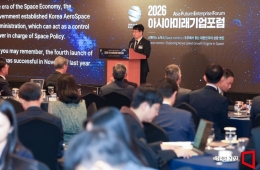
Hwang Seongwan, Vice President of SK Biopharmaceuticals, recently emphasized at an event that Korea’s strengths in information technology (IT) and its ability to precisely identify appropriate patient groups can give a Korean-style CNS therapeutic model—which combines basic research and clinical expertise—a competitive edge on the global stage. Kim Yongjoo, CEO of Ligachem Bio, also noted that he is focusing on CNS therapeutics as the next pipeline, arguing that in a field where the accumulation of basic science and clinical design capabilities matter more than speed, there are still significant opportunities for Korean biotechs.
According to global bio M&A analytics firm Vision Life Sciences, last year, the transaction volume in the CNS and neuroscience field reached $30.7 billion (about 45.703 trillion won), surpassing that of oncology. This is the first time neuroscience has overtaken oncology in capital allocation by big pharma. Johnson & Johnson acquired Intra-Cellular Therapies, the developer of the psychiatric drug Caplyta, for $14.6 billion (21.735 trillion won), and Novartis acquired Avidity Biosciences, a developer of novel neuromuscular disease drugs, for $12 billion (17.8644 trillion won), with these mega-deals concentrated in neuroscience.
Hot Picks Today
 Investment Warnings Surge... "Warning Light" Flashes as KOSPI Nears 8,000 Points
- "Those Who Hesitated at 3,000 Still Haven't Bought" 7 Trillion-Won Asset Manager Says "Opportunities Remain" [Investment Strategies of the Wealthy] ⑦
- NVIDIA Revenue Up 65%, But Jensen Huang’s Compensation Drops 27%
- "SK hynix to Soar to 2.8 Million Won, 'Main Chapter of AI Hasn't Even Begun Yet'—Why KB Securities Is Confident [Click e-Stock]"
- 'Drugs to Prevent Aging' Enter Their First Target Year... First Patient Dosed in the US [New Path for Bio, Anti-Aging] ①
The emergence of late-stage clinical assets for areas with large patient populations and limited treatment options—such as Alzheimer's, Parkinson's, and psychiatric disorders—has led to neuroscience, once shunned by big pharma due to its high failure rates, now becoming the top priority for capital investment.
![[Bio Talk] The CNS Barrier Even China Hasn't Overcome: An Opportunity for Korean Biotech](http://www.asiae.co.kr/news/img_view.htm?img=2026051309524160632_1778633561.jpg)
© The Asia Business Daily(www.asiae.co.kr). All rights reserved.