"Let's Introduce a Domestic Production Promotion Tax System" National Assembly Forum
Calls for Parallel Implementation of Direct Pay System
to Strengthen Competitiveness of National Strategic Industries
The necessity of introducing a "domestic production promotion tax system" to strengthen the competitiveness of national strategic industries such as semiconductors, batteries, and mobility was raised at a National Assembly forum. Industry representatives and experts unanimously agreed that implementing a direct pay system in parallel would be essential to maximize the effectiveness of the policy.

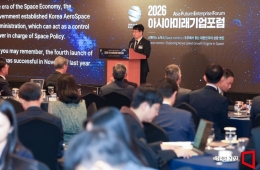
On the morning of the 12th, the "National Assembly Debate on the Introduction of Domestic Production Promotion Tax System to Strengthen the Competitiveness of Strategic Industries" was held in Meeting Room 5 of the National Assembly Members' Office Building in Yeouido. LG Energy Solution
View original imageOn May 12, the "National Assembly Forum on the Domestic Production Promotion Tax System to Strengthen the Competitiveness of National Strategic Industries," co-hosted by Democratic Party lawmakers Ando Geol, Lim Ho-seon, and Lee Yeonhee, was held at the National Assembly Members' Office Building in Yeouido. The forum was chaired by Professor Jo Sujeong of Korea University School of Law, and attended by government officials, academia, and industry stakeholders.
Assemblyman Ando Geol stated, "Amid the restructuring of global supply chains, countries are engaging in intense policy support competition to secure future industries," and added, "There is a need to introduce a Korean-style production promotion tax system that goes beyond the existing investment tax credits."
Forum participants emphasized the necessity of introducing a direct pay system. Kim Ki-young, President of the Korean Accounting Association and Professor at Myongji University, said, "For the domestic production promotion tax system to have a real impact, it must be combined with a direct pay system." He proposed several measures: ▲100% reimbursement, ▲20-year carryforward credits, ▲allowing overlapping investment tax credits, and ▲exemption from minimum tax requirements.
Companies echoed these sentiments. Kim Wooseop, Head of the Communication Center at LG Energy Solution, remarked, "Under the current system, tax credits are mainly available to profitable companies, making it difficult for battery companies operating at a loss to receive meaningful support," and stressed, "There is a need to allow direct pay or third-party transfer options."
Kim Bitmaro, Director of the Fiscal Analysis Center at the Korea Institute of Public Finance, explained, "The United States supports advanced manufacturing through tax credits and direct pay under the Inflation Reduction Act (IRA), and Japan has also introduced a domestic production promotion tax system for strategic sectors."
Lee Joon, Head of the Strategic Industry Research Center at the Korea Institute for Industrial Economics and Trade, emphasized, "Korea is a key nation capable of competing with China in strategic industries such as semiconductors, batteries, electric vehicles, and defense," adding, "Industrial policy is needed to maintain the manufacturing ecosystem."
Hot Picks Today
 Even with High Oil Price Relief Payment, Additional 300,000 Won Per Person to Be Provided... Applications Open from the 18th in This Region
- Merck Scores First Invalidation of Halozyme Patent...Positive Signal for Alteogen and Keytruda SC Dispute
- Investment Warnings Surge... "Warning Light" Flashes as KOSPI Nears 8,000 Points
- "Those Who Hesitated at 3,000 Still Haven't Bought" 7 Trillion-Won Asset Manager Says "Opportunities Remain" [Investment Strategies of the Wealthy] ⑦
- "I'm Younger and Fitter Than Your Husband, Get a Divorce"... Suspicious Messages Between Wife and Fitness Trainer
Assemblyman Ando also noted, "There may be concerns about a short-term decrease in tax revenue, but in the long term, this policy will help protect and grow our industries and tax base," stressing the need for effective system design.
© The Asia Business Daily(www.asiae.co.kr). All rights reserved.