Democratic Progressive Superintendent Candidates Announce Joint Statement on 'Educational Transformation'... "Absolute Grading for CSAT and School Records"
15 Democratic Progressive Superintendent Candidates Hold Joint Press Conference on May 12
"Resolving Educational Inequality"
Fifteen candidates for the superintendent of education from the Democratic Progressive camp, who are running in the June 3 local elections across the country, have pledged to achieve an ‘educational transformation’ that goes beyond the current ranking-based entrance examination system. They also promised to implement: ▲ absolute grading for the College Scholastic Ability Test (CSAT) and school records ▲ balanced development of regional universities ▲ the conversion of autonomous private high schools and other specialized high schools into general high schools ▲ the guarantee of teachers’ basic political rights ▲ and the strengthening of education on climate crisis and artificial intelligence (AI).
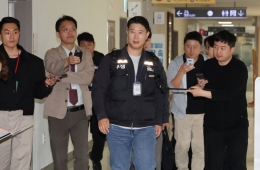
On May 12, after winning the unified primary for the Democratic Progressive camp, the 15 candidates for superintendent of education from each of the 15 city and provincial offices of education held a joint press conference at Gwanghwamun Square in the morning to announce these pledges.
In their statement, they said, “Despite achievements such as having the world’s highest rate of higher education attainment, children are still suffering under an exam-oriented education system. We will strengthen the public nature of education and resolve educational inequality by ensuring the success of this educational transformation, opening new avenues for future education.”

First, in order to resolve the excessive competition in entrance exams and normalize public education, they pledged to abolish relative grading no later than the early 2030s and shift both school records and the CSAT to an absolute grading system. This is intended to provide education tailored to the individual growth and development of each student.
They also pointed out that excessive entrance competition stems from the hierarchical structure of universities and academic elitism, and said they would work closely with both central and local governments to reform the university system. Regarding the government’s current ‘Creating 10 Seoul National Universities’ policy, they suggested further expanding joint degree programs and academic exchange among flagship national universities.
As for the high school system, they pledged to convert autonomous private high schools, foreign language high schools, and international high schools into general high schools to dismantle the hierarchy among high schools. They also plan to enhance the substantive implementation of high school equalization policies to reduce the burden of entrance exams and disparities between schools.
Additionally, they pledged to guarantee teachers’ educational rights and autonomy in curriculum operation, and to revise laws and ordinances to protect students’ right to learn and human rights. They also promised to continue efforts to guarantee education workers’ basic political rights and to regularize non-regular school staff.
With regard to future education, they committed to strengthening ecological and climate justice education to address the climate crisis and to expanding education in AI literacy and critical thinking skills.
They stated, “We will correct the distortions caused by entrance exam competition and, during our term as superintendent, establish an educational system where genuine growth and development can be achieved.”
They added, “We will expand educational welfare from early childhood to high school, reinforce a public education system for which the nation and local governments are responsible, extend free education through university, and achieve balanced development of regional universities by eliminating university hierarchies.”
Hot Picks Today
!["Those Who Hesitated at 3,000 Still Haven't Bought" 7 Trillion-Won Asset Manager Says "Opportunities Remain" [Investment Strategies of the Wealthy] ⑦](https://cwcontent.asiae.co.kr/asiaresize/93/2026050715101553735_1778134216.jpg) "Those Who Hesitated at 3,000 Still Haven't Bought" 7 Trillion-Won Asset Manager Says "Opportunities Remain" [Investment Strategies of the Wealthy] ⑦
"Those Who Hesitated at 3,000 Still Haven't Bought" 7 Trillion-Won Asset Manager Says "Opportunities Remain" [Investment Strategies of the Wealthy] ⑦
- "Why Are My Child's Grades Like This?" Surge in Overprotected, Isolated, and Reclusive University Students [University Students in Crisis] ⑧
- [Breaking] NCSoft Reports Q1 Operating Profit of 113.3 Billion Won... Up 2070% Year-on-Year
- "Don't Come to Work from Tomorrow": Two Million Face Unemployment Crisis...Iran Shaken by War Shock
- "SK hynix Could Reach 2.8 Million Won; Why Securities Firms Are Confident That the Main Chapter of AI Has Not Even Begun Yet [Click eStock]"
The joint pledge was participated in by the following candidates: Kang Samyoung (Gangwon), An Minseok (Gyeonggi), Song Younggi (Gyeongnam), Lee Yonggi (Gyeongbuk), Jang Gwanho (Gwangju and Jeonnam), Lim Seongmu (Daegu), Seong Gwangjin (Daejeon), Jung Geunsik (Seoul), Lim Jeonsu (Sejong), Cho Yongsik (Ulsan), Lim Byeonggu (Incheon), Cheon Hoseong (Jeonbuk), Ko Uisuk (Jeju), Lee Byeongdo (Chungnam), and Kim Seonggeun (Chungbuk).
© The Asia Business Daily(www.asiae.co.kr). All rights reserved.