"Why Are My Child's Grades Like This?" Surge in Overprotected, Isolated, and Reclusive University Students [University Students in Crisis] ⑧
Interview with Joohee Kim, Director of the Seoul Youth Resilience Center
Isolation and Withdrawal Are Warning Signs: 7 Out of 10 Contemplate Suicide
Unrelated to Academic Background or Income
Recent Increase in Overprotected Cases by Parent
!["Why Are My Child's Grades Like This?" Surge in Overprotected, Isolated, and Reclusive University Students [University Students in Crisis] ⑧](http://www.asiae.co.kr/news/img_view.htm?img=2026051307330460177_1778625184.jpg)
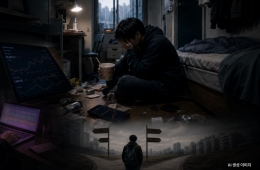
Being emotionally or physically isolated, or rarely going outside and living only at home, can be seen as warning signs that increase the risk of suicide. According to the Ministry of Health and Welfare, 75.4% of isolated and reclusive youth responded that they had thought about suicide. This is a very high level compared to the overall rate of suicidal thoughts among youth, which is 2.3%. Additionally, 26.7% of isolated and reclusive youth answered that they had attempted suicide.
Joohee Kim, Director of the Seoul Youth Latent Center, the first dedicated support institution for isolated and reclusive youth in Korea, which opened in 2024, told The Asia Business Daily on May 6, "A tendency toward isolation and reclusion can appear regardless of educational background or parents' income. Some young people enter university without having learned how to resolve conflicts during adolescence, struggle with relationships, and fail to adapt," she said.

Joohee Kim, Director of the Seoul Youth Restart Center, is being interviewed by The Asia Business Daily at the office in Jongno-gu, Seoul. Director Kim said, "It takes at least two to three years for isolated and reclusive youth to reintegrate into society. It becomes possible when someone consistently supports them, guiding them with messages like 'It's okay,' 'You can fail,' and 'Let's try once more.' " Photo by Jo Yongjun
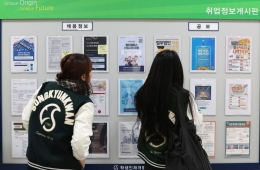
View original imageIt is estimated that there are up to 540,000 isolated and reclusive youth nationwide. Last year, 5,596 young people aged 19 to 39 applied for programs at the center. Among them, university students accounted for 11.1% (598 people). The causes behind university students developing tendencies toward isolation and reclusion include: difficulty adjusting to campus life; experiences of frustration and failure such as intense competition for employment; emotional vulnerability caused by excessive competition; and overprotection from parents.
In particular, there has been a noticeable increase in overprotected, isolated, and reclusive university students on campuses. A staff member at University A said, "Parents sometimes make inquiries while registering for courses on behalf of their children, or request, 'My child is working on a team project and is having conflicts with team members. Please change the team.'" A professor at University B stated, "I've received phone calls from the parents of students who frequently miss class and even fail to take exams, asking, 'Why are my child's grades so low?'" One student struggling with school life and relationships confessed to not knowing where to look or what to do with their hands when talking to people. Even after graduating, similar problems can recur in the workplace, and cases in which these young people remain disconnected from society and stay isolated and reclusive for long periods are not uncommon.

One day in April, on the way home from work, all passengers on the Seoul subway are sitting and looking at their phones. Photo by Heo Younghan
View original imageRegarding this, Director Kim said, "We cannot definitively say that isolation and reclusion always lead to suicide, but even if economic conditions are good, if a young person does not have a supportive environment or experiences low self-efficacy, their self-esteem can decline, leading to despair and thoughts of suicide." She added, "To reduce the number of isolated and reclusive university students, preventive activities should start in adolescence, and programs for parent education should also be expanded. Most importantly, we need to help young people develop the ability to resolve conflicts independently and communicate appropriately with others through conversation."
The center is seeing positive results from a self-growth project in which isolated and reclusive youth set their own goals and receive guidance from counselors. Rather than setting grand goals, participants start with small objectives that match their psychological state and circumstances. Examples include "getting up at 9 a.m.," "contacting three friends per week," or "attending a certification class regularly." Counselors meet with them regularly to check progress and provide encouragement. Director Kim said, "Last year, we ran the program for four months with 70 young people, and it led to real outcomes, such as successful employment." She added, "This year, we plan to develop a manual that other local governments can use, based on full-scale effectiveness research." She also mentioned, "For youth who find face-to-face activities burdensome, we plan to expand our 'Online Latent Center' program in the second half of this year, which includes online routine challenge programs and small group activities."
Hot Picks Today
!["Those Who Hesitated at 3,000 Still Haven't Bought" 7 Trillion-Won Asset Manager Says "Opportunities Remain" [Investment Strategies of the Wealthy] ⑦](https://cwcontent.asiae.co.kr/asiaresize/93/2026050715101553735_1778134216.jpg) "Those Who Hesitated at 3,000 Still Haven't Bought" 7 Trillion-Won Asset Manager Says "Opportunities Remain" [Investment Strategies of the Wealthy] ⑦
"Those Who Hesitated at 3,000 Still Haven't Bought" 7 Trillion-Won Asset Manager Says "Opportunities Remain" [Investment Strategies of the Wealthy] ⑦
- "Not Just Olive Young"... Word-of-Mouth Drives Foreigners to Pharmacies, Spending Surges 156%
- "SK hynix Could Reach 2.8 Million Won; Why Securities Firms Are Confident That the Main Chapter of AI Has Not Even Begun Yet [Click eStock]"
- "Don't Come to Work from Tomorrow": Two Million Face Unemployment Crisis...Iran Shaken by War Shock
- "Why Are My Child's Grades Like This?" Surge in Overprotected, Isolated, and Reclusive University Students [University Students in Crisis] ⑧
※ If you have concerns that are difficult to talk about, such as depression, or if a family member or acquaintance around you is experiencing such difficulties, you can receive 24-hour consultation from a professional via the suicide prevention hotline at ☎ 109 or through the suicide prevention SNS counseling service 'Madeleine.'
© The Asia Business Daily(www.asiae.co.kr). All rights reserved.