South Korea-U.S. Defense Ministers Hold Talks in Washington... Discuss OPCON Transfer, Nuclear Submarines, and Hormuz Support
Focus on OPCON Transfer Timeline
Nuclear Submarine Cooperation and Restoration of Intelligence Sharing on North Korea Also on the Agenda
On May 11 (local time), U.S. Secretary of Defense Pete Hegseth held talks with South Korean Minister of National Defense Ahn Kyubaek in Washington, D.C., coordinating sensitive security issues between the two countries, including the transfer of wartime operational control (OPCON), cooperation on the construction of nuclear-powered submarines, and support for resuming navigation in the Strait of Hormuz.

U.S. Secretary of Defense Pete Hegseth (right) and South Korean Minister of National Defense An Kyu-baek. Photo by AFP Yonhap News
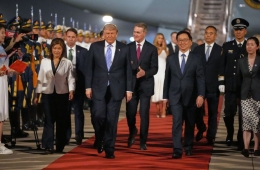
View original imageSecretary Hegseth and Minister Ahn met at the Pentagon that day to discuss major issues concerning the South Korea-U.S. alliance. This was Minister Ahn's first visit to the United States since taking office and the first face-to-face meeting between the two defense chiefs of both countries.
The Lee Jaemyung administration is reportedly aiming to complete the OPCON transfer during its term, with the goal of transition by 2028, before the current governments of both countries end their terms. Accordingly, it is believed that the meeting included exchanges of views on the conditions and timeline for the transfer, as well as ways to maintain the combined defense posture.
Cooperation on the construction of nuclear-powered submarines, which the leaders of South Korea and the United States agreed to last year, was also one of the main agenda items. However, follow-up discussions on related issues have stalled due to differences between the two countries on certain matters. Attention is focused on whether this meeting will see progress in discussions on technical cooperation regarding the nuclear propulsion system and the scope of joint research.
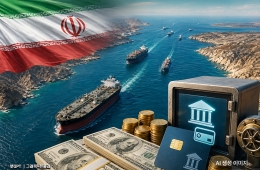
The issue of the Strait of Hormuz, amid the worsening situation in the Middle East, also appears to have been discussed. In particular, with the recent fire on the HMM Namuho near the Strait of Hormuz confirmed to be the result of an external attack, there is speculation that the talks addressed how South Korea might contribute to efforts to ensure maritime safety and resume navigation, as requested by the United States to its allies.
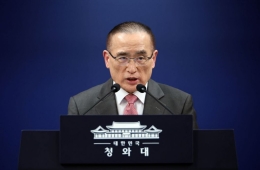
Previously, the Office of the President strongly condemned the attack on the Namuho, stating, "We will continue to participate in international efforts to guarantee the safety and free passage of all vessels, including those from Korea." U.S. President Donald Trump has also repeatedly called for an expanded role for South Korea and other allied countries in the process of normalizing the situation in the Strait of Hormuz.
Hot Picks Today
 Even with High Oil Price Relief Payment, Additional 300,000 Won Per Person to Be Provided... Applications Open from the 18th in This Region
- "Invested 95% in Hynix and Reached 10 Billion Won"... Japanese Investor's Proof Post Goes Viral
- "Why Is the Korean Stock Market Surging?"... Even Italy Is Astonished by the KOSPI Rally
- "You Don't Need to Go to the Gym": The Best Exercises for Lowering Hypertension
- "That Thing Wakes Up Every Night" ... Suspicious Object Covers Rural Village
The issue of U.S. restrictions on intelligence sharing with South Korea regarding North Korea was also likely included in the discussions. Restoring intelligence cooperation to counter North Korea's nuclear and missile threats is considered a core issue for South Korea-U.S. security cooperation.
© The Asia Business Daily(www.asiae.co.kr). All rights reserved.