[University Students in Crisis]⑦"It Feels Like It's All My Fault"...How to Prevent Tragedy on Campus
Concealing Suicide Incidents... Insufficient Data, Reluctance to Share
Only One or Two Counselors on Campus... Responsibility Should Not Rest Solely with the Center
"Proactive Outreach Needed... Community Recovery Programs Essential"
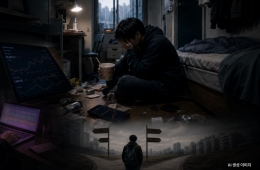
Jung Taeksoo, Director of the Korea Suicide Prevention Center, received an urgent call late last year from the head of the student counseling center at University A, an acquaintance. A university student had died by suicide, and the center head was seeking help because they did not know how to proceed with follow-up measures. Director Jung had served as a career military officer for 24 years but switched to counseling psychology after feeling deep sorrow over the repeated suicides of military personnel. After graduating from a graduate program in counseling psychology in 2010, he engaged in various suicide prevention counseling sessions and lectures and also served as a “Military Life Specialist Counselor” at the Ministry of National Defense.

Jobplus Center at a University in Seoul. Unrelated to the article. Yonhap News Agency
View original imageWith extensive experience counseling bereaved families, Director Jung rushed to the school. This is because a student’s suicide can negatively affect the mental state of other students, potentially leading to further tragedies. He said, “First, I identified the student’s closest friends in their department.” He then created a questionnaire and distributed it privately to those students. The survey assessed how often they thought about the deceased student and whether they were experiencing physical symptoms such as insomnia or loss of appetite, in order to identify high-risk individuals. For students deemed high risk, he promptly conducted one-on-one counseling sessions. During these sessions, students shed tears they had held back and shared their innermost feelings that they had not been able to tell anyone else.
“That friend wanted to meet, but I said I was busy and couldn’t go. I feel like it’s all my fault.” “They asked me to have a meal together, but I couldn't make it, and I am so sorry. If we had eaten together, maybe this wouldn’t have happened.”
![[University Students in Crisis]⑦"It Feels Like It's All My Fault"...How to Prevent Tragedy on Campus](http://www.asiae.co.kr/news/img_view.htm?img=2026051309473260613_1778633252.jpg)
Director Jung explained, “While empathizing with the students, I continuously conveyed the message ‘This is not your fault’ to comfort them and prevent feelings of guilt.” He said that they also allowed enough time for students to cry, heal, and grieve. He noted, “In most universities, such follow-up measures are inadequate or non-existent,” and added, “Because there is a strong tendency within universities to hush up suicide incidents and cover up problems, it is difficult to establish prevention or response measures.”
In fact, in 2016, the Ministry of Education attempted to analyze the situation using suicide data from every university nationwide, with the cooperation of the National Police Agency. However, the response rate was only 44.7%, revealing the limitations in obtaining a clear picture across all universities. Even now, the lack of records on specific details, such as causes of suicide, makes it insufficient to develop effective countermeasures.
![[University Students in Crisis]⑦"It Feels Like It's All My Fault"...How to Prevent Tragedy on Campus](http://www.asiae.co.kr/news/img_view.htm?img=2026051223331860078_1778596398.jpg)
Growing Interest in Student Mental Health... Lack of Counselors and Expertise
Already, university students are highly interested in the mental health of themselves and their peers and are making their own efforts to find ways to prevent suicide. At Hallym Polytechnic University in Chuncheon, Gangwon Province, a two-hour suicide prevention training session was held last month. The lecture, featuring a counselor from the Chuncheon City Mental Health Welfare Center, originally targeted 100 participants, but a total of 162 students signed up, showing an unexpectedly high level of engagement.
A representative from Hallym Polytechnic University stated, “Every year, we conduct a university life adaptation assessment for incoming students at the beginning of the semester to ensure their emotional stability and smooth university life. In individual counseling sessions, we administer and interpret various psychological tests.” The representative added, “Students’ heightened interest in issues such as their own psychological state, depression, and anxiety seems to have led to increased participation in suicide prevention education.” However, most suicide prevention education programs at universities are only one-off events, making it difficult to identify and resolve fundamental causes.
In particular, the number of counselors at student counseling institutions is insufficient to meet the growing demand, and the practical expertise for suicide prevention is also lacking. According to the “2025 Nationwide University Student Counseling Institution Status Report,” which surveyed 130 universities across the country, only 4 out of 10 student counseling institution directors had a background in counseling. Furthermore, more than 7 out of 10 universities reported having no professors specializing in counseling (research or supervisory roles). At 33.1% of universities, there was only one counselor, and 23.1% had two counselors.
A counselor who has worked at a university student counseling center for a year shared, “I didn’t realize there would be so much administrative work. When I put off administrative tasks to handle urgent counseling sessions for students in crisis, I inevitably have to work overtime.”
![[University Students in Crisis]⑦"It Feels Like It's All My Fault"...How to Prevent Tragedy on Campus](http://www.asiae.co.kr/news/img_view.htm?img=2026051223373660080_1778596656.jpg)
Japan Distributes Counseling Guidelines... "Supporting Community Recovery"
In Japan, unlike Korea, suicide prevention programs are managed by the Japanese Association of Student Counseling (JASC), which creates and distributes guidelines. These guidelines are provided to each university, offering protocols for basic responses. Notably, the guidelines are intended for all university staff, ensuring that the entire campus community supports crisis management and suicide prevention for students. They also include measures to create a healthy campus community and to provide comfortable spaces on campus to prevent isolation. In Japan, suicide prevention programs are not just operated by counseling centers; collaborative programs are also implemented, connecting academic departments, colleges, and other support organizations, while respecting student privacy. Counselors are guaranteed stable positions and compensation to enable them to establish robust crisis response and suicide prevention networks within the university.
Director Jung emphasized, “Up through middle and high school, the homeroom teacher system allows for close attention to each child. But when it comes to college students’ counseling and mental health, everything is left to student counseling institutions.” He suggested, “At universities, department heads should act as homeroom teachers and work in close cooperation with student counseling institutions.” He also stressed, “Professors should observe and record changes in students’ facial expressions and behaviors in class—such as whether they appear downcast, frequently skip class, or drink alcohol often.” Additionally, he recommended, “Universities should at least partially release suicide-related data to the Ministry of Education, and a new system should be established to reward outstanding universities that actively engage in suicide prevention and achieve results.”
Lee Kijeong, President of the Korean Council for University Education, analyzed, “The issue of university student suicide does not stem from individual difficulties alone, but from disruptions in the process of growth and anxieties caused by social structure.” He stressed, “Universities, local governments, and medical institutions should establish an integrated support system, and proactive outreach is needed instead of waiting for students to come forward. Alongside new community recovery-centered programs, such as peer mentoring, a holistic approach that addresses both career development and mental health should be promoted.”
Hot Picks Today
 Investment Warnings Surge... "Warning Light" Flashes as KOSPI Nears 8,000 Points
- "Those Who Hesitated at 3,000 Still Haven't Bought" 7 Trillion-Won Asset Manager Says "Opportunities Remain" [Investment Strategies of the Wealthy] ⑦
- "Parents Make 700 Million Won from SK hynix Investment, Will They Buy Me a House?"... Civil Servant's Post Sparks Backlash
- "SK hynix Could Reach 2.8 Million Won; Why Securities Firms Are Confident That the Main Chapter of AI Has Not Even Begun Yet [Click eStock]"
- "Even Fools or Chosenjin Can Do It"...Japanese Olympic Committee Vice President Resigns Amid Anti-Korean Controversy
※ If you are struggling with depression or other difficult issues, or if you have family or acquaintances going through such difficulties, you can receive 24-hour expert counseling by calling the suicide prevention hotline at ☎ 109 or through the suicide prevention SNS counseling service ‘Madeleine’.
© The Asia Business Daily(www.asiae.co.kr). All rights reserved.