"Grand Energy Transition for Agriculture and Rural Areas" Roadmap to Be Announced This July
Inaugural Meeting of the Agricultural and Rural Energy Transition Task Force
Utilizing Resources Such as Irrigation Reservoirs and Biomass for Renewable Energy
Toward Rural Energy Self-Sufficiency and a Source of Basic Income
The government has announced plans to establish a roadmap titled "Grand Energy Transition for Agriculture and Rural Areas" by July this year. The roadmap will outline measures to achieve rural energy self-sufficiency, promote an energy transition within the agricultural sector, and contribute to the nation’s overall energy shift by leveraging agricultural and rural resources.
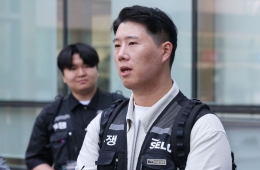
On May 8, the Ministry of Agriculture, Food and Rural Affairs stated that it had set up a task force (TF) at the Government Complex Sejong to develop a strategy for the agricultural and rural energy transition, and held the inaugural meeting with participation from experts in industry and academia.

Floating solar panels on Daehoh Lake, Seosan City, Chungnam. Korea Rural Community Corporation
View original imageA Ministry official explained, "Energy transition has become a national priority for responding to the climate crisis and securing industrial competitiveness, and its importance and urgency have been further highlighted by the recent Middle East conflict." The official added, "In the agricultural sector as well, energy demand is expected to continue rising due to the proliferation of artificial intelligence (AI) and green transition (AX/GX) initiatives, as well as the spread of smart farming."
Accordingly, the Ministry plans to utilize large-scale agricultural infrastructure, such as irrigation reservoirs, and the abundant resources of agriculture and rural communities, including biomass, for the energy transition, all while ensuring harmony with food security. Through this approach, the Ministry aims to contribute to the country’s overall energy transition. The Ministry also expects that using these resources for renewable energy can enable energy self-sufficiency in agriculture and rural areas, as well as serve as a source of basic income.
The TF will be led by Vice Minister Kim Jonggu, with Director-General Kim Junguk of the Agricultural Industry Innovation Policy Office serving as deputy head. The task force will be organized into three teams led by directors: the Rural Energy Self-Sufficiency Team, the Agricultural Energy Transition Team, and the Large-Scale Agricultural Infrastructure Utilization Team. In addition, a private advisory group comprised of experts from industry, academia, and research institutions will be formed to strengthen the strategy development process.
During the first meeting, the focus was placed on ways to accelerate energy transition and self-sufficiency across all aspects of rural life and to link this transformation to increased incomes. The Rural Energy Self-Sufficiency Team will design measures to achieve energy independence in rural areas by promoting agrivoltaics (simultaneous farming and solar power generation), creating solar income villages and energy self-sufficient villages, and expanding the adoption of rooftop solar power systems for farm households, all in connection with the renewable energy zone system.
The Agricultural Energy Transition Team will review plans to establish a low-cost, high-efficiency energy structure throughout the agriculture and food production-processing-distribution value chain. The Large-Scale Agricultural Infrastructure Utilization Team will develop measures to contribute to the national energy transition by harnessing large-scale agricultural infrastructure and resources such as biomass from the agricultural and rural sectors.
Hot Picks Today
![Did Samsung and SK hynix Rise Too Much?... Foreign Assets Grow Despite Selling [Weekend Money]](https://cwcontent.asiae.co.kr/asiaresize/93/2026051416161763554_1778742977.png) Did Samsung and SK hynix Rise Too Much?... Foreign Assets Grow Despite Selling [Weekend Money]
Did Samsung and SK hynix Rise Too Much?... Foreign Assets Grow Despite Selling [Weekend Money]
- "Anyone Who Visited the Room Salon, Come Forward"… Gangnam Police Station Launches Full Staff Investigation After New Scandal
- "Wearing a Leather Jacket in 30-Degree Heat, Jensen Huang Enjoys Street Food as Beijing's 'Mukbang Star': 'It's Delicious'"
- "Drink Three Cups of Coffee and Stay Up All Night Before the Test"... Manual of Insurance Planner Who Collected 1 Billion Won in Payouts
- "Heading for 2 Million Won": The Company the Securities Industry Says Not to Doubt [Weekend Money]
Chairing the meeting, Vice Minister Kim stated, "We plan to establish the basic principles and performance indicators for the energy transition in agriculture and rural areas in alignment with the national renewable energy transition policy, as well as to improve relevant systems." He added, "Based on the key tasks discussed by the TF, we will actively identify and promote fiscal projects that can be felt directly in agriculture and rural communities, making every effort to ensure that the energy transition leads to energy self-sufficiency and increased income for farm households."
© The Asia Business Daily(www.asiae.co.kr). All rights reserved.