United Arab Emirates Withdraws from OPEC and OPEC+: Is the Global Oil Market Order at a Turning Point?
'Oil Cartel' Fractures as UAE Hints at Increased Production
UAE Seeks Its Own Path in Alliances
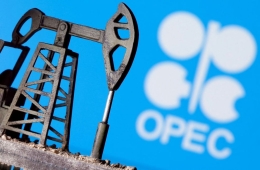
As the Iran war has intensified geopolitical risks in the Middle East, cracks have appeared in the system that has long dominated the global crude oil market: the Organization of the Petroleum Exporting Countries (OPEC) and OPEC+ (an alliance of OPEC members and non-OPEC countries). The United Arab Emirates (UAE), one of the major oil-producing countries, has announced that it will withdraw from OPEC+ and increase production starting June 1. The combined shock of oil supply disruptions caused by the Iran war and the risk of the 'oil cartel' collapsing is creating a critical turning point in the global oil price order.

On April 28 (local time), the UAE announced its decision to withdraw from OPEC and OPEC+ through its state-run WAM news agency. The UAE is the third-largest oil producer among the member states, following Saudi Arabia and Iraq.
Suhail Al Mazrouei, UAE Minister of Energy, said in an interview, "This decision was made after carefully and thoroughly reviewing all strategies over a long period," adding, "We believe now is the right time because it will not have a major impact on the market. Currently, the market is in a state of undersupply."
The UAE government also stated, "Even after withdrawal, the UAE will continue to act responsibly," and promised, "We will supply additional oil production to the market gradually and with caution, in line with market demand and conditions."
This is interpreted as the UAE's intention to determine its oil production independently. The UAE and Saudi Arabia have often clashed over oil production levels. The UAE aimed to pursue new investments to increase its oil output, but Saudi Arabia pressured OPEC to cut production. Although the UAE has previously mentioned the possibility of leaving OPEC, it had never carried it out until now.
The UAE's oil production capacity stands at about 4.8 million barrels per day. However, under OPEC's quota system, it has only been producing about 3.4 million barrels a day. The UAE also has ample ability to ramp up production. Through the Abu Dhabi National Oil Company (ADNOC), the UAE has invested heavily for years in expanding its production capacity. As a result, according to Michael Haigh, Head of Commodities Research at Societe Generale, UAE crude oil is relatively inexpensive to produce.
Potential Structural Weakening of OPEC...Impact on Saudi Arabia's Role

With the UAE's withdrawal, the Middle Eastern oil cartel is expected to be inevitably affected. According to the International Energy Agency (IEA), the UAE's withdrawal will reduce OPEC's production capacity by 13%.
OPEC representatives from the Gulf region warned that the UAE's exit could not only weaken OPEC's ability to manage the market but also further stoke resistance among several member countries dissatisfied with Saudi Arabia's dominance within OPEC.
Jorge Leon, Head of Geopolitical Analysis at Rystad Energy, predicted, "In the long term, this will lead to a structural weakening of OPEC," adding, "Having left OPEC, the UAE will have both the motivation and the capability to increase production, which will raise broad questions about the sustainability of Saudi Arabia's central role in the market."
Saudi-Yemen Civil War Tensions...Economic Rivalry Also at Play
Some view the UAE's withdrawal as a foregone conclusion. Bloomberg assessed that this marks the peak of long-standing tensions between Saudi Arabia and the UAE over oil production policy and their rivalry for political influence in the Middle East.
The two countries clashed during the Yemen civil war. Although both the UAE and Saudi Arabia intervened in the Yemen conflict, they ended up supporting opposing sides: the UAE backed the Southern Transitional Council (STC), while Saudi Arabia supported the Yemeni government forces (PLC), leading to a strained relationship.
In January of this year, government forces backed by Saudi Arabia captured Aden, a UAE stronghold, and the UAE completely withdrew its remaining forces from Yemen, prompting some to declare that the military alliance had effectively come to an end.

Economic competition between the UAE and Saudi Arabia also appears to have played a role. Until now, Dubai—the symbol of the UAE—has been the tourism and financial hub of the Middle East. However, with Saudi Arabia advancing its 'Vision 2030' post-oil initiative and aspiring to create its own financial center to rival Dubai, economic focus has shifted toward Saudi Arabia.
Is the UAE Pursuing Its Own Independent Security Policy?
There are also suggestions that the UAE is signaling a shift in its diplomatic and security policies. During the current war, the UAE suffered the most from Iran's retaliatory attacks. According to the Wall Street Journal (WSJ), Iran launched more than 2,800 drones and missiles at the UAE—far more than those launched at other Gulf states or even Israel.
Kristian Coates Ulrichsen, a Persian Gulf expert and researcher at Rice University's Baker Institute, analyzed, "Abu Dhabi may have become increasingly aware that its existing relationships may not have proven their worth in a crisis."
Hot Picks Today
![Benefiting from Non-Chinese Demand and SpaceX News, This Stock Surged 257%... How Long Will the Rally Last? [This Week's Hot Stock]](https://cwcontent.asiae.co.kr/asiaresize/93/2025081909273687512_1755563255.jpg) Benefiting from Non-Chinese Demand and SpaceX N...
Benefiting from Non-Chinese Demand and SpaceX N...
- Gangneung Hotels Jump from 80,000 Won to Over 600,000 Won... Korea, China, Japan...
- "You'll Regret Not Buying Now"... Minister Urges Travelers to Purchase Airline T...
- Trump Stresses "Cherished U.S.-UK Bond"... Unofficial Diplomatic Impact of King ...
- 'Maternity Leave for Second Child' Interrupted... 1997-born White House Spokespe...
Eric Alter, Dean of the Anwar Gargash Diplomatic Academy—which maintains close ties with the UAE government—also said, "The decision to leave OPEC is part of a larger move by the UAE to chart its own course in alliance relationships."
© The Asia Business Daily(www.asiae.co.kr). All rights reserved.