[Focus] Im Heungbin, Executive Director of the Jeollanam-do Federation of Disabled Persons' Organizations, Awarded Moran Medal of National Order of Merit
Government Honors at the 46th Disabled Persons' Day Ceremony
38 Years on the Front Lines of Disability Welfare
Three-Term Provincial Council Member... Pioneering Policies and Institutional Reforms
"Disability Welfare Is a Right, Not Charity"—A Conviction Put Into Practice
The title that precedes Im Heungbin, Executive Director of the Jeollanam-do Federation of Disabled Persons' Organizations, is not just a formal position. His "38 years in the field" represents a trajectory that runs through the evolution of welfare for the disabled in Jeollanam-do.

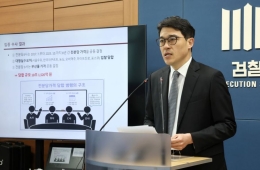
Im Heungbin, Executive Director of the Jeollanam-do Federation of Organizations of the Disabled, awarded the Moran Medal at the 46th Disabled Persons Day Ceremony.
Photo by Im Heungbin SNS
The Moran Medal, a national order of merit, that he recently received, is seen as more than just a personal honor; it stands as a symbol of how far local welfare has expanded in scope.
At the 46th Disabled Persons' Day ceremony, the Ministry of Health and Welfare awarded Executive Director Im in recognition of his contributions to advancing the rights of people with disabilities, supporting rehabilitation, and institutionalizing related policies.
However, the significance of this award goes beyond merely acknowledging his achievements. It is especially meaningful because his philosophy—shifting people with disabilities from being "objects of protection" to becoming "agents of social change"—has now been formally recognized in the public sphere.
'Welfare Experiment' Begun in Island Regions
Im's work began in 1991 with the founding of the Cheonsa Daycare Center. At that time, island areas such as Sinan County faced a severe lack of childcare and welfare infrastructure. In an environment even harsher than the mainland, children with disabilities and their families were, in effect, left outside the system.
He saw the problem not as a "shortage of facilities," but as a "lack of access." Rather than simply increasing the number of welfare facilities, his focus was on creating conditions that would allow people with disabilities to live within their communities. His efforts naturally expanded across Jeollanam-do, leading to the establishment of a foundation to reduce welfare disparities between regions.
![Veterans Award Ceremony Venue. <br>[Photo by Heungbin Lim SNS]](http://www.asiae.co.kr/news/img_view.htm?img=2026042216320336561_1776843123.jpg)
"Welfare as a Right"...Advancing Policy
His work on the ground translated into institutional reforms. From the 8th to the 10th session, Im served as a member of the Jeollanam-do Provincial Council, playing a key role in bringing disability policy into the legislative realm.
The core principle he emphasized was moving away from "charitable welfare." His belief that welfare policy must be rights-based, not merely supportive, expanded to encompass sports, education, and employment policies for people with disabilities. In particular, he focused on increasing participation opportunities and improving accessibility in sports and education, working to build a foundation for people with disabilities to fulfill their roles as members of society.
Why He Never Left the Field
Even after leaving politics, Im has remained active on the front lines. The Disabled Persons' Civil Complaints Counseling Center that he currently runs functions not just as a simple help desk, but as a "case management platform" designed to solve real problems.
By connecting people with disabilities who fall into welfare blind spots to the system, and by exposing policy gaps through individual cases, he helps bridge the divide. At the same time, he has worked to close the information gap and expand the foundation for independence by operating lifelong education centers, running scholarship programs, and publishing a newspaper for people with disabilities.
These efforts have created a cyclical structure—"policy to field, and back to policy again"—that ensures the sustainability of local welfare.
"Time for the Next Step"
In his acceptance speech, Im once again emphasized, "Welfare for people with disabilities is not charity, but a right." This phrase encapsulates both the message he has repeated for 38 years and the direction for the future.
Due to the characteristics of island and rural areas, the Jeollanam-do region still faces structural limitations in access to welfare. Coupled with aging and population decline, welfare for people with disabilities is facing a new phase.
In this context, Im's role is increasingly seen as that of a "structural designer" rather than simply providing individual support. There are growing expectations for him to connect policy and practice based on his accumulated field experience, and to foster the next generation of welfare leaders.
Questioning the Direction of Local Welfare
This national order of merit serves not only to honor one individual's dedication, but also as an opportunity to reflect on the future direction of local welfare.
Experts note, "Welfare in Jeollanam-do is still highly dependent on the field," and emphasize, "Experiences of individuals like Executive Director Im Heungbin must be institutionalized for sustainability."
Hot Picks Today
 Chilling Timing "Did They Know Again?"... $640 ...
- "They Said It Was Safe, Even Seniors Invested... But ETFs Can Also Be Delisted [...
- "One Trillion Won Lost Per Day if Halted"... 30,000 Gather for Samsung Pyeongtae...
- "Doctors Never Eat This": Foods Warned Against by Asan Medical Center Professor
- "I Can't Believe They're Real": Cockroaches Squirm Inside Transparent Jacket in ...
Ultimately, his 38 years are not just a record of the past, but an ongoing process. And the question that time leaves behind is simple: "How far has welfare for people with disabilities come, and where should it go from here?"
Im's answer is clear: "It begins in the field and is completed in policy."
© The Asia Business Daily(www.asiae.co.kr). All rights reserved.