"Study Finds 70% of Employees Support Merging Five Power Generation Companies"
Policy Forum Held on Integration of Public Power Generation Companies Led by Korea Electric Power Workers' Union
Seven Out of Ten Employees Support Integration, but Job Security Concerns Remain
Study Finds "Contribution to GDP Has Declined... Resources Should Be Reallocated After Integration"
As discussions continue regarding the integration of the five Korea Electric Power Generation subsidiaries (Korea South-East Power, Korea Midland Power, Korea Western Power, Korea Southern Power, and Korea East-West Power), experts have voiced the need for a merger of these companies. Furthermore, a recent survey found that seven out of ten current employees at these power generation subsidiaries are in favor of consolidating the five-company system.
On April 21, at the 'Policy Forum on the Integration of Public Power Generation Companies' hosted by Kim Joungho, Chairman of the National Assembly Committee on Climate and Labor, and organized by the Korea Electric Power Workers' Union and unions from Korea Western Power, Korea East-West Power, and Korea Midland Power, Professor Jo Youngsang from the Department of Industrial Engineering at Yonsei University presented the results of a study commissioned by the Korea Electric Power Workers' Union.

Professor Jo analyzed the impact of the division of power generation companies by calculating, based on data from 2001, how much South Korea's GDP increases when the share of public power generation rises by 1%. The analysis showed that before the structural reform, every 1% increase in the share of public power generation led to a 0.408% increase in GDP. However, after the restructuring, the contribution of public power generation to GDP dropped to 0.15%. Professor Jo concluded that the economic contribution of the public power generation sector has weakened since the companies were split, and that the private sector has not been able to fully compensate for this. He stated, "It is reasonable to integrate the five public power generation companies into a single unified generation company and to divide it internally into separate divisions for coal, LNG, renewable energy, and overseas projects, thereby reallocating resources and personnel within the company."
Hot Picks Today
![Even With a 900 Million Won Deposit and 2.5 Million Won Monthly Living Expenses, Residents Say "It's Good to Be Taken Care Of"... Inside a Luxury Silver Town [Opening Silver Housing]](https://cwcontent.asiae.co.kr/asiaresize/93/2026042010015932171_1776646918.gif) Even With a 900 Million Won Deposit and 2.5 Mil...
Even With a 900 Million Won Deposit and 2.5 Mil...
- Deokgu Returns: Mealtime Video Surpasses 1.3 Million Views... "Why Is the Food O...
- "Is the Starting Salary Really 4 Million Won?"... Surprise as Navy Salary and Sa...
- "My Sister Might Be in the Car"... Skeletal Remains Found in Songdo Parking Lot
- Detained Jung Yura Appeals from Prison: "My Children Will Be Sent to an Orphanag...
The survey conducted among employees of the power generation subsidiaries during the study process also showed strong support for integration. According to the results of an online survey carried out through Embrain from March 6 to 27 by Professor Jo, 69.5% of the 1,259 respondents supported integrating the current five-company system into one or a few organizations, while 17.4% were opposed. Regarding the preferred integration method, 73.5% (925 respondents) favored "unification into a single public power generation company," followed by "integration into two or three organizations by region or by type of power generation" at 15.8%, and "maintaining the current five-company system" at 9.2%. Reasons cited for favoring a single company integration included improving management efficiency by eliminating redundant organizations and functions, easing excessive competition and enhancing efficient resource allocation, and ensuring greater policy consistency in energy through unified decision-making. However, when asked about job security expectations following integration, more respondents (39.7%) anticipated increased instability than those who expected greater stability (28.1%). Employees expressed concerns over potential workplace relocation, job insecurity, and changes in wages or benefits, and hoped for guarantees addressing these issues.

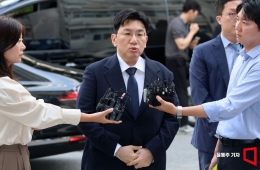
The Electric Power Federation delivered a policy proposal document consolidating the opinions of member cooperatives to Kim Seonghwan, Minister of Climate, Energy and Environment, following the 'Role of Power Public Enterprises in the Era of Energy Transition' meeting held at the Hangang Flood Control Office on the 16th. Electric Power Federation
View original imageSince February, the Ministry of Climate, Energy and Environment has been conducting an expert study to review the restructuring of functions and new roles for public power generation companies. The ministry plans to hold a forum by May at the latest to announce interim results and gather feedback from various stakeholders. At the 'Role of Public Power Companies in the Era of Energy Transition' meeting held on April 16 with representatives from the Federation of Public Service Workers’ Unions, the Power Industry Labor Union, and the labor union leaders from the five power generation companies, Minister Kim Sung-hwan emphasized, "The restructuring of public power generation companies must focus on how effectively these companies can fulfill their roles for the energy transition," and added, "There will be no forced layoffs among lower-level employees." He continued, "We must collectively address the inevitable personnel reallocations resulting from the phase-out of coal power generation," and stated, "I will continue to communicate with stakeholders about restructuring the functions and roles of public power generation companies."
© The Asia Business Daily(www.asiae.co.kr). All rights reserved.