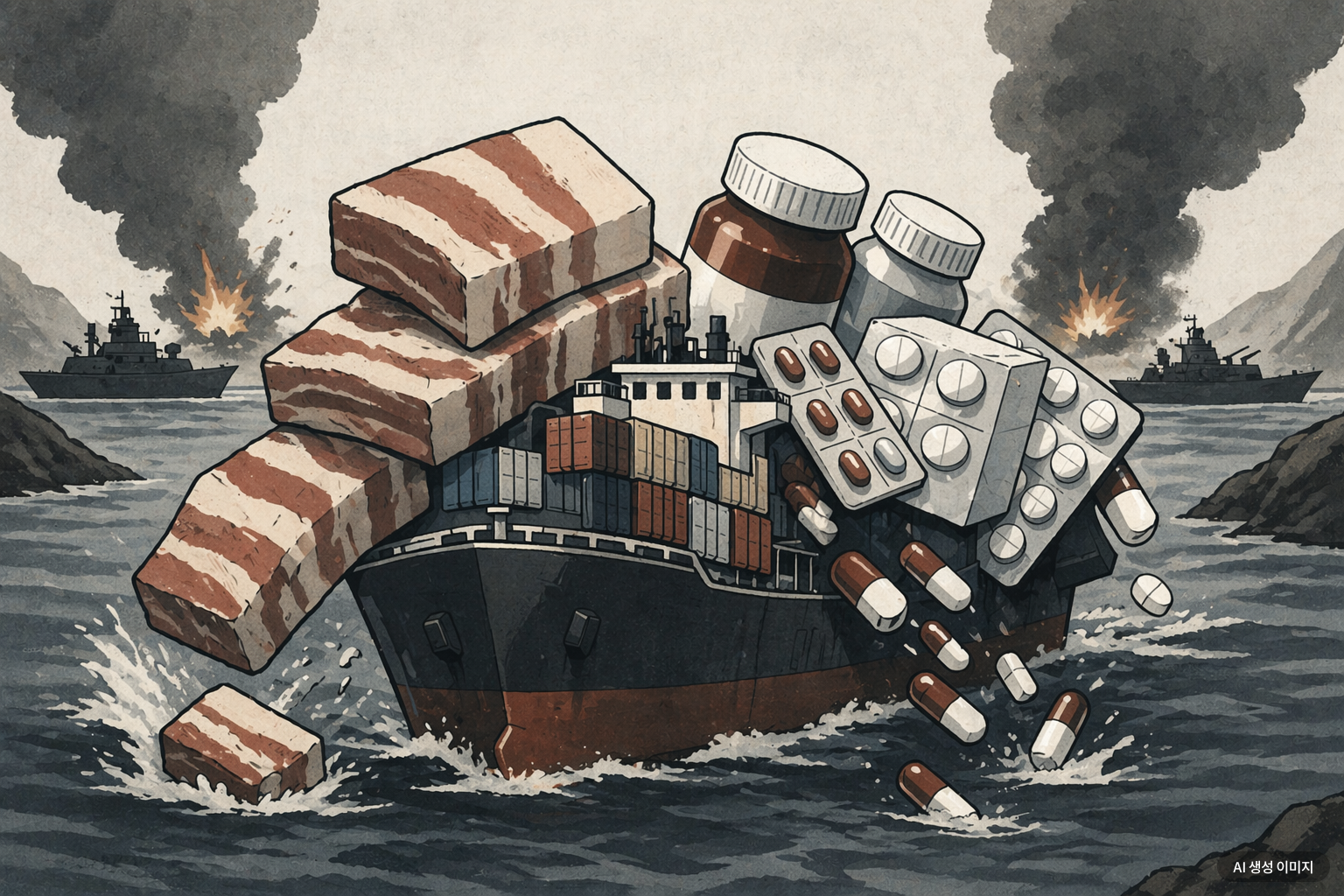
As the likelihood of a prolonged war in the Middle East grows, the UK government has begun preparing for a 'worst-case scenario.' There are concerns that the impact may go beyond a simple surge in oil prices, potentially disrupting the supply of food and pharmaceuticals as well.

The UK government is reviewing scenarios for food supply disruptions, focusing on its crisis response task force. The key issue is energy. If the Strait of Hormuz is blockaded and oil supplies are destabilized, fertilizer production costs could surge or factories could shut down. This would lead to a decrease in agricultural and livestock production, affecting not only food prices but also the overall supply itself.

Another variable in the food supply chain is carbon dioxide. It is essential throughout the food industry, used in slaughtering, packaging, storage, and beverage production. If supply decreases, bottlenecks could occur across distribution processes. Some scenarios are considering situations where supply drops to less than 20% of normal levels.

Authorities believe it is more likely that the number of product varieties available in stores will decrease before an immediate shortage of food occurs. This means that, rather than reaching a stage where "you can't buy it because it's sold out," consumers may first notice that "there are fewer options to buy."

Warnings have also been raised in the healthcare sector. The pharmaceutical industry reports that the supply of raw materials for medicines is rapidly declining, and shortages of certain products could occur within weeks. Concerns are mounting as commonly used medicines such as aspirin, paracetamol-based painkillers, and antibiotics may be affected.

The problem is not limited to medicines. There is growing concern about potential supply disruptions for basic medical supplies such as cancer treatments, surgical consumables, syringes, medical gloves, and IV fluids. Given the high dependence on imports, the more logistics are disrupted, the greater the impact may be.
-

Reporter Seo Jiyeong zo2zo2zo2@asiae.co.kr
-
Edit Hur Eunmi eungmimon@asiae.co.kr
© The Asia Business Daily(www.asiae.co.kr). All rights reserved.



![[Battleground Preview] Seoul Han River Belt: Opposition Judgment vs. Real Estate Sentiment](https://cwcontent.asiae.co.kr/asiaresize/304/2026042211350336008_1776825304.jpg)