"Shouting and Profanity... Trump Reveals 'Anxiety' Amid War Situation"
WSJ: "Behind Trump's Bravado Lies Fear"
Shouted at Aides After Learning of Downed U.S. Jet
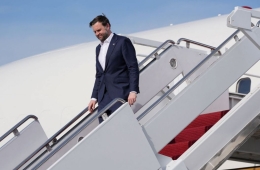
There have been reports that U.S. President Donald Trump, known for his dramatic and impulsive decision-making, has shown signs of anxiety during the Iran war situation.
On the 18th (local time), The Wall Street Journal (WSJ) reported, "Behind President Trump's public bravado, he is wrestling with fear."

According to the report, President Trump reacted with heightened agitation in the White House, shouting at his aides for several hours immediately after hearing the news that a U.S. military fighter jet had been shot down in Iran and that two Air Force personnel were missing. Unable to calm him down, the aides eventually led President Trump out of the conference room.
President Trump immediately ordered a rescue operation, but since the U.S. military was not conducting operations on Iranian territory, they had to take into account the terrain and military risks. The aides determined that the president's impatience was unhelpful for the operation and decided to exclude President Trump from the meeting, instead providing updates at key moments.
Of the missing personnel in Iran, one was rescued quickly, and the other was saved two days later through a high-risk operation.
Afterward, President Trump issued a hardline message regarding the Strait of Hormuz. On April 5, Easter Sunday, he posted a strongly worded message on Truth Social, demanding that Iran open the strait. The post included profanity and threats to open the Strait of Hormuz, as well as the phrase "praise be to Allah." This was interpreted as mocking Iran.
According to the WSJ, President Trump's aides received calls from Republican senators and Christian leaders immediately after the post appeared, asking why he mentioned Allah and used profanity on Easter morning.
Later, when an aide asked President Trump about the incident, he said that mentioning Allah was his own idea, explaining that it was a language Iranians could understand. President Trump reportedly asked his aides, "How is it being received?" possibly expressing concern about the post's impact.
President Trump also made high-intensity remarks, such as mentioning the destruction of Iranian civilization, without prior discussion with his national security team. The WSJ also reported that he made other unreasonable comments, including the idea of awarding himself the highest military honor.
President Trump repeatedly complained that European countries were not providing assistance, and he also brought up the 1979 Iran hostage crisis along with the rising gasoline prices. The incident involved Iranian students occupying the U.S. embassy in Tehran and holding 52 American diplomats and staff hostage.
Hot Picks Today
![[New York Stock Market] Iran Remains Silent Ahead of Ceasefire Expiration... All Major Indices Close Lower](https://cwcontent.asiae.co.kr/asiaresize/93/2026042205132135133_1776802402.jpg) [New York Stock Market] Iran Remains Silent Ahe...
[New York Stock Market] Iran Remains Silent Ahe...
- "Over 20 Times More Than Overseas": 104.5 Million Tons of Rare Mineral Discovere...
- "Only the Top 1% Winning Big in Stocks Smile... '300 Million Won Splurges' or '1...
- Trump Singles Out Apple, Amazon: "I Will Remember Companies That Do Not Request ...
- "Please Launch It in Korea!" After All the Hype... This Coffee Finally Arrives i...
The publication analyzed, "President Trump, who enjoys dramatic situations, is displaying an even more radical and extreme approach in this new phase of war," adding, "He is vacillating between a hardline response and a conciliatory attitude, internally weighing the possibility of the situation spiraling out of control."
© The Asia Business Daily(www.asiae.co.kr). All rights reserved.