[Market Pulse]In an Age of Risk: Drug Price Cuts and Middle East Challenges

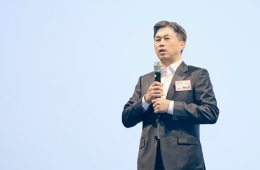
Noh Yeonhong, President of the Korea Pharmaceutical and Bio-Pharma Manufacturers Association
View original imageThe government's recent large-scale drug price reductions appear to be an unavoidable choice to ensure the sustainability of the national health insurance fund and to reduce medical expenses for the public. Underlying this move is the perception that the price of generic drugs in Korea is relatively high. However, we are now living in an era where it is difficult to make decisions based solely on financial logic. Geopolitical instability in the Middle East, the restructuring of global supply chains, and lingering memories of the pandemic all raise important questions for us. Are we truly taking 'risk' into sufficient consideration?
To answer this question, it is necessary to recall experiences from a few years ago. At the onset of the COVID-19 pandemic, the world faced severe shortages of medicines and medical supplies. Not only masks and diagnostic kits, but even some essential medicines could not be supplied smoothly. The concentration of manufacturing in certain countries and fragile global supply chains revealed just how easily they could collapse during a crisis. The global division of labor, which was efficient in normal times, became a source of risk in times of crisis. This was a real-world example of what German sociologist Ulrich Beck called the 'globalization of risk.' Risks spread across borders, and no one was immune to their effects.
Korea was no exception. In a structure where a significant portion of active pharmaceutical ingredients is dependent on overseas sources, supply instability could have become a reality at any time. Fortunately, Korea had the capacity to produce more than 70% of the necessary high-quality prescription drugs, which helped manage the crisis well. However, that experience left a clear lesson: the pharmaceutical supply chain is not just an economic issue, but a matter of national security.
Pharmaceutical Supply Chain Expands Into a Security Issue
With these memories still vivid, large-scale drug price reductions raise another question. Will the policy objective of cost reduction undermine long-term supply stability and industrial competitiveness? Especially in a situation where heightened tensions in the Middle East are driving up energy prices and logistics costs, if companies' profit bases are further weakened, the burden will inevitably increase.
More importantly, this is not a one-off shock. In a risk society, policies give rise to new risks, and those risks in turn trigger further problems, forming a chain reaction. Reduced profits from drug price cuts can lead to decreased investment in research and development, which may result in delays in the development of innovative new drugs and a weakening of industrial competitiveness.
Against this backdrop, McKinsey & Company's recently released '2026 Asia Pharma & Biopharma Report' offers meaningful insights. The report designates this year as the 'Year of Asia's Quantum Leap.' Asia is no longer a follower but is now moving to the center of global innovation, with the proportion of innovative new drug pipelines surging from 28% to 43% in just five years. Korea and China are at the heart of this shift.
This change is not merely quantitative expansion. In every metric—research and development speed, patents, technology modalities, global licensing—Asia is moving beyond a leap to establish structural advantages. Now is a time of both crisis and opportunity. However, there is also an increasing risk that policies and the environment may constrain these opportunities.
![[Market Pulse]In an Age of Risk: Drug Price Cuts and Middle East Challenges](http://www.asiae.co.kr/news/img_view.htm?img=2025031811245772404_1742264697.jpg)
The Pharmaceutical Industry Is an Investment Industry: A 'Crisis Response' Perspective Is Needed
Drug price reductions have the clear, short-term goal of fiscal stability. However, the pharmaceutical industry is an investment-driven industry. Revenue decline immediately translates into reduced research and development, which directly weakens future competitiveness. Furthermore, weakened supply chain response capabilities can lead to higher costs in the next crisis. Current policy needs to be re-examined not simply for fiscal savings but based on 'crisis response capabilities.'
We must ask again: Is the current policy aligned with the trend of Asia’s quantum leap, or is it in conflict with it? The industry has long emphasized that this is a golden time for the pharmaceutical sector to advance. For Korea's pharmaceutical industry to mature and become a powerhouse in new drug development, now is not the time for drug price cuts, but rather for establishing a springboard for a quantum leap.
The solutions are clear. First, policy should prioritize resilience over speed. Even if decisions have already been made, a phased and predictable approach is needed rather than a drastic reduction in drug prices. Second, strategic investments to stabilize the supply chain must be made in parallel. Localization of active pharmaceutical ingredients, diversification of supply sources, and the establishment of emergency response systems are no longer optional. Third, an environment that maintains innovation must be created. Bold incentives for research and development and rational regulatory relaxation should be strengthened. Fourth, the industry itself must change internally. Rather than a generic-focused, overly competitive structure, it should shift to joint development, joint production, and platform-based cooperation models. Asia’s quantum leap is taking place at the 'ecosystem' level, not at the level of 'individual companies.'
We are now living not just in an era of crisis, but in a time when the order is being restructured. Drug price reductions and Middle East risks are not isolated events, but signals of structural change. In Beck's risk society, what matters is not eliminating risk, but the ability to manage it.
Hot Picks Today
 "With This Certificate, Even Those in Their 60s...
- Popcorn Container Craze at Theaters Sparks Sell-Out Frenzy, Emerges as New Reven...
- "Bear Destroyed My Rolls-Royce"... US Car Owners Who Claimed $200,000 Insurance ...
- Passed Through Just Before Hormuz Re-closure... 1 Million Barrels of Crude Oil H...
- "Quit Office Job to Earn Over 200 Million Won a Year"… Chinese Woman in Her 30s...
Noh Yeonhong, Chairman of the Korea Pharmaceutical and Bio-Pharma Manufacturers Association
© The Asia Business Daily(www.asiae.co.kr). All rights reserved.


!["They Said It Was 'Delicious' Milk... Is the 'List of Fake Milk Products in Korea' for Real? [Matjal X-File]"](https://cwcontent.asiae.co.kr/asiaresize/307/2023072413274517286_1690172865.jpg)