Ken Griffin: "Global Recession Inevitable if Strait of Hormuz Blockade Persists"
Semafor World Economy Conference

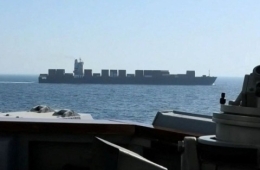
Ken Griffin, CEO of Citadel, warned on April 14 (local time) that if the blockade of the Strait of Hormuz continues for a longer period, the global economy could slip into a recession.
According to international media outlets such as CNBC, CEO Griffin stated at the Semafor World Economy Conference held in Washington, D.C., "Let's assume the Strait of Hormuz is blocked for six to twelve months. The world would inevitably fall into recession."
He added, "As a result, the world would witness a massive shift to alternative energy sources such as wind, solar, and nuclear power."
On February 28, after the United States and Israel conducted airstrikes against Iran, international oil prices surged, leading to weakness in risk assets across the globe, including the U.S. stock market. Recently, as the United States and Iran reached a two-week truce agreement and held peace talks, investor sentiment has begun to recover.
CNBC noted that Asian economies are particularly vulnerable to a surge in international oil prices. This is because countries such as Korea, Japan, and China have a relatively high proportion of energy imports passing through the Strait of Hormuz.
On this day, the International Monetary Fund (IMF) also projected this year’s global economic growth rate at 3.1%, down by 0.2 percentage points from its forecast in January, citing the impact of the war involving Iran. The IMF analyzed that soaring energy prices, rising inflation expectations, and the spread of risk aversion in financial markets are all having a negative ripple effect on the global economy.
Hot Picks Today
 Goldman Sachs Raises Forecast to 220%: "KOSPI H...
- Popcorn Container Craze at Theaters Sparks Sell-Out Frenzy, Emerges as New Reven...
- Chairman Choi Jinsik of the Korea Federation of Mid-sized Enterprises: "A Shift ...
- "It Turns Out They Were After My Account" Shocked Reactions... "We're Watching Y...
- "Moms Touch Unruly Woman" Video Spreads... Assaulted Employee and Smashed Regist...
The IMF predicted that if the conflict in the Middle East worsens in the future, the global economic growth rate could fall to 2.5%. If the war becomes prolonged and more severe, growth could hover around 2%.
© The Asia Business Daily(www.asiae.co.kr). All rights reserved.



!["They Said It Was 'Delicious' Milk... Is the 'List of Fake Milk Products in Korea' for Real? [Matjal X-File]"](https://cwcontent.asiae.co.kr/asiaresize/307/2023072413274517286_1690172865.jpg)