Will Inflation Stabilize After the War? Analysis Dampens Hopes: "Recession Concerns Likely to Grow" [Weekend Money]
Geopolitical Risks from the Middle East Inevitably Lead to High Oil Prices
High Oil Prices Have Often Led to Economic Downturns After a Time Lag

On the 3rd, a price notice for gasoline and diesel was placed at a gas station in Yongsan District, Seoul. 2026.04.03 Photo by Dongju Yoon
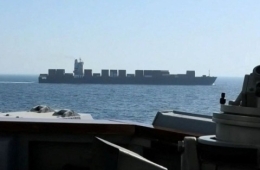
View original imageWith the war between the United States and Israel and Iran having paused for now, expectations for an end to the conflict are growing. However, analysts warn that even if the war ends, inflation driven by high oil prices will continue to weigh on the economy.
Geopolitical risks originating from the Middle East inevitably trigger high oil prices
On April 12, IBK Investment & Securities identified inflation, interest rates, and credit indicators as key economic metrics to monitor after the end of the conflict. They emphasized that it is essential to track these indicators, as surges in oil prices caused by geopolitical risks can lead to economic downturns or recessions.
Jung Yongtaek, an economist at IBK Investment & Securities, stated, "Looking at past conflicts in the Middle East, geopolitical risks originating from the region are inevitably linked to oil prices," adding, "Unprecedented spikes in oil prices have, almost without exception and with a time lag, led to a downturn or recession in the U.S. economy."
The channel through which surging oil prices negatively affect the broader economy and financial markets is inflation. Higher inflation erodes real purchasing power and investment capacity, leads to rising interest rates, and increases the burden on economic participants. In this latest surge, oil price increases have been directly reflected in inflation indicators, as evidenced by a sharp rebound in the inflation rate in March.
The problem is that even after oil prices drop sharply due to factors such as the end of the conflict, the inflation rate adjusts only very gradually, with a time lag. This is because it inevitably takes time for the price increases passed on through complex supply chains and other variables such as exchange rates to subside.
Jung also pointed out, "Even if the war is resolved in the first half of the year and international oil prices return to pre-war levels, U.S. inflation indicators are highly likely to remain much higher throughout the second half than the inflation rate that would have been recorded had there been no war."
![Will Inflation Stabilize After the War? Analysis Dampens Hopes: "Recession Concerns Likely to Grow" [Weekend Money]](http://www.asiae.co.kr/news/img_view.htm?img=2024080708473877685_1722988058.png)
High inflation leads to higher interest rates, placing a significant burden on the economy
High inflation triggers interest rate hikes, which in turn place considerable pressure on the economy. Jung explained, "High inflation is likely to lead to higher interest rates," adding, "In the past, unprecedented oil price surges have often resulted in subsequent key interest rate hikes by the Federal Reserve." These rate hikes have been measures to curb inflation that exceeded target levels.
He emphasized, "The reason we must pay attention to interest rates is that they can become a decisive catalyst for the realization of credit risk." He further explained, "From the perspective of the business cycle, it is important to monitor the flow of credit risk, as the economic cycle is closely linked to the credit risk cycle."
However, he noted, "The current situation in the U.S. credit market is still quite different from previous periods of heightened risk," but added, "It is important to note that credit spreads, after bottoming out in the first half of last year, have reversed course and are now on a gradual upward trend."
Hot Picks Today
 Goldman Sachs Raises Forecast to 220%: "KOSPI H...
- Popcorn Container Craze at Theaters Sparks Sell-Out Frenzy, Emerges as New Reven...
- Chairman Choi Jinsik of the Korea Federation of Mid-sized Enterprises: "A Shift ...
- "It Turns Out They Were After My Account" Shocked Reactions... "We're Watching Y...
- "Moms Touch Unruly Woman" Video Spreads... Assaulted Employee and Smashed Regist...
He continued, "The corporate bond stress index published by the New York Fed has surged following the outbreak of the Iran conflict," adding, "This shows that conditions for raising funds through bond issuance are rapidly deteriorating."
© The Asia Business Daily(www.asiae.co.kr). All rights reserved.


!["They Said It Was 'Delicious' Milk... Is the 'List of Fake Milk Products in Korea' for Real? [Matjal X-File]"](https://cwcontent.asiae.co.kr/asiaresize/307/2023072413274517286_1690172865.jpg)