Three Scenarios for Trump's Future Strikes on Iran [Yang Nakgyu's Defence Club]
Request for Allied Participation... Most Countries Likely to Refuse
If the U.S. Proceeds with a Solo Ground Operation, a Prolonged Conflict Is Unavoidable
Missile Stockpiles Will Be Quickly Depleted If Key Targets Are Struck
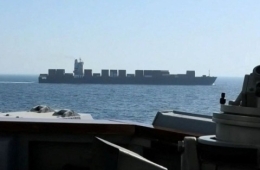
On March 16 (local time), U.S. President Donald Trump once again urged countries with a U.S. military presence to join the maritime escort operation for ships passing through the Strait of Hormuz. However, these countries have reacted coldly to the request. This is because they could suffer domestic losses, and if the situation turns into a prolonged conflict, they could find themselves in a difficult position.

Germany was the first to oppose the operation. It made it clear that it would not participate in any form of military operation in the Strait of Hormuz. German Foreign Minister Johann Wadephul said in an interview with ARD the previous day, "There is no immediate necessity for a military operation in the Strait of Hormuz. Above all, there is absolutely no need for Germany to participate." The European Union (EU) also drew a line, stating it would not join the maritime escort.
Scenario 1: Will Allied Countries Join?
The main reason countries are declining the U.S. request is the narrowness of the Strait of Hormuz. Currently, about 600 vessels are waiting to pass through the strait. These ships must traverse its narrowest point. Large oil tankers have to pass in both directions along a 33-kilometer-wide channel, which, from Iran's perspective, is the most advantageous point for an attack.
Iran possesses Ghader and Persian Gulf (Khalij Fars) anti-ship cruise missiles. The Khalij Fars missile can be launched from mobile launchers (TEL) inland, making it highly stealthy. It is known to have high accuracy at targets up to 300 kilometers away. Naval mines are also a problem. Iran has more than 6,000 naval mines. Even advanced Aegis destroyers are helpless if they cannot clear floating mines. Furthermore, if Iran's drones and the so-called "mosquito fleet" of small, fast boats attack, it will be difficult to respond effectively.
Scenario 2: Chances of Success for U.S. Ground Forces in Japan and Others
Deploying ground troops to strike Iranian missile bases and fleet headquarters is not easy. The United States is first sending U.S. forces stationed in Japan to increase pressure. The units being dispatched include the amphibious assault ship Tripoli, previously based at Sasebo in Nagasaki Prefecture, Japan, and the 31st Marine Expeditionary Unit, formerly stationed at Camp Hansen in Okinawa. From these two units, a total of about 5,000 personnel—including approximately 2,500 Marines—are expected to be deployed to Iran. These units were also dispatched during the Afghanistan and Iraq wars. The Tripoli, deployed to Japan in June last year, is equipped to carry F-35 stealth fighters and is considered a strategic asset for amphibious operations.
Iran's counterattack is also expected to be formidable. The Iranian military has a total force of 640,000 personnel. The Islamic Revolutionary Guard Corps (IRGC) alone independently commands about 120,000 troops, spanning the army, navy, air force, as well as special and intelligence units.
The IRGC is an elite force established after the 1979 Iranian Revolution to protect the regime. While the regular military inherited the military structure of the Pahlavi dynasty before the 1979 Islamic Revolution, the IRGC was formed by the highest authority at the time, the Islamic Revolutionary Council. The IRGC seized and detained the South Korean chemical tanker "Korea Chemie" in 2021.
Scenario 3: How Long Can Precision Strikes Continue?
If allied countries do not join, the last option for the United States is to continue conducting strikes on its own. The first targets would be four harbors: Kharg and Bushehr in the north, and Bandar Abbas and Chabahar in the south. After U.S. President Donald Trump designated the IRGC as a foreign terrorist organization (FTO) in 2019, the IRGC significantly reinforced its naval power at these ports.
The Zagros Mountains and the areas around them are also targets. Russian-made surface-to-air missiles and radar systems are deployed in this region. The United States is likely to carry out preemptive strikes here and then enforce a no-fly zone, intercepting Iranian fighter jets and drones operating in the area.
The problem is the supply of U.S. missiles. Within just two weeks of war with Iran, the United States has expended several years' worth of key munitions, raising concerns about the cost of war and depletion of weapons stockpiles. The Tomahawk cruise missile, produced by defense contractor RTX, is a representative example of long-range precision strike weapons. Each missile costs about 3.6 million dollars (approximately 5.3 billion won). Over the past five years, the U.S. military purchased only 370 Tomahawks. However, according to the Center for Strategic and International Studies (CSIS), the U.S. military is estimated to have used as many as 168 Tomahawks in just the first 100 hours after the war broke out on February 28.
Hot Picks Today
 Goldman Sachs Raises Forecast to 220%: "KOSPI H...
- Popcorn Container Craze at Theaters Sparks Sell-Out Frenzy, Emerges as New Reven...
- "Soaking in the Ganges Will Heal You" Tragedy as 13-Year-Old Boy Dies After 12 H...
- "It Turns Out They Were After My Account" Shocked Reactions... "We're Watching Y...
- "Moms Touch Unruly Woman" Video Spreads... Assaulted Employee and Smashed Regist...
Shin Jongwoo, Secretary General of the Korea Defense & Security Forum, said, "Even if the U.S. Marines stationed in Japan succeed in opening up the Strait of Hormuz through an amphibious operation, a prolonged conflict is inevitable," adding, "There is a high possibility that this could become a second Afghanistan or Iraq."
© The Asia Business Daily(www.asiae.co.kr). All rights reserved.



!["They Said It Was 'Delicious' Milk... Is the 'List of Fake Milk Products in Korea' for Real? [Matjal X-File]"](https://cwcontent.asiae.co.kr/asiaresize/307/2023072413274517286_1690172865.jpg)