Second Round of Public Institution Relocations for Up to 350 Entities Accelerated... Prime Minister Kim: "Minimizing Capital Region Retention"
10th National Policy Coordination Meeting
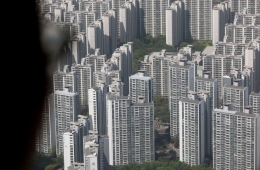
The government is set to accelerate the relocation of public institutions concentrated in the Seoul metropolitan area to other regions. It is understood that up to 350 institutions are under review as candidates for relocation. With the June 3 nationwide local elections just three months away and ongoing discussions about the establishment of integrated special cities, voters across the country are expected to pay close attention to which institutions will be relocated and when. On March 5, Prime Minister Minseok Kim stated, "The government's policy is to minimize retention in the capital area and avoid piecemeal, quota-based dispersion."

Prime Minister Minseok Kim is speaking at the National Policy Coordination Meeting held on March 5, 2026, at the Government Complex Seoul in Jongno-gu, Seoul. Photo by Yojong Jun
View original imageOn the morning of March 5, Prime Minister Kim presided over the 10th National Policy Coordination Meeting at the Government Seoul Office, where he said, "This second phase of public institution relocation is part of a structural reform to ease the monopolar concentration in the capital region and to diversify engines of regional growth by redistributing population, jobs, and capital." He went on to emphasize, "We will also revisit, from the ground up, the criteria for exceptions to relocation, based on the achievements and lessons learned from the first phase of public institution relocations."
Prime Minister Kim added, "To maximize the impact of the relocations, we will promote regional clustering by linking the five major wide-area economic zones and the three major special self-governing provinces to specialized local industries, so that these areas can serve as genuine growth hubs." He further urged active cooperation from related ministries and local governments, stating, "We will prepare a rational and systematic roadmap through a comprehensive survey of all candidate institutions and by assessing local government needs."
Hot Picks Today
!["We Can't Hold Out Any Longer": Airlines Reduce Seats, Cut Routes, and Face Bankruptcy Amid Crisis [Global Focus]](https://cwcontent.asiae.co.kr/asiaresize/93/2026042414573239703_1777010253.jpg) "We Can't Hold Out Any Longer": Airlines Reduce...
"We Can't Hold Out Any Longer": Airlines Reduce...
- "Grandma, This Isn't Made by AI, Right?"... Thought It Was Old-Fashioned, But No...
- "Guilt-Free Pleasure: A New Menu Sells Every 4 Seconds With Great Taste and No W...
- "This Has Never Happened to Me in Korea"... Gwangjang Market Stall That Charged ...
- "Seniors Take Over the Disco Festival: 'Only 50 and Above Allowed' [Mwonil Issyu...
The first phase of public institution relocations took place between 2012 and 2019, during which approximately 150 public institutions moved to regional areas. However, many public institutions still remain concentrated in Seoul and the surrounding metropolitan area. For this second phase, the government is reviewing the relocation of about 350 institutions and organizations under the Public Institutions Operation Act and the Local Decentralization and Balanced Development Act.

© The Asia Business Daily(www.asiae.co.kr). All rights reserved.