Emergency Supply Chain Review Amid Escalating Middle East Crisis... "208 Days of Oil Reserves Ensure Adequate Response"
Joint Inter-Agency Review of Economic Supply Chains Held on March 4
Deputy Minister Kang: "Securing Alternative Import Sources, Expanding Financial Support"
Following the joint airstrikes by the United States and Israel against Iran, which have heightened concerns over the stability of supply for resources such as oil and natural gas, the government has launched an emergency inspection of the economic supply chain. Despite rising tensions around the Strait of Hormuz, the government assessed that there have been no unusual developments as of now. However, given the ongoing uncertainty in the Middle East, it plans to continuously monitor the supply status of key items.

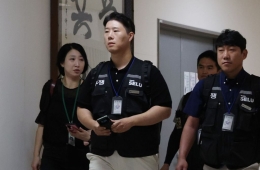
Kang Giryong, Deputy Minister for Fiscal and Economic Affairs, convened an inter-agency joint inspection meeting on the afternoon of March 4, 2026, to assess the impact of the Middle East crisis on domestic and international supply chains. During the meeting, participants conducted a comprehensive review of import trends, substitutability, and domestic production conditions for economic security items with high dependence on the Middle East, such as energy, chemical products, and materials and equipment, and discussed future response strategies.
Regarding energy, the government found that, despite heightened tensions surrounding the Strait of Hormuz, there have been no unusual trends affecting domestic supply thus far. A government official explained, "According to the International Energy Agency (IEA), we hold a 208-day reserve of oil, which is considered to provide a sufficient buffer for supply crises."
For most materials, parts, and equipment, it was also evaluated that alternative import sources can be secured or domestic production can be converted, so the current situation in the Middle East has had only a limited impact on domestic supply.
However, for naphtha, 54% of imported volumes pass through the Strait of Hormuz; therefore, if the situation is prolonged, there are concerns about supply, and the government plans to prepare support measures such as converting export volumes to the domestic market.
A government official stated, "Given the significant uncertainty over how the situation in the Middle East will unfold, we will do our utmost to ensure the stable management of domestic and international supply chains, centering on the inter-agency emergency response team."
To promptly identify difficulties faced by businesses related to the Middle East crisis, the government will strengthen communication with industry and promote tailored support, such as finding alternative import sources, through the corporate support help desk within KOTRA (Korea Trade-Investment Promotion Agency).
In addition, to respond to increased volatility in international oil prices, the government is thoroughly preparing emergency manual measures, including securing additional quantities from regions outside the Middle East, introducing overseas production, and exercising priority rights for joint stockpiling purchases. If necessary, it will also respond swiftly by releasing reserves.
In particular, the government will expand support for the purchase of crude oil and emergency operating funds through the Supply Chain Stabilization Fund. It will operate a 'Supply Chain Fund Emergency Response Team' within the Export-Import Bank of Korea and seek to increase the credit limit for crude oil purchases from regions outside the Middle East, such as North America and Central and South America. If companies suffer damages due to increased international oil price volatility, the government will quickly identify their funding needs and provide the necessary financial support.
Hot Picks Today
 "Samsung and Hynix Were Once for the Underachievers"... Hyundai Motor Employee's Lament
- "Was This Delicious Treat Enjoyed Only by Koreans?"... The K-Dessert Captivating Japan
- "Iran Considers Usage Fees From Surface to Seabed, Eyes $15 Billion Annual Revenue"
- Fair Trade Commission Fines "Big Five" Couriers Including Coupang and CJ 3 Billion Won for Shifting Safety Accident Liability to Agencies
- "That? It's Already Stashed" Nightlife Scene Crosses the Line [ChwiYak Nation] ③
Deputy Minister Kang stated, "As uncertainty continues in the Middle East region, we will continue to closely cooperate with relevant ministries to monitor the supply status of key items. We will spare no effort to ensure that our companies can smoothly secure alternative supplies, and we will respond proactively to ensure that the domestic supply chain remains stable."
© The Asia Business Daily(www.asiae.co.kr). All rights reserved.