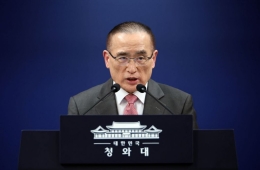
[Invest&Law] Serve Your Sentence, Become a Tycoon... Why Is It So Hard to Recover Billions from the Daejang-dong Case?
Prosecution’s Decision Not to Appeal Fixes Confiscation Cap at 47.3 Billion Won
Nam Wook: "Will Seek State Compensation if Asset Preservation Is Not Lifted"
Confiscation Enforcement Rate Stands at Only 0.3?0.5%
Asset Recovery Remains Elusive in Both Criminal and Civil Proceedings
Due to the prosecution's decision to forgo appealing the Daejang-dong case, it appears that the private operators involved will be able to retain a significant portion of their enormous profits even after serving their sentences and being released. Of the estimated 780 billion won in development profits calculated by the prosecution, only 47.3 billion won can be confiscated through criminal proceedings, and the decision not to appeal has effectively closed the door on raising this ceiling any further.
From the investigation stage, the prosecution obtained a preservation order to freeze approximately 200 billion won in assets belonging to Kim Manbae and other members of the Daejang-dong group. This measure was intended to prevent the assets from being hidden before the verdict was finalized. However, after the court acquitted the defendants of breach of trust in the first trial and the prosecution leadership decided not to appeal, some defendants are now demanding the release of the preserved assets, arguing that "there is no basis for preserving assets beyond the amount that can be confiscated (47.3 billion won)."
It has been reported that Nam Wook, an attorney and one of the Daejang-dong group, has requested the release of the preservation order on his share from the prosecution, and has indicated that he will file a state compensation claim if his request is not granted.
![[Invest&Law] Serve Your Sentence, Become a Tycoon... Why Is It So Hard to Recover Billions from the Daejang-dong Case?](http://www.asiae.co.kr/news/img_view.htm?img=2025112011211825332_1763605278.jpg)
Confiscation Preservation Amount Rises from 2.9 Trillion to 9 Trillion Won Over 5 Years... Only Seoul Central District Prosecutors' Office Has a Dedicated Criminal Proceeds Recovery Division
According to statistics obtained by The Asia Business Daily from the Supreme Prosecutors' Office, the number of confiscation and preservation cases at prosecutors' offices nationwide has increased from around 2,500 to 4,400 over the past five years, and the amount preserved has grown from 2.9 trillion won to about 9 trillion won. During the same period, the total amount subject to confiscation enforcement also rose from 30.6 trillion won to nearly 33 trillion won. However, the actual amount of confiscation enforced each year remains at only around 1.2 to 1.6 trillion won, with the enforcement rate stagnating at 0.3-0.5% annually. While the scope of assets subject to confiscation and preservation is rapidly expanding, the actual recovery rate does not even reach 1%.
If cases of large, unenforceable confiscation orders with virtually no chance of execution are excluded, the effective enforcement rate would be higher. Nevertheless, even taking this into account, the prosecution's enforcement rate for confiscation remains notably low.
According to the Supreme Prosecutors' Office, only the Seoul Central District Prosecutors' Office has an official division dedicated to criminal proceeds recovery. The other 17 district prosecutors' offices have criminal proceeds recovery teams, and at branch offices, the investigation department handles the recovery of criminal proceeds. In other prosecutors' offices, there is no dedicated department, and non-official criminal proceeds recovery teams are operated, where two to three prosecutors are responsible for criminal proceeds recovery work in addition to their regular investigative or trial duties.
Prosecutors Must File Civil Lawsuits... Assets Must Be Returned to Criminal's Name for Recovery
Even if a conviction ordering confiscation is finalized, in most cases, the assets registered under the criminal's name or in official records are actually owned by third parties. To enforce the confiscation, there must be assets under a borrowed name that can be proven to be effectively owned by the criminal. Even if such assets are found, enforcement is not immediate. For assets in the criminal's name, a finalized criminal judgment serves as an enforceable title under civil execution law, allowing for immediate enforcement. However, for assets under borrowed names or third parties, the Supreme Court's position is that a criminal judgment alone cannot be used to enforce confiscation.
Ultimately, after the prosecutor locates assets under borrowed or third-party names and obtains a provisional seizure or other confiscation/preservation order to prohibit disposal, they must file a civil lawsuit-such as a creditor subrogation suit or a fraudulent conveyance cancellation suit-and win, in order to transfer the asset's title back to the criminal's name first.
Another problem is the lack of a dedicated organization to handle creditor subrogation or fraudulent conveyance cancellation lawsuits, which are known to be particularly complex among civil cases. Due to budget constraints and other issues, prosecutors from the investigating office must handle these civil lawsuits themselves in most cases.
Jo Jutae, an attorney at Dongin Law Firm, stated, "It is possible to file a civil claim, but if the assets have already been hidden or transferred to a third party, there may be nothing left to enforce even if a judgment is obtained. While it is possible to trace assets through a fraudulent conveyance cancellation suit, the requirements are strict and the litigation is difficult, making it extremely challenging to recover billions of won solely through civil proceedings." He added, "Ultimately, after serving their prison sentences, the convicted individuals may still be able to live comfortably on their remaining assets."
Ministry of Justice: "Development Profits Can Be Recovered Through Civil Lawsuits"... Legal Community: "Practically Impossible"
The Ministry of Justice maintains that Seongnam Development Corporation, as the victim, can recover development profits through civil lawsuits. However, legal experts point out that, considering both criminal and civil procedures, this is virtually impossible. A former prosecutor-turned-attorney said, "Although criminal and civil procedures are technically separate, in reality, the criminal judgment almost entirely determines the civil outcome. The likelihood that a civil court would newly recognize billions of won in damages as 'illegal acts' for conduct not found criminal in the criminal trial is extremely low."
As a result, in the Daejang-dong case, recovery through criminal proceedings will be capped at 47.3 billion won, and Seongnam Development Corporation will only have a chance to recover the remaining billions of won in development profits by winning civil lawsuits, obtaining provisional seizures, or successfully pursuing fraudulent conveyance cancellation suits.
Hot Picks Today
 Even with High Oil Price Relief Payment, Additional 300,000 Won Per Person to Be Provided... Applications Open from the 18th in This Region
- "Invested 95% in Hynix and Reached 10 Billion Won"... Japanese Investor's Proof Post Goes Viral
- "Why Is the Korean Stock Market Surging?"... Even Italy Is Astonished by the KOSPI Rally
- "You Don't Need to Go to the Gym": The Best Exercises for Lowering Hypertension
- "That Thing Wakes Up Every Night" ... Suspicious Object Covers Rural Village
Although the amount of assets subject to confiscation and preservation increases every year, the actual recovery rate remains in the zero percent range, making it likely that the Daejang-dong group will be able to retain substantial wealth even after completing their sentences.
© The Asia Business Daily(www.asiae.co.kr). All rights reserved.