[Interview] The Father of Chum-Churum...Taking on the Challenge of K-Oak Barrel-Aged Soju
Korea's First Doctor of Distilled Spirits:
"Alcohol Inspires Many Fields of Study"
The Age of Aging
Korean Oak Proves the Potential of K-Oak Barrels
Maximizing Both Social and Economic Benefits with K-Oak Barrels
"Aren't you curious about the flavor of whiskey and soju aged in oak barrels made from Korean oak trees?"
Taewan Kim, Principal Researcher at the Food Convergence Research Division of the Korea Food Research Institute, emphasized in an interview with Asia Economy that the quality of aged spirits matured in Korean oak barrels is in no way inferior to that of foreign-aged spirits. He stated, "Aging adds value to many things," and highlighted, "K-oak barrels not only bring diversity to our liquor industry, but can also generate a wide range of social and economic ripple effects."

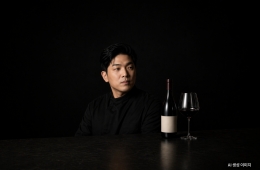
Taewan Kim, Principal Researcher, Food Convergence Research Division, Korea Food Research Institute
View original imageKorea's First Doctor of Distilled Spirits..."Alcohol Inspires Many Fields of Study"
Kim is recognized as Korea's first doctor of distilled spirits. Having majored in chemical engineering at university, he developed an early interest in alcoholic beverages. For him, alcohol was not just something to drink and enjoy for leisure, but an important medium that has influenced various academic fields throughout human history. He explained, "The distillation apparatus used for alcohol was adapted into petroleum engineering to develop systems for fractional distillation of oil, and the research of Louis Pasteur, known as the father of bacteriology, was rooted in the fermentation of wine yeast." He added, "Wanting to study alcohol more professionally, I decided to study abroad."
Afterward, Kim earned his master's and doctoral degrees in distilling at Heriot-Watt University in Scotland, the home of whiskey. Upon returning to Korea, his first job was at Doosan Liquor (now Lotte Chilsung Beverage). There, the first product he worked on developing was "Chum-Churum." He said, "Since I poured my efforts into everything from research to commercialization, changing everything including the ingredients, it was both fun and felt like raising my own child," expressing his affection by adding, "I still only drink Chum-Churum when it comes to soju."
He later worked on the design of distilled soju "Daejangbu" and beer "Kloud," before moving to the Korea Food Research Institute in 2012. At that time, the institute was seeking experts to specialize in distilled spirits research, and Kim was considered the right fit. He explained, "At the time, there was no one in Korea who had studied distilled spirits professionally, and most of the personnel in companies were only responsible for simple process research, so I think that's why the opportunity came to me." He added, "I decided to make the move because I believed I could conduct research to fill the gaps in our liquor industry."

The Age of Aging...Korean Oak Proves the Potential of K-Oak Barrels
Aging has become more than a trend in the food industry; it is now a clear standard. Especially for those seeking product diversification and premiumization, aging is no longer optional but a fundamental requirement. Alcoholic beverages are no exception. Even among similar liquors, aged products are recognized as having much higher market value than unaged ones.
Since 2018, the Traditional Food Research Division at the Korea Food Research Institute has been conducting a "Modernization of Traditional Distilled Spirits" project. Led by Kim, this research project aims to diversify and premiumize Korean liquor by localizing and advancing strains, distillers, and aging materials.
The third theme-research on aging materials-was conducted in collaboration with the Korea Forest Service, combining the exploration of how to utilize domestic forest resources. The goal was to develop wooden barrels using indigenous Korean oak, as Korea is one of the world's four major forest-rich nations. Kim explained, "After the Korean War and other events, Korea successfully reforested its devastated land in a short period of time, so the government was also considering shifting forest policy toward creating economic value." He added, "If we can develop Korean-style wooden barrels, it could not only advance the Korean liquor industry, but also create various added values."

Kim then focused on identifying suitable forest resources for aging alcoholic beverages and researching their suitability. The tree species selected was oak. Oak barrels, commonly used for aging whiskey and wine in Western countries, are mainly produced in France and the United States. Kim explained, "Oak, a broad-leaved tree, does not refer to a single species, but rather encompasses about 500 species within the oak family. Compared to conifers, oaks are more suitable for producing barrels for aging liquor due to their manufacturing suitability and the presence of compounds such as lignin and hemicellulose, which influence the aroma and flavor of spirits."
He further explained, "About 50 species of native oak are distributed across the Korean Peninsula. After comparing various components and considering factors such as distribution area for commercialization, we determined that six species-Quercus dentata, Quercus aliena, Quercus variabilis, Quercus mongolica, Quercus acutissima, and Quercus serrata-are suitable for barrel production." Subsequently, Kim sent samples of Korean oak barrels to Scotland, where two-year whiskey aging experiments were conducted, with samples tested at monthly intervals.
Kim expressed pride that the Korean oak barrels were on par with their overseas counterparts. He explained, "Among the six species, Quercus serrata contains the highest levels of 'oak lactone,' resulting in barrels that impart a pronounced sweetness."
In fact, whiskey aged in Quercus serrata barrels is said to evoke the flavor of American bourbon more than Scotch whisky. Oak lactone is a volatile aromatic compound found in oak, divided into cis-oak lactone, which imparts coconut and vanilla aromas, and trans-oak lactone, which imparts spicy characteristics. Among the six species, Quercus serrata was found to have the highest levels of both types of oak lactone.

Taewan Kim, senior researcher at the Food Convergence Research Division of the Korea Food Research Institute, is checking the quality of whiskey aging in domestic oak barrels.
View original imageMaximizing Both Social and Economic Benefits with K-Oak Barrels
As the suitability of Korean oak species for barrel production has been proven, industrialization using these resources is expected to move forward. Kim said, "First, it will be important for the market to be established by releasing many whiskey and soju products aged in domestic oak barrels. Since oak barrels are expensive products with supply falling short of demand, if the existence and quality of Korean oak barrels become known, this could grow into a highly profitable business, especially in overseas markets."
Hot Picks Today
!["What Should I Eat? Cooking at Home Is a Hassle... 10,000~20,000 Won 'Hotel-Level Catering' Spreads in Ultra-Luxury Apartments [Luxury World]"](https://cwcontent.asiae.co.kr/asiaresize/93/2026042610544940447_1777168490.png) "What Should I Eat? Cooking at Home Is a Hassle...
"What Should I Eat? Cooking at Home Is a Hassle...
- "The Essence Is Capacity Expansion" This Stock’s Target Price Soars 65% in Ten ...
- "Instant Hit Upon Debut"...Who First Created Food Court Sample Foods? [Delicious...
- Kim Jong Un Meets Russian State Duma Chairman Visiting North Korea... Russian De...
- No Work, No Inheritance for the Eldest... 30 Billion KRW in Shares Gifted to Sec...
He also emphasized the social value, in addition to economic value. "In Korea, where natural resources are scarce, forests are an important cyclical ecological resource. If forest resources are well planned and managed as a matter of policy, it will not only revitalize rural economies through economic forest breeding policies, but also greatly contribute to carbon neutrality by managing the age of trees for industrial purposes," he said. "I hope that the synergy between Korea's forest resources and the liquor industry will activate both social and economic benefits."
© The Asia Business Daily(www.asiae.co.kr). All rights reserved.