[Defense Brief] Caution Needed in Supporting Lethal Weapons
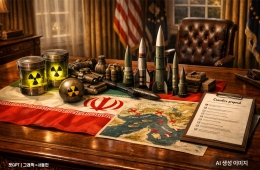
The state deploys the latest weapons or develops new weapons to protect its people. The same applies to us. We have developed weapons to protect our citizens and defend our territory from North Korea. However, neighboring countries think differently. They threaten us every time our military power grows.
![[Defense Brief] Caution Needed in Supporting Lethal Weapons](http://www.asiae.co.kr/news/img_view.htm?img=2023033111475674179_1680230876.jpg)
The revision of the South Korea-U.S. missile guidelines is a representative example. The South Korea-U.S. missile guidelines were established in October 1979, during the late Park Chung-hee administration. The United States opposed, fearing that South Korea might secretly develop nuclear weapons to mount on missiles or export missile technology to hostile countries. As a result, South Korea became bound not only by the Missile Technology Control Regime (MTCR) of the international community but also by the South Korea-U.S. missile guidelines. As the North Korean nuclear and missile threat increased, South Korea and the U.S. lifted all restrictions on missile range and warhead weight through the fourth revision. This was 42 years after the missile guidelines were first established.
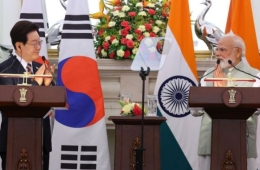
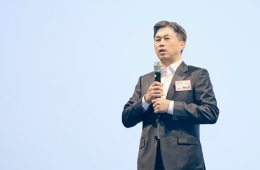
Upon hearing this news, China immediately protested. In 2021, Xing Haiming, the Chinese Ambassador to South Korea at the time, attended a seminar titled "100 Years of the Chinese Communist Party and China's Development" held in Seoul and stated, "If China's national interests are harmed, we cannot remain silent," and criticized, "The United States is mobilizing all its power to suppress or oppress China." Although South Korea would not immediately develop missiles aimed at China, it meant that South Korea could at least possess medium- to long-range missiles capable of reaching China. In fact, our military developed the ‘Hyunmoo-5,’ a ground-to-ground ballistic missile with a warhead weight of 8 to 9 tons, one of the world's largest high-power missiles, following the missile guideline revision. However, this missile is intended to counter North Korea's military power, not China.
When the Terminal High Altitude Area Defense (THAAD) system was deployed, China also rose in protest. China regarded THAAD as a U.S. weapon system aimed at encircling China. They perceived the THAAD radar as an offensive weapon that monitors Chinese military activities and intercepts ballistic missiles. On January 6, 2016, when North Korea conducted its fourth nuclear test, then-President Park Geun-hye did not answer a phone call from China as a sign of dissatisfaction. Chinese President Xi Jinping protested during meetings with former President Park in March 2016 and twice with former President Moon Jae-in in 2019. At the December 2017 South Korea-China summit, China hinted at respecting the so-called ‘Three No’s (3불)’?no participation in the U.S. missile defense (MD) system, no additional THAAD deployment, and no trilateral military alliance among South Korea, the U.S., and Japan?outlined in the ‘October 31 South Korea-China Relations Improvement Consultations.’
China’s coercion does not align with logic. The detection range of the THAAD radar is about 800 km, making it difficult to detect China. Besides THAAD, the U.S. possesses maritime-based X-band radars, Aegis defense systems, various special reconnaissance aircraft, and satellites for intelligence gathering on China. If the system were aimed at China, there would be no need to deploy THAAD. THAAD is merely a means to defend against North Korean missiles.
Hot Picks Today
 "With This Certificate, Even Those in Their 60s...
- Popcorn Container Craze at Theaters Sparks Sell-Out Frenzy, Emerges as New Reven...
- When His Father Suddenly Collapsed Before His Eyes... 13-Year-Old Son Preserves ...
- "Six Months After 'Mom's Touch Troublesome Woman' Incident... Franchise Says, 'S...
- "Quit Office Job to Earn Over 200 Million Won a Year"… Chinese Woman in Her 30s...
Our logic has not changed whenever we develop and deploy weapons. However, the future is problematic. President Yoon Suk-yeol stated regarding lethal weapon support to Ukraine, "We had a principle of not directly supplying, but depending on Russia and North Korea’s activities, we can consider it more flexibly." If lethal weapons are supplied, it would overturn the notion that weapon development has been a means to protect our people. Lending our weapons to other countries or for attacking others could ultimately be for national security. However, if Russian forces die due to lethal weapons, our weapons become tools that harm others rather than protect ourselves. This is why caution is necessary in supporting lethal weapons.
© The Asia Business Daily(www.asiae.co.kr). All rights reserved.



!["They Said It Was 'Delicious' Milk... Is the 'List of Fake Milk Products in Korea' for Real? [Matjal X-File]"](https://cwcontent.asiae.co.kr/asiaresize/307/2023072413274517286_1690172865.jpg)