"Submit Urine Test to Request Menstrual Leave"…Controversy Over New Rule at Seoul Institute of the Arts
Spread into a Exhaustive Battle of Misandry and Misogyny
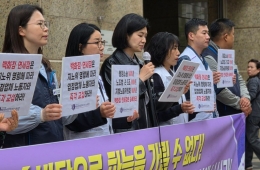
Seoul Institute of the Arts is facing controversy for requiring students to submit a medical certificate or confirmation of treatment that includes urine test results as proof when applying for menstrual leave. The school states this is to "prevent misuse of menstrual leave," while others view the measure as excessive.

Seoul Institute of the Arts posted a notice on their website on the 12th regarding the strengthening of proof documents for menstrual leave.
View original imageOn the 12th, Seoul Institute of the Arts posted guidelines on its website regarding attendance recognition for menstrual leave in the second semester. The Academic Affairs Office decided to recognize attendance only when a medical certificate or confirmation of treatment issued after a urine test is submitted. The certificate or confirmation must be dated on the day of the hospital examination or within one day after, and applications are limited to three times per semester, with reapplications allowed only after three weeks from the previous application date. Female students currently enrolled who wish to apply for menstrual leave must visit the Academic Affairs Office within seven days of the hospital visit, submitting proof documents such as a medical certificate or confirmation of treatment indicating that a 'urine test was conducted.' The medical institution for the test is designated by the university.
Menstrual leave is a system that allows female students to miss classes for legitimate reasons when suffering from severe pain before or after menstruation. In 2006, the National Human Rights Commission recommended improving the system, stating that treating absences or early departures due to menstruation as sick leave or tardiness causes excessive disadvantages and infringes on female students' health rights.
The Seoul Institute of the Arts explained that the strengthened regulation aims to "prevent abuse of menstrual leave." They pointed out that in the first semester, 53.5% of all recognized attendance absences were menstrual leave, and since it is difficult to verify the authenticity, the university sought ways to prevent fraudulent use.
Hot Picks Today
!["Grandma, This Isn't Made by AI, Right?"... Thought It Was Old-Fashioned, But Now I'm Hooked [World is Z Gold]](https://cwcontent.asiae.co.kr/asiaresize/93/2026042114422434550_1776750143.jpg) "Grandma, This Isn't Made by AI, Right?"... Tho...
"Grandma, This Isn't Made by AI, Right?"... Tho...
- Monthly Rentals in Seoul Surpass 70%... Over 80% in Gwanak and Dongdaemun
- "This Has Never Happened to Me in Korea"... Gwangjang Market Stall That Charged ...
- "Seniors Take Over the Disco Festival: 'Only 50 and Above Allowed' [Mwonil Issyu...
- "We Can't Hold Out Any Longer": Airlines Reduce Seats, Cut Routes, and Face Bank...
As this news spread, not only students but also some netizens engaged in heated debates, escalating into exchanges of 'misandry' and 'misogyny.' In response, the university stated, "Since there are many discussions about this issue, the school plans to meet with the student council to discuss reestablishing the regulations."
© The Asia Business Daily(www.asiae.co.kr). All rights reserved.