Seoul Mayor Oh Se-hoon's Welfare Policy 'Ansim Income' Expands Nationwide
Proof of Effectiveness of Seoul City's Current Welfare System Including Earned Income Tax Credit and Child Allowance Linkage
Formation of TF to Prepare Next-Generation Standard Reform Plan
Research on Nationwide Expansion Under Review, Announcement Within the Year
Seoul Mayor Oh Se-hoon's welfare model, 'Ansim Income,' has begun work for nationwide implementation. This policy, promoted by the Seoul Metropolitan Government to alleviate income disparity and eliminate welfare blind spots, plans to review its linkage with existing systems such as the Earned Income Tax Credit.
On the 19th, Seoul announced that it will prepare a welfare system reform plan to present the next-generation standard of 'Ansim Income,' the country's first income guarantee system currently undergoing policy experimentation.

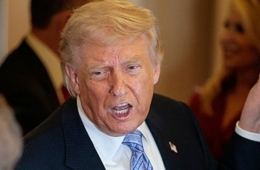
Seoul Mayor Oh Se-hoon is making an announcement about the 'Seoul Basic Income Pilot Project' at the Seoul City Hall briefing room on the 22nd. Photo by Kang Jin-hyung aymsdream@
View original image'Ansim Income' is a welfare system that supports a certain percentage of household income shortfall compared to the median income, providing more support to those with lower income in a progressive manner. Seoul reports that the first performance evaluation of the 'Ansim Income Pilot Project (Phase 1),' involving 1,523 households (484 supported households and 1,039 comparison households), has demonstrated effects such as a high rate of benefit discontinuation, increased consumption of essential goods, and improvements in mental health and nutrition.
This year, the plan is to lay the policy foundation for nationwide expansion through in-depth review and research. The current 'Ansim Income Pilot Project' was designed considering only six types of cash benefits, including livelihood benefits under the National Basic Livelihood Security System, which limits its applicability for nationwide operation.
First, the relationship with existing systems such as the Earned Income Tax Credit and Child Allowance will be reviewed. For example, the 'National Basic Livelihood Security System' can have blind spots due to reasons such as assets that are difficult to quickly dispose of even if income stops immediately, and difficulties in proving work incapacity. Additionally, the 'Basic Pension,' received by 70% of those aged 65 and older, requires research due to financial burdens from aging. Through 'Ansim Income,' the aim is to develop alternatives that overcome the limitations of current systems.
To this end, Seoul will also operate the 'Ansim Income Consistency Research Task Force (T/F).' This organization, comprising social welfare and economic experts, appointed Professor Yang Sung-il, a special professor at Korea University Graduate School of Public Health and former Vice Minister of Health and Welfare, as chairperson. Starting with its first meeting on the 19th, the T/F plans to hold about 10 full or subcommittee meetings over six weeks from next month to establish the direction for 'current social security systems and Ansim Income.' Based on these discussions, the T/F will research problems and improvement tasks of the current system and finalize legal and institutional tasks for the expansion of Ansim Income within this year.
Hot Picks Today
 "Buy on Black Monday"... Japan's Nomura Forecasts 590,000 for Samsung, 4 Million for SK hynix
- "Plunged During the War, Now Surging Again"... The Real Reason Behind the 6% One-Day Silver Market Rally [Weekend Money]
- "We're Now Earning 10 Million Won a Month"... Semiconductor Boom Drives Performance Bonuses at Major Electronic Component Firms
- 'Bond King' Gundlach: "Rate Cuts Impossible... CPI Could Rise to 4%"
- Experts Are Already Watching Closely..."Target Stock Price 970,000 Won" Now Only the Uptrend Remains [Weekend Money]
A Seoul city official stated, "If Ansim Income takes root as an alternative income guarantee system, it will eliminate the side effects of existing welfare systems where people with work ability do not work or seek to earn undeclared income for fear of losing eligibility." The official added, "We also expect effects such as alleviating income polarization and fostering a spirit of challenge and achievement through guaranteed minimum income."
© The Asia Business Daily(www.asiae.co.kr). All rights reserved.