Car Association "Save Small Parts Suppliers... Appeal for Exemption of Companies with Fewer Than 50 Employees from the Serious Accident Punishment Act"
The domestic automobile industry has earnestly appealed for a postponement of the application of the Serious Accidents Punishment Act (hereinafter referred to as the SAPA) to workplaces with fewer than 50 employees. With the enforcement of the law just five days away, it is argued that a delay in applying the law is crucial for the survival of small-scale automobile parts manufacturers.
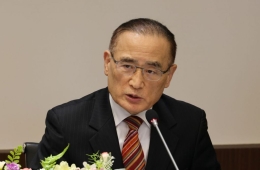
On the 22nd, the Korea Automobile Industry Association (KAIA) issued a statement appealing for the postponement of the law. The association urged the National Assembly, saying, "Considering the desperate situation of small-scale automobile parts companies, please pass a bill to postpone the application of the SAPA until before the law is enforced." The association is a coalition of 11 domestic automobile industry-related organizations, including the Korea Automobile Mobility Industry Association (KAMA), Korea Automobile Industry Cooperative, Hyundai-Kia Cooperation Association, Korea GM Cooperation Association, and KGM Cooperative.
The SAPA is a law that strengthens criminal penalties for business owners when serious industrial accidents causing significant human casualties occur. It has been enforced in workplaces with 50 or more employees since January 27, 2022, and after a two-year grace period, it is set to be enforced in small-scale workplaces with fewer than 50 employees starting January 27 of this year.
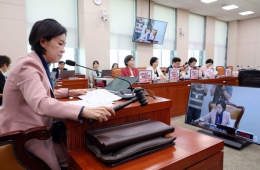
The ruling party proposed an amendment to further postpone the application of the law for small-scale workplaces by two years, but as discussions in the National Assembly have been delayed, it is expected to be difficult to pass. Consequently, the automobile parts industry, mainly composed of small businesses, has voiced its difficulties.

The association stated, "Small parts manufacturers are completely unable to keep up with the global competition for eco-friendly vehicle transition due to lack of funds and manpower," adding, "They are now facing a crisis of survival."
They continued, "If the SAPA is enforced under these circumstances, small-scale workplaces that are severely unprepared will see an increase in closures due to criminal penalties, which could lead to further social side effects such as worker unemployment." According to the association, among approximately 10,000 domestic automobile parts companies (1st to 3rd tier), over 94% are small-scale workplaces with fewer than 50 employees, and the domestic automobile parts industry's transition rate to future vehicles is only around 20%.
Hot Picks Today
 "Now Our Salaries Are 10 Million Won a Month" Record High... Semiconductor Boom Drives Performance Bonuses at Major Electronic Component Firms
- Is It Really Like an Illness? "I Can't Wait to Go Again"—Over 1 Million Visited in Q1, Now 'Busanbyeong' Takes Hold [K-Holic]
- "Realizing How Fast Money Disappears: Should You Try Only the Essentials for 5,000 Won? [The Basics of Benefits]"
- "Heading for 2 Million Won": The Company the Securities Industry Says Not to Doubt [Weekend Money]
- Experts Already Watching Closely..."Target Price Set at 970,000 Won" Only Upward Momentum Remains [Weekend Money]
Finally, the association appealed, "The postponement of the SAPA for workplaces with fewer than 50 employees is realistically to give small-scale businesses, which lack investment capacity and have not been able to prepare until now, a final chance to improve the causes and prepare," urging, "Please consider the desperate situation of small parts manufacturers."
© The Asia Business Daily(www.asiae.co.kr). All rights reserved.