Lee Bok-hyun "Creditors, Broad Support Needed"... Taeyoung Workout 'In Sight' (Comprehensive)
As the decision on whether Taeyoung Construction will enter a workout (corporate financial restructuring) approaches, financial authorities have urged broad consideration of support for debtors and stakeholders based on Taeyoung Group's intention to recover. They also made it clear that they will not hold the creditor group accountable afterward for decisions made to prevent a liquidity crisis at the parent company TY Holdings caused by Taeyoung Group's workout. The possibility of Taeyoung Construction entering a workout appears to have increased significantly.
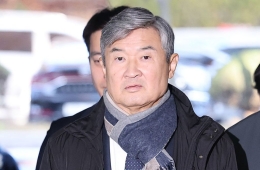
On the morning of the 9th, Lee Bok-hyun, Governor of the Financial Supervisory Service, held a New Year’s issue meeting with CEOs of major financial companies at the Bankers' Hall in Jung-gu, Seoul, stating, "I believe that broadly considering support not only for the debtor’s direct debt but also for indirect debt or stakeholders aligns with the original purpose of a workout."

On the 9th, Lee Bok-hyun, Governor of the Financial Supervisory Service, finished a New Year's financial issues meeting with the chairmen of seven financial holding companies, the chairman of the Korea Development Bank, and the president of the Industrial Bank of Korea at the Bankers' Hall, and is speaking to reporters about the meeting results. Photo by Heo Young-han younghan@
View original imageThe meeting was attended by the chairpersons of seven domestic financial holding companies (KB, Shinhan, Hana, Woori, NH Nonghyup, Korea Investment, Meritz), the chairman of KDB Industrial Bank, and the president of IBK Industrial Bank. KDB Industrial Bank is the main creditor bank of Taeyoung Construction, and most other financial companies are connected directly or indirectly to Taeyoung Construction through subsidiaries or real estate project financing (PF).
Governor Lee, seemingly keeping Taeyoung Group, which applied for the workout, in mind, urged support for indirect debt and stakeholders, while also requesting, "Please comprehensively consider the liquidity situation of not only the company applying for the workout but also related companies such as the parent company, to avoid unintended consequences where liquidity problems arise for the entire group, including the parent company, during the workout process of some affiliates within the group."
He added, "Regarding the creditor group's decision-making based on the fundamental purpose of the workout, the supervisory authorities will not hold them accountable afterward, issuing non-action opinions, etc. The supervisory authorities will also support the workout process based on the agreement between debtors and creditors and will make necessary adjustments to ensure smooth coordination of interests."
At the meeting, measures to prevent the liquidity crisis from spreading to the parent company TY Holdings during the debt restructuring process of Taeyoung Construction were mainly discussed. This implies that if the creditor group demands joint guarantee debt repayment from TY Holdings regarding Taeyoung Construction’s main debt, the holding company could also face a liquidity crisis, so this must be taken into account.
After the meeting, Governor Lee shared with reporters the content of a recent meeting with Yoon Se-young, the founding chairman of Taeyoung Group, and the meeting’s details, stating, "I heard that from TY Holdings’ perspective, unable to default, some liquidity was directed (to TY Holdings)." Earlier, Taeyoung Group had used 8.9 billion KRW out of 15.49 billion KRW from the sale of Taeyoung Industry, one of the four major self-help plans, to repay TY Holdings’ joint guarantee debt.
He continued, "Since a workout is premised on the creditor group’s debt forbearance, there was consensus that it is inappropriate for the creditor group to simultaneously demand joint guarantee debt repayment and trigger a liquidity crisis. From the perspective of financial company officials, if the conditions for demanding joint guarantee debt repayment are met but they do not make the demand, they bear responsibility. To prevent issues in this regard, the authorities will do their best, including issuing non-action opinions."
With the first financial creditors' meeting of Taeyoung Construction scheduled for the 11th, the authorities’ broad call for support for stakeholders at this meeting has led the industry to view the likelihood of a workout initiation as increasing. A workout requires the consent of at least 75% of creditors (based on credit extension amount) at the financial creditors' meeting.
The final hurdle is Taeyoung Group’s 'intention to recover.' Regarding the 'additional self-help plan,' a prerequisite for initiating the workout, the tug-of-war between the creditor group and Taeyoung Group remains intense. Financial authorities and creditors strongly feel that Taeyoung Group must provide collateral in the form of the major shareholder family's private contributions, as well as shares of the parent company TY Holdings and the core affiliate SBS.
On the other hand, Taeyoung Group has clearly expressed its intention to protect SBS even while preparing the self-help plan. The day before, TY Holdings borrowed 33 billion KRW from Yoon Jaewon, CEO of Blue One and daughter of founder Yoon, using 1,172,000 shares of SBS as collateral. This effectively blocked the transfer of SBS shares as collateral to external parties such as the creditor group.
The creditor group again demanded a sincere additional self-help plan. Kang Seok-hoon, chairman of KDB Industrial Bank, told reporters before the meeting, "In the current state, it is difficult for the creditor group to accept Taeyoung Construction’s self-help plan. I hope that the plan to use SBS shares as collateral will be included in a sincere self-help plan."
However, differences between the creditor group and Taeyoung Group seem to be narrowing. Governor Lee said, "The prerequisite for forming a consensus within the creditor group to adjust joint guarantee debt is the debtor’s sincere effort. (At present) I understand that a fairly sincere plan is being discussed between Taeyoung Group and KDB Industrial Bank."
Meanwhile, Governor Lee also urged acceleration of restructuring for real estate PF and insolvent companies at the meeting. He said, "While there is a view that real estate PF is being guided to a soft landing and there is no risk of systemic problems, there is also criticism that the pace of resolution is too slow. It is necessary to speed up the resolution of PF projects that lack business viability."
Hot Picks Today
 "Now Our Salaries Are 10 Million Won a Month" Record High... Semiconductor Boom Drives Performance Bonuses at Major Electronic Component Firms
- Experts Already Watching Closely..."Target Price Set at 970,000 Won" Only Upward Momentum Remains [Weekend Money]
- [Breaking] Prime Minister Kim Minseok: "All Possible Response Measures, Including Emergency Mediation, Will Be Considered If Strike-Related Damages Are Feared"
- Did Samsung and SK hynix Rise Too Much?... Foreign Assets Grow Despite Selling [Weekend Money]
- Is It Really Like an Illness? "I Can't Wait to Go Again"—Over 1 Million Visited in Q1, Now 'Busanbyeong' Takes Hold [K-Holic]
He also called for proactive efforts in restructuring insolvent companies. Governor Lee emphasized, "During the restructuring process, support should be provided so that subcontractors of insolvent companies do not suffer disadvantages in credit transactions. Also, active consideration should be given from a win-win finance perspective to small and medium-sized construction companies to prevent worsening liquidity difficulties. Each industry should maintain sufficient loss absorption capacity and promptly set aside reserves with vigilance."
© The Asia Business Daily(www.asiae.co.kr). All rights reserved.