Ultimately, It Was Businesses That Drew in a Population of One Million... The Drastic Transformation of Hwaseong City
Dongtan 1·2 New Towns Drive Population Inflow
Strong Industrial Base in Semiconductors, Automobiles, and Bio Sectors
Hwaseong City in Gyeonggi Province has grown into a large city with a population of 1 million. It ranks fifth among basic local governments nationwide, following Suwon, Goyang, and Yongin in Gyeonggi Province, and Changwon in Gyeongnam Province.
The growth of Hwaseong City has been dramatic. It was promoted from a county to a city in 2001, when the population was only 210,000. It then surpassed 500,000 in September 2010, becoming a large city, and eventually grew into a city of 1 million people 22 years after its promotion.
![A panoramic view of Dongtan New Town, the central area of Hwaseong City. 410,000 people, accounting for 40% of the total population, are concentrated here. <br>[Photo by Hwaseong City]](http://www.asiae.co.kr/news/img_view.htm?img=2023111313203850401_1699849238.jpg)
A panoramic view of Dongtan New Town, the central area of Hwaseong City. 410,000 people, accounting for 40% of the total population, are concentrated here.
[Photo by Hwaseong City]
A Natural Advantage... Half of the Area is 'Urban Area'
Hwaseong City's growth is distinct even compared to other cities and counties in Gyeonggi Province. A representative example is the area designated as urban area.

Hwaseong City's total area is 699.4㎢, making it the fourth largest after Yangpyeong County, Gapyeong County, and Pocheon City. What is notable is the size of the 'urban area.' According to the National Land Planning and Utilization Act, urban areas refer to regions where population and industry are concentrated or expected to be concentrated. This includes residential, commercial, industrial, and green areas among land use zones.
Hwaseong City's urban area covers 308.5㎢, accounting for more than 44% of the total city area. In terms of urban area size alone, it ranks second after Yongin City (407.7㎢). This not only indicates a large area but also rapid urbanization. Experts analyze that this is partly because Hwaseong is relatively outside the Han River watershed and has a low proportion of mountainous terrain, making it freer from location regulations.
400,000 in Dongtan... The Power of New Towns

The rapid growth of Hwaseong City can be attributed to new town development, corporate presence, and transportation networks.
In particular, the direct factor influencing Hwaseong's population increase is new town development, specifically Dongtan New Town. Dongtan 1 and 2 New Towns, developed along the Gyeongbu Expressway, are Hwaseong's representative residential hubs. The population living there is about 410,000, accounting for 40% of Hwaseong's total population. This is close to the 474,000 residents (as of October) in Bundang-gu, Seongnam City, which includes Bundang and Pangyo New Towns. Additionally, the development of areas such as Hyangnam 1 and 2 Districts, Bongdam 1 and 2 Districts, and Namyang New Town has supported rapid population inflow.
Since new town development is still ongoing, population inflow is likely to continue. Especially, the SongSan Green City development, which the city is promoting for balanced east-west development, is expected to become a black hole attracting population from surrounding cities in the West Coast area.

27,000 Companies... Equipped with Semiconductor, Automotive, and Bio Industries
Another important factor behind Hwaseong City's growth is its industry.
Hwaseong has 22 industrial complexes, matching its large area. There are about 27,000 companies based in Hwaseong, the highest concentration in Gyeonggi Province.
It is not just the number of companies that is impressive. Hwaseong has a foundation for advanced future industries such as semiconductors, automobiles, and biotechnology. Renowned companies such as Samsung Electronics Hwaseong Campus, Hyundai Motor Namyang Research Institute, Kia Autoland Hwaseong Plant, and Hanmi Pharmaceutical have established their bases here.
As a result, Hwaseong City is also known as a local government that does not receive government local allocation tax (special allocation tax) support. The local allocation tax is the amount the national government grants to local governments facing financial deficits. Unlike many local governments in the metropolitan area that rely on local allocation tax for 20-30% of their finances, Hwaseong has a solid financial independence. In fact, Hwaseong covers 60% of its total local taxes through corporate local income tax and others.
'Extinction' is Someone Else's Story... Young Hwaseong

Hwaseong City's population is currently increasing by 50 to 100 people daily. This contrasts with many local governments in both rural and metropolitan areas experiencing population decline.
The population composition is also a factor envied by other local governments.
In fact, the average age of Hwaseong residents is 38.8 years, the youngest among basic local governments nationwide. This is 5.8 years younger than the national average of 44.6 years. The proportion of children is as high as 20%.
A Hwaseong City official explained, "Because advanced future industries such as automobiles, semiconductors, and biotechnology are concentrated here, there is a large influx of young people, which positively affects the population structure."
For this reason, Mayor Jeong Myeong-geun of Hwaseong expresses confidence, saying, "A population of 1 million is not the end but the beginning for Hwaseong City." The mayor added, "Hwaseong has the potential to grow into a city of 2 million people. I will ensure the fulfillment of the 20 trillion won investment pledge made during my term to create good jobs."
Well-Connected Expressway Network... Railway Network is a Challenge
Hwaseong City and the surrounding metropolitan area benefit from a dense expressway network connecting north-south and east-west. The Gyeongbu Expressway and Seohaean Expressway, as well as Pyeongtaek-Siheung, Seohaean, Pyeongtaek-Paju, Pyeongtaek-Jecheon, Metropolitan Area 2nd Ring, and Osan-Hwaseong Expressways are interconnected like a spider web.
Additionally, Hwaseong has the longest coastline among Gyeonggi Province local governments. It has ports such as Gungpyeong Port and Jeongok Port, and excellent access to Pyeongtaek Port. This provides core competitiveness in industrial location with roads and ports.
However, the railway network is a weak point for Hwaseong. The Gyeongbu Line railway and metropolitan subway lines are concentrated on the eastern side of the city, which poses an obstacle to balanced east-west development.
Despite being a city of 1 million people, Hwaseong still operates under an eup-myeon-dong system without district offices. This is a challenge, as the current system has limitations in handling residents' civil complaints and administrative demands. Therefore, the city has requested the government to establish four new district offices.
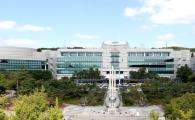
Mayor Jeong said, "We will create living conditions befitting the status of Hwaseong City with a population of 1 million and make it a city where residents are proud to live."
© The Asia Business Daily(www.asiae.co.kr). All rights reserved.







