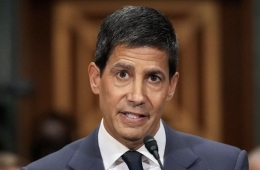
Eliminating the 'Pension Blind Spot'... Jiseongho Proposes Amendment to the Talbukmin Act
Proposal for Amendment to North Korean Defectors Act... First Insurance Premium Payment
Low Understanding of National Pension System and Unstable Employment
"If Elderly Poverty Expands, It Will Be a Huge Social Cost"
Legislation is being promoted to protect North Korean defectors suffering from 'old-age poverty' due to their inability to properly utilize the National Pension System. The government plans to partially support the initial enrollment costs for the National Pension to prevent the issue of old-age poverty among defectors from causing enormous social costs.
On the 27th, Ji Seong-ho, a member of the Environment and Labor Committee of the National Assembly from the People Power Party (proportional representation), announced that he would take the lead in proposing a partial amendment to the Act on the Protection and Settlement Support of North Korean Defectors (North Korean Defectors Act), which mandates enrolling defectors in the National Pension from the time they first enter South Korea. The amendment includes provisions for the government to pay the first National Pension premium on behalf of defectors before they move from Hanawon to their place of residence.
![Jiseongho, Member of the People Power Party [Photo by Yonhap News]](http://www.asiae.co.kr/news/img_view.htm?img=2023092708413091143_1695771690.jpg)
Under the current law, North Korean defectors are subject to a 'special provision for the National Pension.' If they are between 50 and 60 years old at the time of protection decision and have paid premiums for more than five years, they can receive old-age pension benefits upon reaching the pensionable age.
The problem lies in the timing and duration of enrollment. Generally, the longer the enrollment period in the National Pension, the higher the amount received in old age. However, most defectors have a low understanding of the pension system and face unstable employment, making it difficult to meet the required enrollment period. According to the 2022 Settlement Status Survey of North Korean Defectors by the South-North Hana Foundation, 21.2% were daily workers or simple laborers, the largest group. This is considered an indicator of the unstable employment status of defectors. In fact, the average tenure of wage workers among defectors is 35.3 months, less than half that of the general population.
Above all, since defectors move to their residences without income after completing settlement education at Hanawon, they are in a position where voluntarily paying pension premiums is difficult. Furthermore, ignorance of the pension system can lead to long-term exemption from payment, naturally placing them in a pension blind spot and worsening the problem of 'old-age poverty.'
According to the amendment, if the government pays the first month's premium, the enrollment timing for defectors can be advanced, which is expected to increase the amount calculated for old-age benefits. Even if defectors fail to pay premiums midway, they can still receive benefits by retroactively paying through the National Pension back-payment system.
Hot Picks Today
 "Buy on Black Monday"... Japan's Nomura Forecasts 590,000 for Samsung, 4 Million for SK hynix
- "Plunged During the War, Now Surging Again"... The Real Reason Behind the 6% One-Day Silver Market Rally [Weekend Money]
- "We're Now Earning 10 Million Won a Month"... Semiconductor Boom Drives Performance Bonuses at Major Electronic Component Firms
- [PE Now] F&B Companies Making a Second Attempt at Sale: The Formula for a Successful Deal
- Experts Are Already Watching Closely..."Target Stock Price 970,000 Won" Now Only the Uptrend Remains [Weekend Money]
Representative Ji Seong-ho said, "There is concern that enormous social costs will be paid in the future due to the old-age poverty problem of defectors. To minimize the national burden, the government should take a proactive approach by paying the first premium at the initial stage of entry and ensure that defectors' old age is protected within the framework of the National Pension system."
© The Asia Business Daily(www.asiae.co.kr). All rights reserved.