Huawei Founder: "Apple Is My Teacher... I Am Also a Fan"
Indirect Concerns Raised Over Sanctions and Exclusion
Reiterated Importance of Talent and R&D
Remarks Following 'Mate60 Pro' Launch Spark Daily Attention
Ren Zhengfei, founder of Chinese telecommunications equipment company Huawei, has sparked attention by likening Apple to a 'teacher' and revealing that he himself is a 'fan.' While this humble expression praises the biggest competitor in the smartphone market, it also indirectly reveals concerns about sanctions and market monopolies.
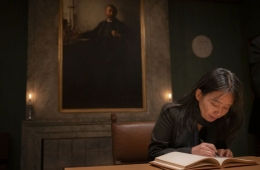
According to Shanghai Securities News on the 19th, the official website of the International Collegiate Programming Contest (ICPC) published a transcript of a conversation between Ren Zhengfei and award-winning students during the event. The event was held from the 21st to the 26th of last month, just before the launch of Huawei's latest smartphone model, the 'Mate 60 Pro.'

At the event, when asked by a student whether he was a fan of competitor Apple, Ren said, "We should not exclude (Apple)," adding, "We need to frequently examine why Apple's products are so good and also look at the gap between us and Apple." He further explained, "It is very gratifying to have a teacher who gives us the opportunity to learn and compare. From this perspective, it is not an exaggeration to say that I am an Apple fan."
On the surface, his remarks seem to highly appreciate and acknowledge Apple's technological prowess, but the use of the word 'exclude (排外)' is worth pondering. From the perspective of China and Huawei, they have long been excluded by the U.S. and the semiconductor industry.
He also reiterated the importance of research and development (R&D) and talent, which he has consistently emphasized. When asked about his views on investment in basic research, he responded, "As technology transitions become shorter and shorter, we ourselves have started to take an interest in basic theoretical research," adding, "We invest about 3 to 5 billion dollars annually in basic theoretical research." Regarding the global largest programming contest for university students, he emphasized, "We will provide long-term and stable support," and expressed willingness to "sponsor visits to China for exchanges between leaders and participants."
Additionally, he stated, "We will support competitions for researchers to nurture talent in basic science," and stressed, "We will create campuses worldwide to support the ICPC contest held at Huawei Campus (Shenzhen), and we will also establish R&D zones so that young talents can experience Huawei's working environment."
Following the confirmation that the Mate 60 Pro, released by Huawei on the 29th of last month, is equipped with 7nm (nanometer, one billionth of a meter) semiconductors produced by China’s largest semiconductor foundry, SMIC (Semiconductor Manufacturing International Corporation), the market is paying even closer attention to Ren’s remarks. Especially, Chinese media have been actively promoting Huawei by reporting on Ren Zhengfei’s past statements and actions day after day. Local media collectively reported, albeit belatedly, Ren’s statement during a meeting with the personnel department in July that "We are stockpiling talent, not dollars," igniting the will for technological advancement.
Hot Picks Today
!["Rather Than Endure a 1.5 Million KRW Stipend, I'd Rather Earn 500 Million in the U.S." Top Talent from SNU and KAIST Are Leaving [Scientists Are Disappearing] ①](https://cwcontent.asiae.co.kr/asiaresize/93/2026051914165468840_1779167814.png) "Rather Than Endure a 1.5 Million KRW Stipend, I'd Rather Earn 500 Million in the U.S." Top Talent from SNU and KAIST Are Leaving [Scientists Are Disappearing] ①
"Rather Than Endure a 1.5 Million KRW Stipend, I'd Rather Earn 500 Million in the U.S." Top Talent from SNU and KAIST Are Leaving [Scientists Are Disappearing] ①
- "No Cure Available, Spread Accelerates... Already 105 Dead, American Infected"
- "If That's the Case, Why Not Just Buy Stocks?" ETFs in Name Only, Now 'Semiconductor-Heavy' and a Playground for Short-Term Traders
- "Reporters Who First Revealed Jo Jinwoong's Juvenile Offense History Cleared of Juvenile Act Violation"
- Instead of a National Assembly Profile, Now a 'Carpenter'... Ryu Hojung Says "I Couldn't Do a Body Profile Shoot Twice"
Xu Zhijun, Huawei’s rotating chairman, said at the '2023 World Computing Conference' held last weekend in Changsha, Hunan Province, China, "There is still a technological gap between domestically produced and foreign-developed semiconductors, servers, and PCs, but if we do not use products developed independently, that gap will never be narrowed." Xu especially urged the expansion of domestic chip usage, stating, "If we use our independently developed products on a large scale, it will help drive the advancement of our technology and products."
© The Asia Business Daily(www.asiae.co.kr). All rights reserved.