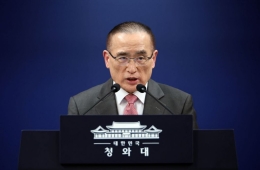
[Yeouido Interview] Lee Kwang-jae "People's Lives as Politicians' Report Cards... Introducing Politician Survival Index"
Interview with Lee Kwang-jae, Secretary General of the National Assembly
Integrating AI + Big Data into Legislation
Former Aide to President Roh Moo-hyun Fully Committed to 'Technology'
"A child's report card is not the mother's report card. However, we must create a world where the lives of the people become the report card of politicians."
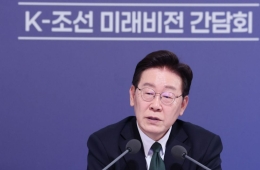
Lee Kwang-jae, Secretary General of the National Assembly, recently proposed in an interview with Asia Economy the so-called 'Politician Survival Index,' a legal indicator that evaluates from basic local government heads to members of the National Assembly and the president, and publishes the results once a year.
Since taking office as Secretary General of the National Assembly in July last year, he has served as a three-term senior member of the Democratic Party of Korea, as well as the Chief of the Blue House's National Situation Room and Governor of Gangwon Province. He has also been active in the think tank Yeosijae for national future strategy. Secretary General Lee explained, "Through these experiences, I concluded that leadership is what distinguishes troubled times from good governance," adding, "I came to think that a political reform is needed to create an index that can grade politicians' performance."
![[Yeouido Interview] Lee Kwang-jae "People's Lives as Politicians' Report Cards... Introducing Politician Survival Index"](http://www.asiae.co.kr/news/img_view.htm?img=2023072714195321928_1690435193.jpg)
The Politician Survival Index is the result of Secretary General Lee's long-standing contemplation. He introduced specific indicators centered on three major indices: the nation, the individual, and social integration. Secretary General Lee said, "The nation can be assessed by Gross Domestic Product (GDP), Gross Regional Domestic Product (GRDP), potential growth rate, and productivity; the quality of life of the people can be measured by jobs, income, housing, childcare, education, health and medical care, old-age pensions, and cultural life; and the social integration index can be understood through income disparity, social mobility, number of protests, and number of lawsuits," adding, "I hope that once a year, report cards are issued from the president down to basic local government heads."
He argues that through this, evaluations of politicians and understanding where national finances are needed can be achieved, leading to fiscal reform. He emphasized, "If this report card is introduced, politics will change from a UFC (mixed martial arts) fight to a record-based competition."
Over the past year, he has served as Secretary General of the National Assembly, working to integrate big data and artificial intelligence (AI) into legislative activities. To strengthen direct communication with the public, he plans to open a studio called 'Isiljikgo' soon to enhance communication between members of the National Assembly and the people. Secretary General Lee, who also focused on revitalizing parliamentary diplomacy, stressed, "Winning the technology war should be the essence of diplomacy," and added, "To achieve this, we need to establish a technology attach? position."
The following is a Q&A with Secretary General Lee.
- Since taking office as Secretary General, you have emphasized that 'a first-class National Assembly is necessary to create a first-class nation.' What are the conditions for being first-class?
= Currently, South Korea's economy is advanced, but happiness is lagging behind. A first-class nation is one where both the country and its people prosper together. To achieve this, I felt a fundamental political revolution is needed where the people evaluate, nurture, and eliminate politicians. Son Heung-min is evaluated by his results, but what are politicians evaluated by? If evaluation indicators are established by law and published once a year, politicians will probably work frantically to meet those grades.
- Is quantification possible?
= If the standards for a prosperous and well-off nation and people are evaluated across three major areas, the public will not need to criticize politicians but just look at the report card. It can be introduced by law and measured with the participation of media and professional organizations. Until now, politicians have been vaguely evaluated only by GDP, but as a result, the country has prospered while the people's lives have worsened. In a way, we have lost our way after industrialization and democratization. This can revolutionize the national budget system as well. The people will be able to know where the money should go.
![[Yeouido Interview] Lee Kwang-jae "People's Lives as Politicians' Report Cards... Introducing Politician Survival Index"](http://www.asiae.co.kr/news/img_view.htm?img=2023073110491324792_1690768153.jpg)
- What reforms have been promoted by the National Assembly Secretariat over the past year?
= Currently, power and politics are separated. Power is the ability to do something, and politics is the ability to decide what to do, but we are only pursuing power. Politics must be revived, and to realize this scientifically, we introduced AI and big data. It statistically shows what problems arise from certain choices to help politicians make decisions. Now, one side only talks about nuclear phase-out, and the other only about renewable energy. But for the best choice, scientific statistics are necessary.
Also, it should not be the loudest member of the National Assembly who gets attention, but the working member who earns the people's love. To this end, a studio called 'Now, directly tell the people in real-time' (Isiljikgo) will open soon. About 1,400 seminars are held annually in the National Assembly, and these will be broadcast on YouTube. For well-prepared reports from the National Assembly Library, Budget Office, and Legislative Research Office, the researchers who wrote them will appear on YouTube to explain. In short, this strengthens direct democracy.
- You have worked to strengthen parliamentary diplomacy. Will the Korea-US Parliamentary Alliance be realized?
= Chairman Kim Jin-pyo will visit the United States this year. Given the many discussions so far, I believe the Korea-US Parliamentary Alliance will be established. It is expected that a Korea-US Parliamentary Exchange Center will be created in Washington, D.C. Chairman Kim plans to install this in the Trade Center.
- You previously served as Chair of the Foreign Affairs and Unification Committee. Do you have any recent opinions on South Korea's diplomacy?
= I hope diplomacy becomes wise enough to use the whole world as a playground. The essence of the US-China hegemonic war is a technology war. If we have just ten technologies like semiconductors during this global order reshaping based on the technology war, they will become our security and economy. Our diplomacy's essence should be to make every effort to become the winner of this technology war. To this end, the 'technology attach?' system must be introduced. All major advanced countries have them, and in Silicon Valley, consuls should be sent as technical staff.
- The need for legislative impact assessment has increased in the National Assembly, but concerns about limiting legislative power have been raised.
= Over the past five years, the National Assembly has passed an average of 1,673 laws annually. The US passes 503, the UK 36, France 49, and Germany 124. This can be seen as active, but laws eventually become enforcement ordinances and local ordinances. Laws inevitably involve costs such as administrative expenses or regulations, so reducing these costs is necessary.

Lee Kwang-jae, Secretary General of the National Assembly, being interviewed by Asia Economy. Photo by Jo Yong-jun jun21@
View original image- There are many criticisms that politics has become polarized.
= Political polarization is due to monopolism of 100 to 0. For politics to coexist, constitutional and election law reforms are absolutely necessary. If the opposition party is seen as going to jail, an endless vicious cycle will repeat. Another reason for political polarization is that the people's lives have become difficult, creating a society of anger. To live well together, the quality of life of the people must be drastically improved. Also, changes to the national referendum law must be sought. When an issue arises, the division period should not be prolonged but decided quickly. The law should be changed so that the people's will can be asked during major elections. Additionally, public opinion surveys targeting 10 million people can be conducted.
- Chairman Kim set the constitutional day as the deadline for election system reform, but it was not met. How should this be resolved?
= The presidential office must make a decision on the election law. Only then can the discussion be initiated. The election law negotiation can only happen when it is uncertain which party will win next year. As the number of independent voters continues to increase, conditions for election system reform have matured, but the political circle has not made a decision. The hardest part is who will 'bell the cat.' Since there is much consensus in the political circle, it is best to watch and see.
- There are many questions about your future political activities.
= Like former President Roh Moo-hyun said, "Use me as a tool for historical progress," I am looking for a meaningful role in the advancement of history. I think a lot about what that will be. Since I am currently Secretary General of the National Assembly, I want to finish what I started well. Opening the future is important, but I believe that only after achieving results in the tasks at hand will there be a next step.
Why Lee Kwang-jae is All-in on 'Technology'
Lee Kwang-jae, Secretary General of the National Assembly, dreamed of becoming a patent attorney in his childhood. In this interview, he urged people to memorize the phrase "National power comes from economic power, economic power comes from technological power, and technological power comes from education" like a formula.
Secretary General Lee's special relationship with technology is greatly influenced by his entry into politics under former President Roh Moo-hyun. Having served as a secretary to former President Roh during his time as a member of the National Assembly, Secretary General Lee experienced a life-shaking moment when Roh told him at their first interview, "Use yourself as a tool for historical progress."
Secretary General Lee said, "Former President Roh was one of the first to use an electronic organizer during his time as a member of the National Assembly," introducing, "At that time, he bought very expensive computers for his secretaries and connected them via LAN to share documents." He added, "Former President Roh said Korea's biggest problem is the lack of manuals and records, so the same accidents repeat every year," and introduced that the National Archives was established and the Lee Ji-won system was created in the presidential office. Former President Roh also ordered his secretaries to read electronic newspapers and visit exhibitions.
These experiences were put into practice by Secretary General Lee after taking charge of the National Assembly's administration. Since the 5th of last month, the National Assembly has started operating autonomous robo-shuttles. These autonomous vehicles can be boarded by visitors to the National Assembly on weekdays from 10 a.m. to 4 p.m. using a smartphone app. The National Assembly Secretariat is considering expanding the service area to the 'National Assembly-Yeouido Station' section by adding routes next year.
Hot Picks Today
 Even with High Oil Price Relief Payment, Additional 300,000 Won Per Person to Be Provided... Applications Open from the 18th in This Region
- "Invested 95% in Hynix and Reached 10 Billion Won"... Japanese Investor's Proof Post Goes Viral
- "Why Is the Korean Stock Market Surging?"... Even Italy Is Astonished by the KOSPI Rally
- "You Don't Need to Go to the Gym": The Best Exercises for Lowering Hypertension
- "That Thing Wakes Up Every Night" ... Suspicious Object Covers Rural Village
Explaining the process of introducing autonomous vehicles, he said, "Making the National Assembly a regulatory special zone and thinking that politics is about solving current conflicts and opening the door to the future," adding, "To open the door to the future, regulations must be broken. Experiments must be conducted. Reducing errors through such experiments is the most important thing in human history. Technology is about conducting these experiments." He continued, "The evolution of this world ultimately comes from the evolution of thought," and added, "I believe technology is one of the powerful forces that change the world."
© The Asia Business Daily(www.asiae.co.kr). All rights reserved.