Separate Collection of TV License Fees... KEPCO Faces Inevitable Annual Profit Decrease of 40 Billion KRW
KEPCO "Collection costs exceed fee revenue under separated collection"
Negative factor in resolving 45 trillion won deficit
The Korea Communications Commission's decision to separate the collection of TV license fees from electricity bills has inevitably led to a decrease in revenue for Korea Electric Power Corporation (KEPCO), which had been entrusted with collecting the fees. KEPCO is concerned that the costs of separate collection will exceed the commission fees. Although KEPCO earned over 40 billion KRW annually through entrusted collection, it will now have to operate a loss-making business.
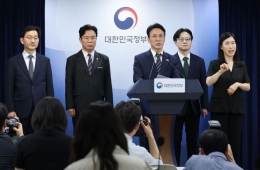
On the 5th, the Korea Communications Commission reviewed and approved an amendment to the Enforcement Decree of the Broadcasting Act to separately collect TV license fees and electricity charges. The amendment will go through the Deputy Prime Minister’s meeting, Cabinet meeting, and presidential approval, and is expected to be promulgated and enforced as early as August.
KBS has entrusted KEPCO with collecting TV license fees along with electricity bills since 1994. KEPCO receives a commission fee of 6.15% of the collected amount from KBS. According to KEPCO, it collected 673.8 billion KRW in TV license fees in 2020 and received 41.4 billion KRW as commission fees. The commission fees slightly increased to 41.9 billion KRW in 2021 and 42.3 billion KRW in 2022. However, with the amendment preventing KEPCO from combining electricity bills and license fees for billing and collection, additional costs for KEPCO are inevitable.
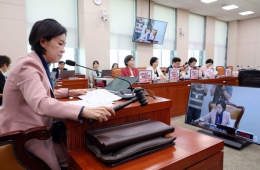
According to a statement submitted by Rep. Cho Seung-rae of the Democratic Party to the Korea Communications Commission regarding the legislative notice of the Enforcement Decree amendment, KEPCO expressed concerns that "the cost of collection will significantly increase due to separate collection of TV license fees, and total collection costs may exceed the entrusted commission fees or the amount collected." KEPCO warned that "if the amendment is implemented without considering these factors, it could inevitably cause losses to the company." KEPCO expects that collecting TV license fees separately from electricity bills will result in collection costs exceeding last year’s commission revenue of 42.3 billion KRW.
KEPCO recorded a deficit of 38.5 trillion KRW over two years from 2021 to last year. In the first quarter of this year, it accumulated a deficit of 6.2 trillion KRW, bringing the total accumulated deficit to 44.7 trillion KRW. Although international energy price declines are expected to bring profits in the third and fourth quarters of this year, it is insufficient to offset the previously incurred massive deficits. For KEPCO, which is in urgent need of funds, the "separate collection of TV license fees" is an additional adverse factor.
KEPCO has been entrusted by KBS under a "license fee collection consignment contract" to collect TV license fees. This contract is renewed every three years, with the current contract valid until December 2024. KEPCO must negotiate with KBS on the separate collection method and commission rates, but if commission rate negotiations fail, KEPCO will have to operate at a loss while continuing the entrusted collection until the end of next year. However, KEPCO plans to seek contract changes to ensure it does not incur losses from separate collection. A KEPCO official stated, "We need to discuss the method and cost burden of separate collection between KBS and KEPCO. KEPCO has no legal obligation to perform entrusted collection at a loss, and we expect to negotiate appropriate cost-sharing measures and contract terms with KBS."
KEPCO plans to first establish the optimal method for separate collection. Options under consideration include detaching only the TV license fee portion from the current electricity bill or issuing separate TV license fee bills alongside electricity bills.
Hot Picks Today
 "Now Our Salaries Are 10 Million Won a Month" Record High... Semiconductor Boom Drives Performance Bonuses at Major Electronic Component Firms
- Wallets Open Wide on Big News...300 Trillion Won Heads to the U.S., "Tax Breaks" Fail to Keep Funds at Home
- "Hope You Enjoy the 'Welfare' for Bereavement of Children"... Ridicule of Strike Non-Participants Intensifies Union Conflict at Samsung Electronics
- "Heading for 2 Million Won": The Company the Securities Industry Says Not to Doubt [Weekend Money]
- Experts Already Watching Closely..."Target Price Set at 970,000 Won" Only Upward Momentum Remains [Weekend Money]
A KEPCO official said, "We are reviewing various matters to reflect the amendment of the Enforcement Decree," adding, "Following the amendment, KEPCO will promptly establish all necessary conditions to comply with the law and ensure efficient implementation to prevent any inconvenience to the public."
![[Image source=Yonhap News]](http://www.asiae.co.kr/news/img_view.htm?img=2023070609413288444_1688604092.jpg)
© The Asia Business Daily(www.asiae.co.kr). All rights reserved.