"Surgeons May Disappear" Japan's Doctor Labor Reform Focuses on Abolishing Primary Care Physician System and Digitalization...
Japanese Government to Reform Doctors' Work Style Starting Next Year
Medical Sector Also Seeks Changes Like Team-Based Care and Digitalization
As news spreads that Seoul National University Hospital, one of the top hospitals in South Korea, is facing a worsening shortage of doctors in 'unpopular' essential medical departments such as surgery, Japan, which is experiencing the same issue, is pushing for reforms in doctors' working conditions. With the Japanese government announcing that various measures, including limits on doctors' working hours, will be implemented starting April next year, the Japanese medical community is attempting various changes, such as abolishing the primary care physician system in anticipation of these reforms.
On the 15th, public broadcaster NHK reported on the medical field's preparations for the 'Reform of Doctors' Working Styles' system to be implemented by the Ministry of Health, Labour and Welfare from April next year.
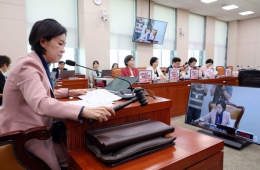
At Kitasato University Hospital in Kanagawa Prefecture, the primary care physician system in the surgery department was abolished and the treatment method was changed to a team-based system. Instead of one doctor being responsible for a specific patient, multiple medical staff form a team to take care of one patient. Every morning, all doctors in the team hold a meeting to share patient information so that any team member can take charge of the patient.
The hospital also changed the way surgeries are conducted. Instead of doctors being present from the start to the end of surgery, except for the lead surgeon, they can rotate shifts during lunch breaks and other times. According to NHK, on that day, eight doctors rotated shifts to perform surgery for 7 hours and 30 minutes.

Medical staff of Kitasato University Hospital during a team meeting. (Photo by NHK)
View original imageDespite concerns about abolishing the primary care physician system, patient satisfaction appears to be high. A man in his 70s who underwent cancer surgery at this hospital said, "With the primary care physician system, doctors had to see other patients, so it was difficult to get immediate responses tailored to me, but I think the team system is good in terms of responsiveness."
Naoki Hiki, chief professor at Kitasato University, stated, "Until now, it was thought that having a primary care physician in charge was good for patients and doctors alike, but isn't it better to find a doctor who is less exhausted from excessive working hours? We are approaching this transition with the idea that being examined by a team improves the quality of medical services and is better for patients."
In addition, 'task shifting,' where other medical professionals share the tasks handled by doctors, and digital transformation are also being implemented.

Medical staff at Kitasato University Hospital alternating during surgery. (Photo by NHK)
View original imageAt Iseikai Hospital in Osaka City, nurses trained in the relevant field share the task of adjusting ventilator settings such as oxygen concentration instead of anesthesiologists. The hospital also introduced beds that automatically change the patient's position, reducing the need for medical staff to periodically reposition patients to prevent bedsores.
Efforts are also accelerating to move away from Japan's culture of manually entering medical records by adopting computerized systems. Through this transition, Iseikai Hospital reduced overtime work per doctor by an average of 1 hour and 56 minutes as of last April.
Industry-academia research is also underway for medical care in remote island areas where it is difficult to provide medical services. At Kyorin University, research is being conducted on remote medical consultations and drone delivery of prescribed medicines instead of doctors making house calls.
The background for Japanese medical institutions adopting these measures is the government's reform measures to be implemented next year. The Japanese government will begin full-scale institutional improvements from April next year. Currently, there are no regulations on doctors' holidays or overtime work in Japan, so the government plans to apply upper limit regulations based on the Labor Standards Act. The upper limit regulation sets annual working hours at 960 hours, approximately 80 hours per month. Continuous working hours will also be restricted.
Like South Korea, Japan is facing a shortage of doctors. According to last year's OECD health statistics, the number of doctors per 1,000 people in Japan is 2.6, far below the OECD average of 3.7. South Korea has a similar level with 2.5 doctors per 1,000 people. Similar to South Korea, there is a tendency to avoid essential medical departments such as internal medicine, surgery, and emergency medicine due to long working hours.
The problem of overwork among Japanese medical staff is also serious. According to a 2019 survey on doctors' working conditions conducted by the Ministry of Health, Labour and Welfare, about 40% of hospital full-time doctors worked more than 960 hours annually, which is generally considered the 'overwork death line,' in relation to overtime and holiday work. Among them, 10% worked more than 1,860 hours annually. A health status survey conducted last year by the doctors' labor union found that 47.1% responded as 'healthy,' 42.5% as 'health status is unstable,' 5.4% as 'cannot say healthy,' and 5.0% as 'very unstable.'
Hot Picks Today
 "Now Our Salaries Are 10 Million Won a Month" Record High... Semiconductor Boom Drives Performance Bonuses at Major Electronic Component Firms
- Experts Already Watching Closely..."Target Price Set at 970,000 Won" Only Upward Momentum Remains [Weekend Money]
- "Heading for 2 Million Won": The Company the Securities Industry Says Not to Doubt [Weekend Money]
- "Only DS Was Considered": 4,000 Members Resign from Samsung's Largest Union in a Month... Majority Status 'at Risk'
- "Chanel Open Run? I Get a Free Pass"... The World of the Top 0.1% That Money Alone Can't Enter [Luxury World]
NHK reported, "In medical sites across the country, efforts are underway not only with team systems and task shifting but also to improve work efficiency and environments using IT technology. However, since circumstances vary depending on the work location and department, many issues still need to be resolved."
© The Asia Business Daily(www.asiae.co.kr). All rights reserved.