[Column] The 'May Spirit' Dimmed by One-Point Constitutional Amendment Debate
![[Column] The 'May Spirit' Dimmed by One-Point Constitutional Amendment Debate](http://www.asiae.co.kr/news/img_view.htm?img=2023040510155078920_1680657350.jpg)
On the 18th, when the 43rd 5·18 Democratization Movement Commemoration Ceremony was held, the 'Spirit of May' faded. This was due to the ruling and opposition parties arguing over the inclusion of the 5·18 spirit in the constitution.
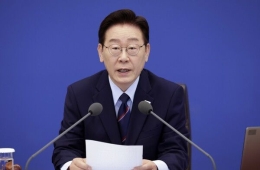
Lee Jae-myung, leader of the Democratic Party of Korea, advocated for a 'one-point constitutional amendment' to include the 5·18 spirit in the constitution, while the Presidential Office countered, calling it a "trick to use the May spirit of freedom and human rights to break through a scandal-ridden situation." In this process, harsh expressions such as "The conservative government is the heir of the massacre" (Lee Jae-myung) and "Forces that ignore human rights while turning a blind eye to the tragic human rights situation in North Korea and ally with totalitarian authoritarianism" (Presidential Office) were rampant.
The 5·18 commemoration ceremony has long been a persistent subject of political strife between conservatives and progressives. The Lee Myung-bak and Park Geun-hye administrations attended the 5·18 ceremony only in their first year in office to emphasize conservative clarity, which sparked controversy over neglect. The singing of the 'March for the Beloved' was also sparse. Progressive governments used this as a strategy to fuel regional conflicts.
After President Yoon Suk-yeol attended the 5·18 ceremonies for two consecutive years since his inauguration last year, expectations were raised for a different approach this time. Since his inaugural speech did not directly mention including the 5·18 spirit in the preamble of the constitution, there was considerable disappointment, so hopes were high that this year would be different. However, perhaps mindful of the Democratic Party’s earlier call for a 'one-point' constitutional amendment, this year’s speech also did not include content about enshrining the 5·18 spirit in the constitutional preamble.
The Democratic Party’s sincerity was also questioned. According to the Ministry of Patriots and Veterans Affairs, 88 Democratic Party lawmakers attended this year’s ceremony, fewer than the 95 lawmakers from the People Power Party. Was it neglected due to the perception that it was their stronghold? The current one-point constitutional amendment also raises doubts about its authenticity. Changing the fundamental spirit of the constitution can affect basic rights, making a one-point amendment difficult.
Hot Picks Today
 "Stocks Are Not Taxed, but Annual Crypto Gains Over 2.5 Million Won to Be Taxed Next Year... Investors Push Back"
- "Don't Throw Away Coffee Grounds" Transformed into 'High-Grade Fuel' in Just 90 Seconds [Reading Science]
- Signed Without Viewing for 1.6 Billion Won... Jamsil and Seongbuk Jeonse Prices Jump 200 Million Won in a Month [Real Estate AtoZ]
- [Breaking] Lee Targets Samsung Electronics Union: "Collective Bargaining Should Not Be Abused... There Is an Appropriate Limit"
- "Even With a 90 Million Won Salary and Bonuses, It Doesn’t Feel Like Much"... A Latecomer Rookie Who Beat 70 to 1 Odds [Scientists Are Disappearing] ③
"There can be no politics before the Spirit of May," said Kim Ki-hyun, leader of the People Power Party, at an on-site Supreme Council meeting held in Gwangju. Park Kwang-on, floor leader of the Democratic Party, said, "The Spirit of May, which stood against the guns and swords that trampled democracy, peace, and human dignity, is the light of our modern history." More than 40 years after the massacre by the Chun Doo-hwan military regime in Gwangju, progressives and conservatives interpret the Spirit of May to suit their own interests. If the Spirit of May is truly to be inherited, conservatives and progressives must abandon their self-interested attitudes. The more it becomes a political battleground, the harder attempts at constitutional amendment will surely become.
© The Asia Business Daily(www.asiae.co.kr). All rights reserved.