"Seven Flour Companies Fined Record 671 Billion Won for Six Years of Price-Fixing While Pocketing Government Subsidies"
‘Big 3’—Sajo, Daehan, and CJ—Held 55 Secret Meetings Over 6 Years
Colluded on Prices Even While Receiving Government Subsidies
KFTC Issues Compulsory Price Redetermination Order
Major milling conglomerates that have dominated the domestic flour market and secretly raised prices over the past six years—distorting the cost of staple foods for ordinary consumers—have been hit with the largest-ever fines for collusion by the Korea Fair Trade Commission. The commission has finalized not only these record-breaking fines but also strict corrective measures, compelling the companies to forcibly reduce the inflated prices resulting from collusion. In addition, a large number of corporate entities and executives have been referred to the prosecution. Notably, these companies were found to have continued their collusion even while receiving government subsidies—funded by taxpayers—to stabilize food prices, exposing severe moral hazard.

KakaoTalk conversation content of milling companies colluding on flour prices. Fair Trade Commission.
View original imageOn May 20, the Korea Fair Trade Commission announced that it had imposed a total fine of 671.045 billion won and corrective orders on seven milling companies—Daehan Flour Mills, CJ CheilJedang, Sajo DongA One, Samyang Corporation, Daesun Flour Mills, Samhwa Flour Mills, and Hantap Co., Ltd.—for colluding on the prices and quantities of B2B (business-to-business) flour supplied to ramen, confectionery, and noodle manufacturers from November 2019 to October last year, a period of about six years. In addition, 14 executives and employees from these seven companies who participated in the collusion have already been reported to the prosecution in accordance with a request for criminal complaint.
This action represents the highest fine ever imposed in the history of domestic cartel (unfair joint conduct) regulation. It surpasses the previous record of the 2010 liquefied petroleum gas (LPG) collusion case, which amounted to 668.9 billion won, breaking the record after 16 years. However, if non-cartel cases are included, the all-time highest remains the 2017 'Qualcomm patent abuse' case, where a fine of 1.0311 trillion won was imposed for abuse of market dominance. The flour milling industry, which had already been hit with mass fines for similar charges in 2006, was once again caught using the same methods to take money from ordinary consumers, prompting the Fair Trade Commission to state that it enforced a zero-tolerance policy regardless of rank or status.
Led by the 'Big 3', Cartel Covered All Products... 55 Secret Meetings Over 6 Years

Trend of operating profit margins of flour companies before and after collusion. Fair Trade Commission.
View original imageThe commission's investigation found that these seven companies controlled a staggering 87.7% share of the domestic B2B flour market. They colluded to raise the supply prices of flour sold to major buyers (such as Nongshim, Samyang Foods, and Ottogi) and to small distributors a total of 24 times. Following the formation of the cartel, both top-tier and smaller milling firms saw their operating profit margins improve significantly. The sales revenue related to this collusion totaled 5.69 trillion won. The commission determined the violations in this case to be extremely serious, applying a base penalty rate of 15%. However, companies that participated less actively were subject to a reduced rate of 10%.
The collusion began in 2019, when intensified market competition prompted executives from the top three companies—Sajo, Daehan, and CJ—and Samyang Corporation to gather at a restaurant and agree to "refrain from excessive competition." As lower-tier milling companies joined in, the scope of the collusion expanded to cover all flour products. To evade detection by the commission, they staggered the timing of price increases by several days for each company and held a total of 55 meetings between representatives and managers over the six-year period to coordinate their actions in detail.
Their schemes were meticulously orchestrated to take advantage of fluctuations in international wheat prices while deceiving consumers. When the price of imported wheat rose between 2020 and 2022, they immediately reflected these cost increases in their selling prices, causing the average price of all-purpose flour—the main product—to surge by up to 74% compared to the start of the collusion. Conversely, after wheat prices stabilized in 2023, they conspired to "reduce prices by the minimum margin only and refuse retroactive discounts on existing contracts" in order to nullify demands for price cuts from the ramen industry and other buyers.
Especially egregious, in the second half of 2022, these firms received a total of 47.1 billion won in government price stabilization subsidies on the condition that they freeze flour prices, yet maintained their collusive practices without interruption. Internal KakaoTalk messages reveal that they manipulated the timing of price increases to align with the government's support schedule in order to reliably secure subsidies—essentially siphoning off public funds while continuing to squeeze household budgets, thereby exposing profound moral hazard. The Ministry of Agriculture, Food and Rural Affairs, the responsible authority, plans to review whether to recover or confiscate these subsidies based on the results of the commission's investigation.
Fair Trade Commission Orders Compulsory 'Price Redetermination'... Mandatory Price Reduction Report Within Three Months

Trends in Flour Sales Prices and International Wheat Prices During the Collusion Period. Korea Fair Trade Commission.
View original imageThe Fair Trade Commission applied a zero-tolerance policy, taking into account that these seven firms were previously sanctioned in 2006 for flour price collusion but reoffended. The largest fines were imposed on Sajo DongA One (183 billion won), Daehan Flour Mills (179.2 billion won), and CJ CheilJedang (131.7 billion won)—the dominant conglomerates. This was followed by Samyang Corporation (94.7 billion won), Daesun Flour Mills (38.4 billion won), Hantap (24.2 billion won), and Samhwa Flour Mills (19.4 billion won). Some companies that actively self-reported during the investigation and review stages received up to a 20% reduction in fines, depending on their level of cooperation.
Significantly, the commission invoked an 'independent price redetermination order' to reverse market prices distorted by the collusion. Under this order, the milling companies must reset their prices to pre-collusion competitive levels and report them to the commission within three months of receiving the decision. They must also submit records of price changes twice a year for the next three years. This system had, in effect, become obsolete, having not been implemented for 20 years since the 2006 flour cartel case due to questions about its efficacy, but was recently revived for a paper industry price-fixing case. The commission's decision to reinstate this measure is interpreted as a strong commitment to forcibly lower market supply prices and immediately ease the financial burden on households.
Hot Picks Today
 "Stocks Are Not Taxed, but Annual Crypto Gains Over 2.5 Million Won to Be Taxed Next Year... Investors Push Back"
- "Don't Throw Away Coffee Grounds" Transformed into 'High-Grade Fuel' in Just 90 Seconds [Reading Science]
- [Breaking] Korean Oil Tanker Attempting Passage Through the Strait of Hormuz
- Signed Without Viewing for 1.6 Billion Won... Jamsil and Seongbuk Jeonse Prices Jump 200 Million Won in a Month [Real Estate AtoZ]
- "Even With a 90 Million Won Salary and Bonuses, It Doesn’t Feel Like Much"... A Latecomer Rookie Who Beat 70 to 1 Odds [Scientists Are Disappearing] ③

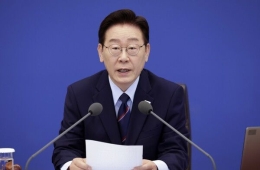
Nam Dongil, Vice Chairman of the Korea Fair Trade Commission, stated, "We will continue to intensify monitoring of collusion involving food prices that are closely tied to people's daily lives, such as flour, and will impose strict sanctions if violations are confirmed. Serious unfair practices by monopolistic firms threaten corporate sustainability, so the commission will do its utmost to fully embed the principle of fair growth in the market."
© The Asia Business Daily(www.asiae.co.kr). All rights reserved.