Anyone Can Now Freely Remit Up to $100,000 Overseas
Overseas Remittance No-Document Limit Raised from $50,000 to $100,000
Foreign Exchange Allowed for General Public at Securities Firms
Foreign Borrowing Reporting Threshold Increased from $30 Million to $50 Million
Ministry of Economy and Finance "Implementation Within First Half of This Year"
[Asia Economy Sejong=Reporters Joo Sang-don and Song Seung-seop] Within the first half of this year, anyone will be able to remit overseas up to an annual limit of 100,000 USD without any special reporting. Ordinary citizens will also be able to exchange currency through securities firms.
On the 10th, the government held an Economic Regulation Innovation Task Force (TF) meeting at the Government Seoul Office, chaired by Deputy Prime Minister and Minister of Economy and Finance Choo Kyung-ho, and announced the 'Foreign Exchange System Reform Direction' containing these details.
The current foreign exchange system operates under the 'restriction and control of capital outflow' from the foreign exchange shortage era of the 1960s. Because of this, it has been continuously pointed out that the foreign exchange system is inefficient and does not match the current economic level. A Ministry of Economy and Finance official explained, "This is to increase the autonomy of foreign exchange transactions and, except in cases unavoidable for external stability, to lay the foundation for active overseas investment and financial innovation," adding, "The ultimate goal is to transition to an advanced foreign exchange system, but the initial intent is to alleviate inconveniences in foreign exchange transactions for citizens and companies through amendments to enforcement decrees and regulations."
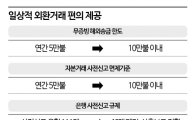
First, the overseas remittance limit without reporting will be raised. Until now, this limit has been maintained at 50,000 USD, set when the Foreign Exchange Transactions Act was enacted in 1999. If the annual remittance amount exceeds 50,000 USD, prior reporting of transaction reasons and payment methods is required, and supporting documents must be submitted to the bank during the actual transaction. Despite the economic scale growing and foreign exchange transactions increasing over the past 20 years, the remittance limit has not been raised, causing excessive transaction costs. Accordingly, the government has doubled the exemption threshold for submitting supporting documents during overseas remittance from an annual cumulative 50,000 USD to within 100,000 USD. The Ministry of Economy and Finance expects that more than 50,000 people who remit between 50,000 and 100,000 USD annually overseas will benefit.
Prior bank reporting related to capital transactions will also be drastically reduced from the current 111 cases to 65. Accordingly, in the future, profit-seeking corporations, local governments, and public institutions will not need to report in advance when borrowing foreign currency funds from non-residents within 30 million USD, or when banks lend won-denominated funds of 30 billion KRW or less domestically to non-residents without guarantees or collateral.
The reporting criteria for large-scale foreign currency borrowing will also be relaxed. Until now, foreign currency borrowing within 30 million USD annually could be freely conducted through bank reporting, but amounts exceeding this had to be reported to the Ministry of Economy and Finance and the Bank of Korea. However, going forward, to improve convenience in foreign currency procurement, the threshold requiring reporting to authorities will be raised to amounts exceeding 50 million USD.
The separate regulation that prevented deposited foreign currency funds from being held or operated domestically in local finance will be abolished. When funds are procured through local finance, they will be regarded as general monetary loans, expanding autonomy in operating foreign currency funds such as domestic deposits of borrowed funds.
Reporting for overseas direct investment will be simplified to once a year. In the future, transactions that do not cause cross-border capital movement effects, such as establishing subsidiaries or affiliates of local corporations and changes in shareholding ratios, will not require frequent reporting but can be reported once annually in an integrated regular report.
The current Foreign Exchange Transactions Act stipulates that violations of procedural regulations such as prior reporting obligations are punishable by imprisonment up to one year or fines up to 100 million KRW if exceeding certain amounts, which has been criticized as excessive. Accordingly, the threshold for violations of capital transaction reporting obligations that can be replaced by warnings will be expanded from 20,000 USD per case to 50,000 USD. The threshold for applying criminal penalties for procedural violations will be raised from exceeding 1 billion KRW to exceeding 2 billion KRW for capital transactions, and from exceeding 2.5 billion KRW to exceeding 5 billion KRW for irregular payments, etc.
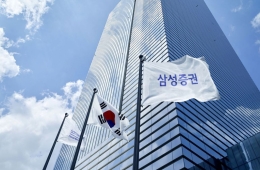
Ordinary citizens will also be able to exchange currency at securities firms. Until now, only four securities firms with over 4 trillion KRW in equity capital and short-term finance business licenses could provide general currency exchange services to corporations. However, in the future, nine securities firms including Mirae Asset, Meritz, Samsung, Shinhan Investment, Kiwoom, Hana, Korea Investment, NH Investment, and KB Securities, all comprehensive financial investment business operators, will be able to offer currency exchange services. The government plans to eventually abolish business sector barriers.
Foreign investors will be able to exchange currency at banks other than their managing banks. Until now, foreign investors could only exchange currency and invest in domestic assets through managing banks where they opened investment-only accounts, but going forward, they will be allowed to transact with banks offering lower fees.
To enhance procedural legitimacy in legal interpretations through collecting diverse opinions from industry and academia, a Foreign Exchange System Development Deliberation Committee will also be established. This committee will discuss issues related to the interpretation of laws, ordinances, and regulations, and regularly seek new system improvement plans considering changes in the economic and financial market environment.
Related Articles
 Significant Easing of Foreign Exchange Regulations... Concerns Over 'Split Remittances and Offshore Tax Evasion'
A Ministry of Economy and Finance official said, "Phase 1 tasks will be prioritized through amendments to the enforcement decree of the Foreign Exchange Transactions Act and the Foreign Exchange Transaction Regulations (Ministry of Economy and Finance notices) within the first half of this year," adding, "Phase 2 tasks will be announced by the end of this year after reviewing the economic situation."

© The Asia Business Daily(www.asiae.co.kr). All rights reserved.