[Inside Chodong] 18 Billion KRW Spent on Unsold Properties Shopping... Public Opinion Chilled Amid 'Legitimacy' Controversy
[Asia Economy Reporter Cha Wanyong] To establish a justification, it is necessary to gain the support of the majority. And to garner majority support, legitimacy must be secured. However, legitimacy is a challenging issue that goes beyond regulatory categories and encompasses social perception.
Especially in social issues involving conflicting interests, stricter standards are applied. For this reason, sociology distinguishes legitimacy into the areas of ‘procedural legitimacy’ and ‘substantive legitimacy’ from an academic perspective. Procedural legitimacy means adhering to established laws and regulations, while substantive legitimacy refers to maintaining equity and fairness.
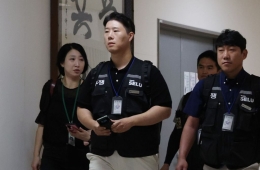
![[Inside Chodong] 18 Billion KRW Spent on Unsold Properties Shopping... Public Opinion Chilled Amid 'Legitimacy' Controversy](http://www.asiae.co.kr/news/img_view.htm?img=2023011608170784350_1673824627.jpg)
Recently, Korea Land and Housing Corporation (LH) has been embroiled in controversy over substantive legitimacy. This occurred when LH purchased 36 units of the ‘Cantavil Suyu Palace’ apartments (exclusive area 19~24㎡) in Gangbuk-gu, Seoul, and 28 officetel units of ‘Antilia Jayang’ in Gwangjin-gu, Seoul, for about 18 billion KRW, after these properties experienced unsold inventory due to high sale prices. These apartments and officetels were sold at prices more than 30% higher than the surrounding market prices, intensifying public criticism.
There are even complaints that the government compensated for a specific developer’s market prediction and pricing failure with taxpayers’ money. The market voices strong dissatisfaction, arguing that if the properties had been sold in 2021, the developer would have made enormous profits, and the losses from the housing price decline were passed on to the buyers.
The appropriateness of the purchase prices also raises doubts. LH stated that for Cantavil Suyu Palace, the purchase price was between 210 million and 260 million KRW, which is a 15% discount from the appraised value. They explained that the purchase was made at a price lower than the surrounding market prices due to this discount. However, since a 20㎡ (Type C) unit was sold for 208 million KRW in August last year, there are suspicions that the purchase price was higher than the actual transaction price.
In the case of Antilia Jayang, all units have an exclusive area of 25㎡, and the purchase price per unit is reported to be between 342 million and 357 million KRW. Since there have been no previous sales, it is difficult to compare with actual transaction prices.
As LH purchases a large number of apartments and officetels that do not align with public sentiment, the government’s ‘Plan to Induce a Soft Landing of the Housing Market through the Purchase of Unsold Houses’ announced earlier this year is also becoming embroiled in controversy over substantive legitimacy. Criticism is emerging that the government is giving excessive benefits to construction companies using taxpayers’ money.
In response, LH is busy distancing itself by stating that the contracts were legitimate and had been underway prior to the government’s announcement. It appears to be watching the government’s stance. LH claims to have adhered to procedural legitimacy. In fact, according to LH’s ‘2022 Second Half Seoul Region Existing Housing Purchase Announcement,’ there is no problem with the target houses, target areas, or purchase prices involved in this unsold housing purchase.
However, what the majority of the public wants is not to buy apartments that are shunned in the market due to high sale prices. Fewer than 100 people will benefit from these apartments and officetels purchased for 18 billion KRW. Even now, many people are shedding tears after losing their homes due to jeonse fraud. Policies that can provide practical help to these people and benefit a larger number of people are needed.
Hot Picks Today
 "Samsung and Hynix Were Once for the Underachievers"... Hyundai Motor Employee's Lament
- "Was This Delicious Treat Enjoyed Only by Koreans?"... The K-Dessert Captivating Japan
- Despite Captivating the Nation for Over a Month... "Timmy" the Whale Ultimately Found Dead
- "Record Heat Expected"...Warning of the Strongest 'Super El Nino' Since 1877
- "That? It's Already Stashed" Nightlife Scene Crosses the Line [ChwiYak Nation] ③
© The Asia Business Daily(www.asiae.co.kr). All rights reserved.