Vice Minister Gi Jae: "Launching Special BoGeumJaRi Loan... Will Reduce Housing Cost Burden for Low-Income People"
Vice Minister Bang Gi-seon Chairs 12th Emergency Economic Vice Ministers' Meeting
Integration of Anshim Conversion Loans, Qualified Loans, and Bogeumjari Loans
Plans to Reduce Burden by Expanding Housing Price and Income Requirements

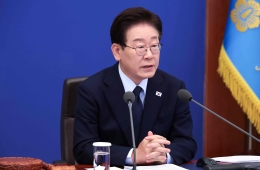
Bang Gi-seon, Vice Minister of Strategy and Finance, is presiding over the 12th Emergency Economic Vice Ministers' Meeting at the Export-Import Bank of Korea in Yeongdeungpo-gu, Seoul, on the 18th, delivering opening remarks. (Photo by Ministry of Strategy and Finance)
View original imageThe government has decided to launch a special BoGeumJaRi loan with relaxed housing and income requirements compared to existing policy mortgage loan products to support low-income households burdened by rising interest rates.
Bang Gi-seon, First Vice Minister of the Ministry of Economy and Finance, announced this plan on the 18th during the 12th Emergency Economic Vice Ministers' Meeting held at the Export-Import Bank in Yeongdeungpo-gu, Seoul.
The meeting discussed the progress and future plans of the Safe Conversion Loan, the status and response strategies for SME funding, and measures to stabilize foreign exchange supply and demand.
Vice Minister Bang stated, "We will continue to reduce the housing finance cost burden for low-income and genuine demand households next year," adding, "We will temporarily launch a special BoGeumJaRi loan by integrating the currently operating Safe Conversion Loan, Qualified Loan, and BoGeumJaRi Loan, and plan to expand housing price and income requirements compared to existing products."
The government intends to finalize and announce detailed operational plans as soon as possible. According to the '3rd Quarter Household Trend Survey' released the previous day, while the total national income increased by 3%, real income decreased by 2.8% due to inflation and other factors, increasing the burden on low-income households. In particular, the sharp interest rate hikes by the Bank of Korea have further expanded interest burdens.
To reduce interest burdens on low-income households, the government is continuing policy support by raising the eligible housing price for the Safe Conversion Loan from 400 million KRW to 600 million KRW, allowing variable-rate mortgage loans to be converted to fixed-rate loans, and adjusting income criteria and loan limits upward.
Vice Minister Bang emphasized, "Following the requirement adjustments, the average daily application amount during the first five business days increased by about 1.5 times, showing positive response, and we will actively promote this until the end of the year to help stabilize livelihoods amid high interest rates."
Support for SMEs and small business owners, whose loans increased during the COVID-19 crisis, will also continue. Since last week, the government has formed the '3-High (High Inflation, High Interest Rates, High Exchange Rates) Prolonged Crisis Response Task Force (TF)' centered on the Ministry of SMEs and Startups to closely examine overall business and funding conditions, relationships with partner companies, labor issues, and other risk factors.
Vice Minister Bang explained, "Based on future TF discussions, we will identify response tasks such as rapid liquidity supply to companies facing difficulties due to external factors, export channel support, expansion of trade finance to strengthen export competitiveness, and smartification of SMEs based on big data."
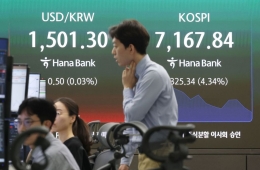
Additionally, the government announced at the meeting plans to request relevant institutions through the responsible ministries to expand foreign exchange hedging ratios on existing overseas investment assets of major public institutional investors such as pension funds and to adjust future overseas investment plans to stabilize foreign exchange supply and demand.
Hot Picks Today
 "Samsung and Hynix Were Once for the Underachievers"... Hyundai Motor Employee's Lament
- After Topping 8,000 Instead of Hitting 10,000... KOSPI Plunges—When Will It Rebound?
- "They Said It's Impossible to Get—Already Selling for Triple the Price: Crowds Worldwide Line Up for $600 Luxury Watch"
- SK hynix Tops “Best Large Companies to Work For” Ranking Based on Employee Review Data
- "That? It's Already Stashed" Nightlife Scene Crosses the Line [ChwiYak Nation] ③
Regarding energy saving in winter, Vice Minister Bang said, "All government offices and public institutions are limiting indoor average temperatures to 17 degrees Celsius, and individuals are making efforts for personal heating by wearing turtlenecks or sweaters," adding, "Today, the Ministry of Industry will convene with 17 metropolitan local governments and energy-related organizations to discuss winter energy saving and efficiency measures."
© The Asia Business Daily(www.asiae.co.kr). All rights reserved.