After Topping 8,000 Instead of Hitting 10,000... KOSPI Plunges—When Will It Rebound?
KOSPI Plunges for Two Consecutive Days After Hitting 8000
Renewed US-Iran Tensions and Surging Market Interest Rates Weigh on Stocks
Short-term Correction Likely, but Strong Fundamentals Raise Hopes for Rebound

Amid renewed concerns over a potential conflict between the United States and Iran and a sharp surge in interest rates, the stock market has experienced a steep decline for the second consecutive day. The sell-off is also being fueled by investors taking profits after the recent rally. Experts are forecasting a period of adjustment for the Korean stock market in the near term. However, they also note that the improving earnings of major companies are expected to continue, and believe that a market rebound remains likely.
KOSPI Plunges for Second Day After Hitting 8,000
On May 18, the KOSPI opened at 7,443.29, down 0.67% from the previous trading day, and the decline deepened intraday, with the index plummeting to as low as 7,142.71. The KOSPI futures index dropped more than 5%, triggering a sell-sidecar (a temporary halt on program sell orders) at around 9:19 a.m. For the second consecutive trading session, the KOSPI sell-sidecar was activated. After reaching an all-time intraday high of 8,000 points on May 15, the KOSPI has been in a downward trend.
However, following the activation of the sell-sidecar, losses were pared, and as of 10:07 a.m., the KOSPI was trading at 7,389.48, down 1.39%. The KOSDAQ started the day at 1,122.57, down 0.64% from the previous session, and fell as much as 3.41% to 1,091.32.
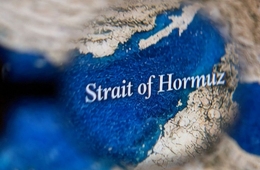
The renewed fears of a conflict between the United States and Iran have weighed heavily on global stock markets. After completing his visit to China, U.S. President Donald Trump pressured Iran to quickly propose a viable ceasefire agreement. On this day, President Trump also posted on social media, stating, "Iran does not have much time left. It would be wise to move quickly, or there will be nothing left for them."
Due to these concerns, bond yields have surged. Last Friday, the yield on 10-year U.S. Treasury notes broke through the psychologically important 4.5% level, rising as high as 4.60% during the session, while the yield on 30-year U.S. Treasuries (5.12%) surpassed the 5% mark.
Adjustment Likely in the Near Term...Solid Fundamentals Support Rebound Expectations
Experts say that rising interest rates are placing significant pressure on the stock market. Lee Euntaek, a researcher at KB Securities, commented, "Over the past 120 years, all three major stock market bubbles were triggered by rising interest rates. Higher rates can impact the real economy and even undermine investments in artificial intelligence (AI), so all attention is now focused on interest rates."
However, fundamental drivers such as improved corporate earnings and expanding AI investments, which have lifted the Korean stock market, remain intact, leading to widespread expectations that the KOSPI could rebound in the future.
Lee Kyungmin, a researcher at Daishin Securities, stated, "The shock from rising bond yields is unavoidable in the short term, but as corporate earnings and economic momentum remain solid, it is important to view volatility as a buying opportunity."
Lee added, "Even amid heightened geopolitical risks, the economic growth outlook for the KOSPI has been revised upward. The current 12-month forward price-to-earnings ratio (PER) is only 7.56 times, near the COVID-19 trough, so simply normalizing valuations could allow the index to challenge new record highs."
Han Jiyeong, a researcher at Kiwoom Securities, said, "Since May, major global stock markets have enjoyed record rallies led by semiconductor and AI stocks, keeping sensitivity to macro and geopolitical uncertainties relatively low. However, the fact that the U.S. 10-year yield broke the psychologically important 4.5% threshold last Friday has dramatically shifted market sentiment."
Hot Picks Today
 "Stocks Are Not Taxed, but Annual Crypto Gains Over 2.5 Million Won to Be Taxed Next Year... Investors Push Back"
- "Don't Throw Away Coffee Grounds" Transformed into 'High-Grade Fuel' in Just 90 Seconds [Reading Science]
- Despite Warnings of "Do Not Enter, You May Not Make It Out Alive"... Foreign Tourist Stranded After Unauthorized Climb on Jeju Sanbangsan
- Signed Without Viewing for 1.6 Billion Won... Jamsil and Seongbuk Jeonse Prices Jump 200 Million Won in a Month [Real Estate AtoZ]
- "Even With a 90 Million Won Salary and Bonuses, It Doesn’t Feel Like Much"... A Latecomer Rookie Who Beat 70 to 1 Odds [Scientists Are Disappearing] ③
Han added, "It is true that the drivers of the market rise, such as improved earnings momentum and the potential for increased AI investment, have not been undermined. If Nvidia’s first-quarter results, scheduled for release on May 21 (Korea Standard Time), meet expectations, it could help revive market sentiment."
© The Asia Business Daily(www.asiae.co.kr). All rights reserved.