"Trauma from Disaster More Severe Than Before"…Medical Community Urges Prompt Support
Multiple Casualties in Central Seoul
Unfiltered Information Spread on SNS... 'Trauma' Expands
Calls for Expanded Government Support Including Integrated Psychological Assistance
Medical Community Also Initiates 'Rapid Treatment Intervention'
"Seek Treatment at Nearby Local Psychiatry Clinics"
Renaming 'Itaewon Disaster' to '10.29 Disaster' Also Discussed

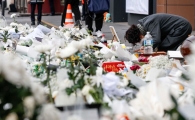
On the 1st, during the national mourning period following the large-scale crush disaster in Itaewon, citizens are receiving counseling at the Itaewon Accident Psychological Support Counseling Center set up in Seoul Plaza. Photo by Kang Jin-hyung aymsdream@
View original image[Asia Economy Reporter Lee Gwan-ju] The medical community is calling for the government to take faster action and implement measures to help the public recover from the psychological impact of the Itaewon disaster. This is due to the large number of direct victims and the significantly heightened trauma responses among the public compared to previous incidents.
According to the medical community on the 7th, five organizations participating in the government’s Integrated Psychological Support Team for the Itaewon disaster?including the Korean Neuropsychiatric Association, Korean Psychiatric Nurses Association, Korean Psychological Association, Korean Mental Health Social Welfare Association, and Korean Trauma Stress Society?recently issued a joint statement saying, “Mental health professionals working on the ground judge that the public’s trauma responses are more severe than before.” They also pointed out that the demand for mental health services is high, resulting in many shortages even within the Integrated Psychological Support Team.
These organizations urged the government to swiftly monitor indiscriminate video dissemination and online posts that damage the honor of the deceased, as well as to promote public-private cooperation to provide the best medical services. They also called on the government to prioritize checking the mental health and psychological state of the public present at the disaster site, ordinary citizens involved in rescue efforts, firefighters, police, medical personnel, and bereaved families to ensure they are not experiencing difficulties.
The Korean Trauma Stress Society also issued a separate statement requesting, “We hope the Integrated Psychological Support Team’s scale will be expanded and its services reorganized.” The society demanded that the team provide continuous support from the early stages to the primary and secondary victims, including the injured and bereaved families, and especially implement active measures for witnesses, disaster survivors, and rescue personnel. The society noted, “There has been a surge in calls to mental health counseling lines, causing some citizens to miss timely access to necessary services,” and suggested, “When public services cannot meet demand, mental health professionals in the private sector should be actively utilized.”
In this disaster, the trauma response is considered greater than in previous incidents because the disaster scene was transmitted unfiltered to the public through social networking services (SNS), and many casualties occurred in the heart of Seoul’s major downtown area. The fact that most victims were young people in their 20s and 30s, including many foreigners, and that there were many survivors and witnesses, also contributed to the heightened trauma.
In response to this situation, the medical community is also taking action. The Korean Association of Private Mental Health Physicians, composed of private psychiatric specialists, recently requested its members to engage in “prompt therapeutic intervention” for victims related to the Itaewon disaster. They asked to minimize the exposure of victims’ identities in waiting rooms and to prioritize appointments for these patients when operating on a reservation basis.
Kim Dong-wook, president of the Korean Association of Private Mental Health Physicians, explained the background, saying, “Although the government and local governments are making various efforts, access is limited and not easy,” and “We judged that it would be efficient for patients to receive treatment immediately at nearby psychiatric clinics.” He added, “There are about 700 psychiatric hospitals and clinics in the Seoul and Gyeonggi areas, and with about 1,000 members, many sympathize with this, so if requested at a nearby location, immediate support can be provided.”
Meanwhile, within the medical community, there is a proposal to change the current name of the Itaewon disaster to something like the “10.29 Disaster” to aid trauma recovery. This is because expressions containing specific place names can increase anxiety and fear, further triggering trauma and potentially causing stigmatization. It is known that the Korean Neuropsychiatric Association and Korean Trauma Stress Society are currently gathering internal opinions on this matter.
Related Articles
 55 Missing Person Reports at Dasan Call Center Immediately After Disaster... 8-Hour Guidance Instruction Confusion
- 'Fire Department → Seoul City Notification' Disaster Alert Sent After 1 Hour 30 Minutes... Seoul City's Response Also Under Scrutiny
- Realmeter "Yoon Approval Rating Drops to Low 30%"... Seoul Approval Rating Falls by 7.3% Highlighted
- Security Office calls presidential residence security criticism on disaster anniversary "irresponsible agitation"

© The Asia Business Daily(www.asiae.co.kr). All rights reserved.







