Nobel Economics Prize Winner 'Ben Bernanke'... "Proposes New Role for Central Banks to Overcome Financial Crisis"
Lee Chang-yong, BOK Governor: "Well Aware of Great Depression Monetary Policy Issues, Fortune for Global Economy"
Former Governor Park Seung: "Firmly Pushed Quantitative Easing Policy with Conviction"
![[Image source=Yonhap News]](http://www.asiae.co.kr/news/img_view.htm?img=2022101110315963861_1665451919.jpg)
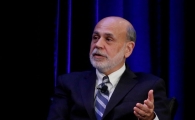
[Asia Economy Reporter Seo So-jeong] The news of former Federal Reserve (Fed) Chairman Ben Bernanke winning the Nobel Prize in Economics for his role in overcoming the 2008 global financial crisis has elicited responses from the Korean economics community emphasizing the significance of central banks' roles in an era where global inflation has made their function more crucial than ever. Bernanke succeeded Alan Greenspan (1987?2006) as Fed Chairman in 2006 and served until 2014. He is recognized for tackling the 2008 financial crisis with proactive monetary policies. During the global crisis, he boldly supplied liquidity to the market through zero interest rates and quantitative easing policies, setting a new precedent for the role of central banks.
Lee Chang-yong, Governor of the Bank of Korea and a close acquaintance of Bernanke, praised him in a phone interview with Asia Economy on the 11th, saying, "When the global financial crisis hit, it was a stroke of luck for the world economy that Professor Bernanke, who was the scholar most knowledgeable about the monetary policy failures during the Great Depression of the 1920s and 1930s, led the Fed." Bernanke earned his Ph.D. at the Massachusetts Institute of Technology (MIT) with a dissertation on the Great Depression and later taught economics at Stanford University and Princeton University. In a 1983 paper published while he was a professor at Stanford, he analyzed the U.S. Great Depression of the 1930s and identified the banking crisis as the decisive factor prolonging the economic downturn, which later became a vital insight during his tenure at the Fed. Bernanke is also famous for the term "helicopter money," an extreme economic stimulus policy describing direct funding from the central bank to the government as if money were being dropped from a helicopter.
Former Bank of Korea Governor Park Seung also evaluated Bernanke's role in a phone interview with Asia Economy, stating, "Bernanke played a significant role in global financial history by confidently pushing forward quantitative easing policies to overcome the financial crisis." Park added, "Quantitative easing policies have been widely applied and promoted by central banks worldwide, and now the direction has shifted toward tapering quantitative easing and raising interest rates. Bernanke's pioneering experiments on when quantitative easing is most necessary and when it should be withdrawn are highly meaningful."
Related Articles
 Flood of Warnings... Bernanke "Must Watch War, Strong Dollar, etc." (Comprehensive)
Professor Kim Jin-il of Korea University’s Department of Economics, who worked with Bernanke at the Fed, described him as "a very humble person who valued communication, often dining with staff without formality." Professor Kim recalled, "Before joining the Fed, Bernanke served as chair of Princeton University's economics department until 2002. To recruit excellent professors, he actively invited not only candidates but also their students for meals to hear their reputations firsthand." He added, "When working together on papers at the Fed, he focused on the work rather than formalities and communicated frequently."
© The Asia Business Daily(www.asiae.co.kr). All rights reserved.







