"Overworked but effectively cut"... 2030 Public Servants Explode with Dissatisfaction Over Wage Increase Proposal
High Inflation but Only 1.7% Raise... Entry-Level Grade 9 Civil Servants' Starting Salary Below Minimum Wage
"Many Cases Exceeding 52 Hours a Week... Not Paid for Overtime"
Jeongongno Union "Will Push for Position Allowance Increase"
![[Image source=Yonhap News]](http://www.asiae.co.kr/news/img_view.htm?img=2022090109254217424_1661991942.jpg)
[Asia Economy Reporter Gong Byung-sun] Public servants are exploding with dissatisfaction over the government's wage increase plan. It is expected that organized responses will be made, centered on public servants in their 20s and 30s who are increasingly exhausted by a social atmosphere that only demands overwork and sacrifice.
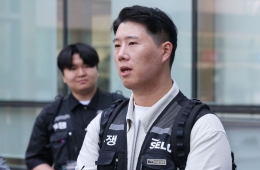
On the 31st of last month, the Korean Government Employees' Union (KGEU) and the Federation of Korean Government Employees' Unions (FKGEU) held a press conference condemning the Yoon Seok-yeol administration in front of the Presidential Office in Yongsan, Seoul. On that day, 2030 union members dressed in mourning clothes held memorial photos and placards such as 'Grade 9 Public Servant Salary Account Death' and urged the government to prepare measures for public servant salaries. Public servants across the country also rose up. From Gwangju Metropolitan City to Daegu, Busan, Ulsan, Jeju, Jeonbuk, and Chungnam, public servant unions simultaneously issued statements or held press conferences condemning the government's wage increase plan.
Inflation Rate Expected at 7-8%, Wage Increase Only 1.7%... Dissatisfaction Accumulated Since the COVID-19 Era
On the 30th of last month, the Ministry of Economy and Finance (MOEF) decided that the salaries of public servants below grade 5 will increase by 1.7% next year, the salaries of grade 4 senior officials will be frozen, and the salaries of ministers and vice ministers will be cut by 10%. This is interpreted as shifting the pain to public servants while implementing austerity measures to reduce the budget size. Since 85% of all public servants are below grade 5, about 980,000 public servants will receive a 1.7% wage increase next year.
Lower-ranking public servants expressed dissatisfaction, saying it is effectively a wage cut. In July, Statistics Korea forecasted that this year's inflation rate would reach 7-8%, but the wage increase rate is less than half of that. According to KGEU, as of last year, the starting salary of a grade 9 public servant was 1,512,800 KRW, which is even less than the minimum wage of 1,822,480 KRW, making it even harder to make a living.
This dissatisfaction has been accumulating since the COVID-19 era. During the Moon Jae-in administration, the average wage increase rate for public servants was only 1.9%. This is because the increase rate was 0.9% in 2021 and about 1.4% in 2022 as part of efforts to overcome the COVID-19 crisis. This is below the 7.2% minimum wage increase rate over the five years of the Moon administration.
'Work is light' 'Sacrifice' perception causes dissatisfaction... 113 overwork deaths in 5 years
![[Image source=Yonhap News]](http://www.asiae.co.kr/news/img_view.htm?img=2022090109294617449_1661992186.jpg)
Public servants in their 20s and 30s expressed more dissatisfaction with the perception that their workload is lighter than that of private companies. Between 2017 and 2021, 113 public servants died from overwork, indicating that their workload is excessive. Grade 9 public servant Jeong (29) said, "Many public servants work over 52 hours a week, but since we have to follow the law, overtime work cannot be recorded beyond that," adding, "We do not get paid for the work we do, and since activities like having a second job are restricted, we cannot earn money elsewhere."
There were also complaints from 2030 public servants who feel intimidated by the social atmosphere that demands sacrifice from public servants. Grade 7 public servant Kang (31) said, "This time, soldiers' salaries were raised to 1 million KRW, approaching the starting salary of grade 9 public servants," adding, "There will be no talk of economic improvement in the future, and I am worried that other benefits for public servants will be taken away." Another public servant Song (30) explained, "In this atmosphere, public servants cannot feel pride," and "Young people will avoid becoming public servants even more, which may lead to a decline in the quality of public services and policy development capabilities."
Hot Picks Today
!["Heading for 2 Million Won": The Company the Securities Industry Says Not to Doubt [Weekend Money]](https://cwcontent.asiae.co.kr/asiaresize/93/2025061015355092669_1749537351.jpg) "Heading for 2 Million Won": The Company the Securities Industry Says Not to Doubt [Weekend Money]
"Heading for 2 Million Won": The Company the Securities Industry Says Not to Doubt [Weekend Money]
- "Anyone Who Visited the Room Salon, Come Forward"… Gangnam Police Station Launches Full Staff Investigation After New Scandal
- "No Matter How Much Freedom of Expression..." Man Spotted with Rising Sun Flag Tattoo at Starfield
- "Drink Three Cups of Coffee and Stay Up All Night Before the Test"... Manual of Insurance Planner Who Collected 1 Billion Won in Payouts
- Did Samsung and SK hynix Rise Too Much?... Foreign Assets Grow Despite Selling [Weekend Money]
It is expected that the public servants' unions will continue their struggle, focusing on lower-ranking public servants concentrated in the 2030 generation. Park Jung-bae, vice chairman of KGEU, said, "Lower-ranking public servants are in a situation where it is difficult to continue their livelihoods as they are," adding, "KGEU Youth Committee members will show their protest to the government through performances such as submitting resignation letters." He also added, "We will ensure that the increase in the position allowance, agreed upon by the wage committee to practically raise the salaries of lower-ranking public servants, is implemented."
© The Asia Business Daily(www.asiae.co.kr). All rights reserved.