Short-term External Debt, Exchange Rate, and Foreign Exchange Indicators Worsen... Government Says "Still Stable, Proactive Risk Management"

Bang Gi-seon, Vice Minister of Strategy and Finance, is delivering opening remarks at the '6th Emergency Economic Vice Ministers' Meeting' held on the morning of the 19th at the Government Seoul Office in Jongno-gu, Seoul. (Photo by Ministry of Strategy and Finance)
View original imageThe government recently assessed that although the trade balance deficit continues, and external indicators such as the won-dollar exchange rate, foreign exchange reserves, and short-term external debt are deteriorating, the overall situation remains at a satisfactory level.
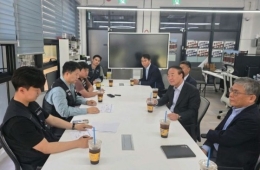
On the morning of the 19th, the government held an emergency economic vice ministerial meeting at the Government Seoul Office, chaired by Bang Gi-seon, the First Vice Minister of Strategy and Finance, to discuss the current state of South Korea's external soundness and future response directions.
The Ministry of Strategy and Finance explained that although the trade balance deficit has persisted for four consecutive months due to a sharp increase in energy imports and the current account surplus margin has narrowed, the situation is not worrisome.
The ministry stated, "Excluding energy factors, the trade balance has recorded a surplus until recently," and added, "Major countries with large energy import volumes, such as Japan and France, are also commonly experiencing trade balance deterioration."
It continued, "The current account maintained a generally robust surplus trend through the first half of the year, which is attributed to a surplus in income accounts such as dividends and interest from overseas production export growth and expanded overseas investment," and analyzed, "Although uncertainties exist in the second half, the annual current account surplus is expected to be achieved smoothly."
Regarding the won-dollar exchange rate, which rose to around 1,320 won due to the strong dollar, the government evaluated that the depreciation of the currency value is not as large compared to Japan and Europe, and emphasized that the monthly decreasing foreign exchange reserves are also declining at a smaller rate compared to major countries.
The government judged that the significant increase in South Korea's short-term external debt is still favorable compared to past averages and the level during the financial crisis.
As of the second quarter, the ratio of short-term external debt to foreign exchange reserves, which indicates South Korea's external payment capacity, rose to 41.9%, the highest in 10 years.
The Ministry of Strategy and Finance stated, "Although short-term external debt has increased mainly in the banking sector this year, considering the foreign currency liquidity situation of domestic banks, the ability to repay external debt is sufficient," and added, "Also, most short-term foreign currency borrowings by foreign bank branches are loans from overseas headquarters, so the repayment burden is low."
However, the ministry emphasized that since risks related to external soundness remain, such as the possibility of a global economic slowdown and continued dollar strength due to tightened U.S. monetary policy, they will closely monitor indicators and market conditions to proactively manage risk factors.
To this end, the government plans to prepare and announce a comprehensive export strategy within this month, including regulatory improvements for export companies, resolution of on-site difficulties, and specialized support for major industries, and explained that already established support measures such as expanding trade finance supply by 40 trillion won and easing logistics burdens for small and medium export businesses will be implemented without disruption.
Regarding the deterioration of external indicators such as foreign exchange and external debt, the government will strengthen cooperation with related agencies such as the Bank of Korea and the Financial Services Commission and plans to hold the Foreign Exchange Soundness Council and the Big Money Meeting promptly if necessary.
The Ministry of Strategy and Finance stated, "We will make every effort to maintain credibility regarding our external soundness and overall economic fundamentals through consultations with credit rating agencies and overseas investor briefings," and explained, "In particular, we will actively respond to major issues such as export slowdown, household debt, and fiscal soundness during the annual credit rating agency consultation process in the second half of the year."
Hot Picks Today
 Cerebras Soars 70% on IPO Debut: Is Nvidia's Reign Ending as a New AI Semiconductor Power Emerges?
- There Is a Distinct Age When Physical Abilities Decline Rapidly... From What Age Do Strength and Endurance Drop?
- "Multi-Million Won Bonuses, Life Is Sweet"—Even Employee Reactions... SK hynix Overtakes Samsung to Claim No. 1 Spot
- "It Costs 100,000 Won for Two Hours"...No Place for Kids to Play if Parents Can't Afford It
- Japanese Teacher Dismissed for Obscene Acts Involving Third-Grade Girl's Water Bottle
© The Asia Business Daily(www.asiae.co.kr). All rights reserved.