[Urgent Roundtable] Inflation Defense or Economic Revival... BOK at a Big Step Crossroad
Bank of Korea Expected to Take Big Step Rate Hike in Second Half
Capital Outflow if July Interest Rates Invert
Forecasted to Be 1% Point Lower Than US Rates Next Year
Excessive Rate Hikes May Cause Economic Recession
Possibility of Stagflation Also Raised
![[Urgent Roundtable] Inflation Defense or Economic Revival... BOK at a Big Step Crossroad](http://www.asiae.co.kr/news/img_view.htm?img=2022061614574816011_1655359068.jpg)
![[Urgent Roundtable] Inflation Defense or Economic Revival... BOK at a Big Step Crossroad](http://www.asiae.co.kr/news/img_view.htm?img=2022061609585215393_1655341132.jpg)
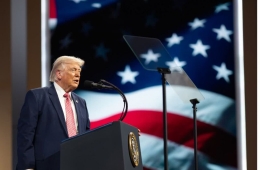
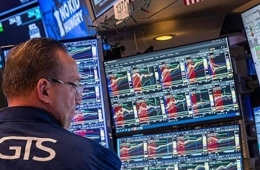
[Asia Economy reporters Seo So-jeong and Moon Je-won] As the U.S. central bank took a 'giant step' by raising the benchmark interest rate by 0.75 percentage points at once in response to high inflation shocks, the Bank of Korea is increasingly likely to take an unprecedented 'big step (0.5 percentage point hike)' next month. Initially, the market largely expected the Bank of Korea to continue raising rates by 0.25 percentage points in the remaining four Monetary Policy Committee meetings this year, but with the U.S. Federal Reserve (Fed) hinting at another giant step next month, there is analysis that the pace of rate hikes could accelerate beyond expectations.
On the other hand, some argue that with the Korean economy's growth slowing in the second half of the year and inflation driven by supply factors such as rising raw material prices due to the Russia-Ukraine war, there are limits to resolving inflation solely through interest rate hikes. In response, Asia Economy held an emergency roundtable to diagnose the recent inflation situation and gather expert opinions on the Bank of Korea's possibility of taking its first-ever big step.
◆Support grows for Bank of Korea's big step in July= Many experts generally evaluated the Fed's giant step as in line with market expectations and gave weight to the forecast that the Bank of Korea will take a big step in the second half of the year. Professor Ha Jun-kyung of Hanyang University’s Department of Economics said, "With the Fed taking a big step, the current upper bound of U.S. interest rates has reached 1.75%, the same as Korea’s, and the interest rate inversion is just around the corner next month. From the Bank of Korea’s standpoint, which must prioritize price stability, the possibility of a big step in July is high."
Professor Kim Sang-bong of Hansung University’s Department of Economics said, "Consumer prices in May rose 5.4% compared to the same month last year, marking the highest in 13 years and 9 months, and the 6% range seems likely in the future. However, considering that housing costs are not reflected in the statistics, the perceived inflation is much higher," emphasizing, "With inflation expectations spreading rapidly, raising interest rates is the only answer."
Following this rate hike by the Fed, the gap between Korea and the U.S. benchmark interest rates has significantly narrowed from 0.75?1.00 percentage points to 0.00?0.25 percentage points, and capital outflows could intensify as early as July due to interest rate inversion, which also supports the case for a big step. Research Fellow Cho Young-moo of LG Economic Research Institute said, "Interest rate inversion between Korea and the U.S. is a matter of time," forecasting, "Considering the rapid pace of U.S. rate hikes, U.S. rates could lead Korea’s by up to 1 percentage point in the first half of next year."
Cho added, "If the benchmark interest rate falls below that of the U.S., foreign investors will withdraw funds seeking higher returns, and the Korean won’s value could sharply decline. While the external soundness and fundamentals (economic resilience) may mitigate the shock compared to the past, concerns over capital outflows will inevitably push for rate hikes."

Bank of Korea Governor Lee Chang-yong is speaking at the emergency macroeconomic financial meeting held at the Bankers' Hall in Jung-gu, Seoul on the 16th. Photo by Moon Honam munonam@
View original image![[Urgent Roundtable] Inflation Defense or Economic Revival... BOK at a Big Step Crossroad](http://www.asiae.co.kr/news/img_view.htm?img=2022061611263915680_1655346398.jpg)
◆Urgent rate hikes may trigger stagflation= However, some experts raised concerns that recent global inflation is strongly driven by supply factors, so the effect of rate hikes alone in curbing inflation is limited and may instead cause an economic recession.
Professor Kim Young-ik of Sogang University Graduate School of Economics said, "Although the U.S. inflation situation is so severe that the Fed took a giant step, it is not appropriate for the Bank of Korea to follow with a big step," pointing out, "All economic indicators are worsening, and excessively raising rates could lead to economic contraction." He added, "Statistically, industrial production and consumption in Korea affect the economy with about a six-month lag, so monetary policy decisions should be based on future economic indicators rather than current ones," emphasizing, "Raising rates when indicators are declining is undesirable." He explained that with Korea’s potential growth rate falling below that of the U.S. and difficulty in finding upward growth factors, rapid rate hikes could cause side effects.
Uncertainty about the U.S. inflation situation and monetary policy is also a variable that could further expand market instability for the time being. Senior Research Fellow Baek In-seok of the Korea Capital Market Institute said, "Although the market seemed to regain short-term stability as the U.S. giant step materialized, this is just the beginning," forecasting, "Since the U.S. inflation peak has not yet been confirmed and the Fed does not signal that inflation will calm soon, the U.S. policy rate could rise close to 4% early next year."
Hot Picks Today
!["Stock Set to Double: This Company Smiles Every Time a Data Center Is Built [Click e-Stock]"](https://cwcontent.asiae.co.kr/asiaresize/93/2026050416112750184_1777878687.jpg) "Stock Set to Double: This Company Smiles Every...
"Stock Set to Double: This Company Smiles Every...
- "Is Yours Just Gathering Dust at Home? Millennials & Gen Z Rediscover Digicams O...
- "SK hynix GDRs Trade at a Premium...Global Demand Set to Surge"[Click e-Stock]
- "High-Net-Worth Investors Managing 10 Trillion Won: 'Gangnam Wealthy Also Feel F...
- “She Shouted, ‘The Rope Isn’t Tied!’... Chinese Woman Falls from 168m Cliff ...
Although the Fed projected a year-end rate of 3.4%, about twice the current level, there is a view that the forecast could rise if inflation does not subside. Baek added, "With the aging population intensifying, potential growth rates declining, and economic dynamism lower than the U.S., a rapid rise in benchmark interest rates could trigger stagflation."
© The Asia Business Daily(www.asiae.co.kr). All rights reserved.