[Yoon Administration Economy] Fuel Tax Cut 30% Until Year-End... Expansion of Monthly Rent Deduction and Extension of Vehicle Acquisition Tax Reduction
Announcement of the New Government's Economic Policy Direction
![[Yoon Administration Economy] Fuel Tax Cut 30% Until Year-End... Expansion of Monthly Rent Deduction and Extension of Vehicle Acquisition Tax Reduction](http://www.asiae.co.kr/news/img_view.htm?img=2022061608313115058_1655335891.jpg)
[Asia Economy Sejong=Reporter Kwon Haeyoung] The government will extend the 30% reduction in fuel tax and the reduction of the liquefied natural gas (LNG) allocation tariff measures until the end of the year to stabilize soaring prices. It plans to expand tax benefits on monthly rent payments and principal and interest repayments on housing lease funds for the homeless to reduce the housing cost burden on low-income households, and also extend individual consumption tax reduction benefits for eco-friendly vehicle purchases.
On the 16th, the government announced the "New Government Economic Policy Direction" containing these measures.
30% Fuel Tax Cut Extended Until Year-End... Increased Tax Credit Rate on Monthly Rent for Homeless & Eco-Friendly Vehicle Individual Consumption Tax Reduction Extended Until 2024
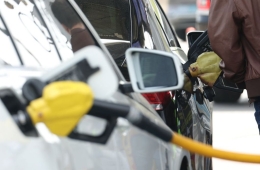
First, to ease the burden of fuel costs caused by high oil prices and stabilize prices, the 30% fuel tax reduction measure will be extended for five months until the end of the year. The application period for LNG allocation tariffs will also be extended until year-end, and the individual consumption tax rate on LNG and bituminous coal for power generation will be temporarily reduced by 15% from August until the end of the year.
Housing cost burdens will also be eased. The government will raise the tax credit rate on monthly rent paid by homeless household heads and expand the income deduction limit on principal and interest repayments of housing lease funds. The value-added tax exemption period for management fees of apartments with exclusive area of 135㎡ or less in eup and myeon areas will be extended from the end of this year to the end of 2024. To reduce the housing cost burden for university students, the deadline for signing the happiness dormitory implementation agreement, which is exempt from VAT, will also be extended from the end of 2022 to the end of 2024.
The government plans to reduce communication costs by encouraging the launch of 5G communication plans for seniors and youth-customized data benefit enhancement products.
The individual consumption tax reduction benefits for eco-friendly vehicles such as hybrid, electric, and hydrogen cars will also be extended until 2024. Accordingly, hybrid cars can receive a reduction of up to 1.43 million KRW, electric cars up to 4.29 million KRW, and hydrogen cars up to 5.27 million KRW. VAT on diapers and baby formula will also be permanently exempted.
Focused Inspection of 4 Trillion KRW Scale Fiscal Projects Contributing to Price Stabilization... Fiscal Investment in Distribution Structure Improvement Projects in Next Year’s Budget
Additionally, the government will conduct focused inspections and management of major fiscal projects worth 4 trillion KRW that affect price stabilization. If supply instability of major goods intensifies, additional measures such as changes to fund operation plans and budget transfers will be implemented. The Ministry of Agriculture, Food and Rural Affairs and the Ministry of Oceans and Fisheries will establish price stabilization response teams for agricultural and marine products to monitor major items and respond promptly.
Cost increase pressures that may arise in the import, production, and distribution processes in key sectors will also be minimized. To this end, the government will push to extend a 30% reduction in the HACCP (Hazard Analysis and Critical Control Points) audit fees. When preparing the 2023 budget, projects that can improve import, production, and distribution structures by sector will be reflected to continue structural price stabilization efforts through fiscal means. Stockpiling of major grains and seafood will be expanded, and additional dedicated storage facilities will be added for imported grains with low self-sufficiency rates such as wheat and soybeans.
Unfair practices such as collusion and resale price maintenance in major livelihood sectors will be intensively inspected by a joint inspection team formed by the Fair Trade Commission and relevant ministries.
Furthermore, to ease the management burden on small business owners and self-employed individuals, the government will extend rent reduction measures on national property leases for six months until the end of the year and defer payment of employment and industrial accident insurance premiums for July to September by three months.
Hot Picks Today
!["Stock Set to Double: This Company Smiles Every Time a Data Center Is Built [Click e-Stock]"](https://cwcontent.asiae.co.kr/asiaresize/93/2026050416112750184_1777878687.jpg) "Stock Set to Double: This Company Smiles Every...
"Stock Set to Double: This Company Smiles Every...
- "Is Yours Just Gathering Dust at Home? Millennials & Gen Z Rediscover Digicams O...
- "SK hynix GDRs Trade at a Premium...Global Demand Set to Surge"[Click e-Stock]
- "High-Net-Worth Investors Managing 10 Trillion Won: 'Gangnam Wealthy Also Feel F...
- “She Shouted, ‘The Rope Isn’t Tied!’... Chinese Woman Falls from 168m Cliff ...
Bang Gi-seon, First Vice Minister of the Ministry of Economy and Finance, stated, "We will focus policy capabilities on responding to urgent issues such as livelihood stabilization and risk management, and above all, make every effort to stabilize prices and reduce the burden on low-income households. While strengthening efforts to reduce core living expenses and achieve structural price stabilization, we will also ensure housing stability through expanding real estate supply, normalizing tax and finance, and stabilizing the jeonse and monthly rent markets."
© The Asia Business Daily(www.asiae.co.kr). All rights reserved.