Food Shortage Risk... Price Surge of 'Tansankalium' Due to Russian Sanctions
Potassium Carbonate, the Main Ingredient of Chemical Fertilizers Needed for Crop Growth
Russia and Belarus Account for 40% of Global Trade Volume

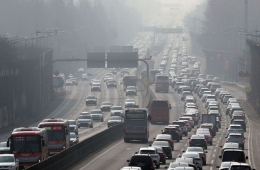
Due to the war in Ukraine, Western sanctions against Russia and its ally Belarus have intensified, causing the price of potassium carbonate, which accounts for 40% of the global supply from the two countries, to soar. Photo by Pixabay
View original image[Asia Economy Intern Reporter Kim Se-eun] The price of potassium carbonate, whose supply has been blocked due to strengthened Western sanctions against Russia and Belarus, is soaring.
Concerns have been raised that this is not just a simple supply instability but could also impact global grain harvests, potentially leading to a food crisis.
Potassium carbonate is a main raw material for chemical fertilizers, with Russia and Belarus supplying about 40% of the total global production to the market. Before the Ukraine war, it was distributed at low prices due to global oversupply.
However, as the Ukraine war prolonged, the West imposed import sanctions on Russia and its ally Belarus, blocking the supply routes of potassium carbonate, which suddenly caused demand to explode.
In Brazil, which depended on these two countries for about half of its potassium carbonate imports, the price of potassium carbonate rose 185% in one year, reaching $1,100 per ton (approximately 1,365,000 KRW). In Europe, it surged 240%, trading at 875 euros per ton (approximately 1,161,600 KRW).
India, one of the major agricultural countries, consumes 4 to 5 million tons of potassium carbonate annually, relying entirely on imports. Since 33% of this was from Russia and Belarus, securing a new supply chain is an urgent matter.
Meanwhile, potassium carbonate suppliers worldwide have started to expand production.
Global mining company BHP has turned its attention to Canada, which has emerged as an alternative country to Russia in the raw materials market. BHP plans to advance the mining schedule of the 'Jansen' project in western Canada, a $5.7 billion project, by one year.
Hot Picks Today
!["Rather Than Endure a 1.5 Million KRW Stipend, I'd Rather Earn 500 Million in the U.S." Top Talent from SNU and KAIST Are Leaving [Scientists Are Disappearing] ①](https://cwcontent.asiae.co.kr/asiaresize/93/2026051914165468840_1779167814.png) "Rather Than Endure a 1.5 Million KRW Stipend, I'd Rather Earn 500 Million in the U.S." Top Talent from SNU and KAIST Are Leaving [Scientists Are Disappearing] ①
"Rather Than Endure a 1.5 Million KRW Stipend, I'd Rather Earn 500 Million in the U.S." Top Talent from SNU and KAIST Are Leaving [Scientists Are Disappearing] ①
- "No Cure Available, Spread Accelerates... Already 105 Dead, American Infected"
- "If That's the Case, Why Not Just Buy Stocks?" ETFs in Name Only, Now 'Semiconductor-Heavy' and a Playground for Short-Term Traders
- "Reporters Who First Revealed Jo Jinwoong's Juvenile Offense History Cleared of Juvenile Act Violation"
- Instead of a National Assembly Profile, Now a 'Carpenter'... Ryu Hojung Says "I Couldn't Do a Body Profile Shoot Twice"
Brazil Potash is urging Brazilian authorities to approve mining at the potassium carbonate mine being developed in the Amazon.
© The Asia Business Daily(www.asiae.co.kr). All rights reserved.