[Seomideum's Book Talk] Altruist Professor Kim Hak-jin: "A Heart for Others Is a Strategy for My Own Survival"

The desire for recognition is often perceived negatively in Eastern societies. When compared to numerous proverbs such as "An empty cart makes the most noise," "The rice stalk bows lower as it ripens," and "Speaking is worth a hundred nyang, but keeping silent is worth ten thousand nyang," the desire for recognition is no different from the seed of arrogance.
In particular, the wish to be recognized by oneself is considered a shallow feeling, while the desire to be acknowledged by others is regarded as a deeper sentiment. In the East, when one strives hard and achieves remarkable results and receives praise, it is customary to show humility by saying things like "Not at all," "You're too kind," or "You flatter me," for this reason.
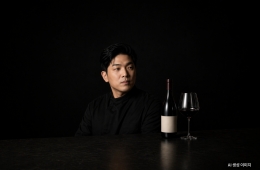
However, the desire for recognition is not necessarily a bad thing. It can also have the effect of motivating goal-oriented behavior and achieving results. Kim Hak-jin, a professor in the Department of Psychology at Korea University and author of The Secret Brain Structure of Altruists (photo), argues that altruism also originates from the desire for recognition.
He explains that all humans possess a desire for recognition, and through this, altruism can manifest. In other words, people can be altruistic in order to be recognized. On the 7th, we met Professor Kim at the Law Building on Korea University’s Anam campus to discuss his book.
![[Seomideum's Book Talk] Altruist Professor Kim Hak-jin: "A Heart for Others Is a Strategy for My Own Survival"](http://www.asiae.co.kr/news/img_view.htm?img=2022022314473655688_1645595256.jpeg)
Professor Kim stated that humans use altruism for survival. In a society where people live together, a good reputation is important, so through altruism, one gains a good reputation and seeks survival through it. Hitler stimulated the desire for recognition of the disheartened German people after the war, leading to an "extreme phenomenon that can be defined as evil." Hitler craved the recognition of his supporters, and his supporters longed for his recognition. He regarded the Germanic people as an absolutely superior good and, based on this, excluded other ethnic groups and committed atrocities.
"The psychology that condones immoral discrimination and hatred carried out under the name of altruism also stems from excessive desire for recognition," Professor Kim explained. From his explanation, the human desire for recognition can be perceived as evil, but it is not necessarily so. While he does not dismiss genetic factors, Professor Kim explained, "The structure and function of the brain can change significantly depending on experiences after birth."
Professor Kim said, "The desire for recognition can manifest as either good or evil depending on how it is expressed, so the postnatal educational and environmental factors that determine its direction are more important than the genetically determined intensity of reward-seeking motivation." He added, "Just as knowing your physical condition accurately helps you maintain healthy eating habits, if the desire for recognition is expressed and you are aware of it, you can regulate it when you reach that state." He explained that emotions arise when the brain fails to predict the body's condition. When a person can identify the cause of emotional occurrence, it can be resolved appropriately.
This principle is similar to that of Dr. Oh Eun-young, a psychiatrist who finds the underlying causes of problematic behaviors in children and suggests solutions. Professor Kim praised her, saying, "Dr. Oh Eun-young’s solutions demonstrate remarkable insight even to experts and have an extraordinary ability to apply theory to practice through extensive experience."
In fact, keeping an emotion diary helps in understanding the desire for recognition. Professor Kim has been writing an emotion diary for several years. When he experiences a strong emotional stimulus, he records it. He writes down emotions such as anger, shame, humiliation, jealousy, along with the situation and the perceived reasons. This act itself becomes an opportunity for self-reflection, and the accumulated data serves as material for self-analysis.
Through this, Professor Kim finds the emotional balance point and maintains an appropriate level without excess or depletion. Unless the content is too embarrassing, he shares it with his wife and others around him as a tool for consideration and understanding. The effect is so significant that Professor Kim plans to conduct formal research on emotion diaries and publish a book.
The outcome could help prevent corruption and assist those struggling with anger management. Since corruption mostly stems from improper desires for recognition within organizations, Professor Kim argues that having a proper desire for recognition can prevent social evils.
Hot Picks Today
!["KOSPI Surpasses 6,500, Resembling Dot-com Bubble Era... 'Just a Matter of Time, May Rise Even More Strongly' [Weekend Money]"](https://cwcontent.asiae.co.kr/asiaresize/93/2026042309403537312_1776904834.jpg) "KOSPI Surpasses 6,500, Resembling Dot-com Bubb...
"KOSPI Surpasses 6,500, Resembling Dot-com Bubb...
- A Single Card Worth 24 Billion Won... "Over 3,000% Higher Returns Than the Stock...
- Ministry of Employment and Labor Employee Had 20,000-Won Meal With Coupang Execu...
- "Cyber Room Salon" Opens Right in Front of Cheongdam Elementary in Gangnam... Pa...
- No Work, No Inheritance for the Eldest... 30 Billion KRW in Shares Gifted to Sec...
The so-called gapjil (abuse of power) problem is similar. Our body strives to maintain homeostasis, but when it uses the external environment to maintain internal balance, it tends to be more influenced by the external environment than the internal one, making it easy to fall into addiction. Gapjil and anger management disorders can also be considered forms of such addiction. Professor Kim emphasized that the problem lies in the fact that the desire for recognition and altruism are often perceived as opposites. The desire for recognition in others is seen as competition and unhelpful to oneself, whereas altruism is helpful, so they tend to feel different. However, Professor Kim advises not to view the desire for recognition as inherently negative but to use it to find the ‘balance point’ of emotions to lead a healthy life.
© The Asia Business Daily(www.asiae.co.kr). All rights reserved.