Participatory Government Labor Minister: "50 Trillion and 100 Trillion Cash Support Promises Are Extremely Irresponsible"
Former Minister Kim Daehwan: "Must Embrace 'National Innovation' as the Spirit of the Times"
Criticism of Populist Promises by Presidential Candidates
[Asia Economy Reporters Oh Ju-yeon and Kwon Hyun-ji] "The presidential candidates' promises of 50 trillion and 100 trillion won in cash support go beyond populism to what can be called 'inflationism,' and are extremely irresponsible pledges. The current administration, combining factionalism and populism, has worsened livelihoods, jobs, and economic vitality, and such mistakes must not be repeated by the next government."

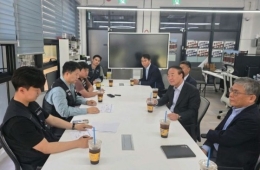
Kim Dae-hwan, former Minister of Labor and lead author of "The Republic of Korea's Game is Changing," said in an interview with Asia Economy on the 9th that the next presidential candidates' populist welfare pledges "ultimately become an enormous debt burden for future generations, so they must bear infinite responsibility." Kim will hold a book concert in the afternoon regarding his publication.
Kim expressed concern that presidential candidates should devise ways to regain the cooling engine of economic growth with insightful perspectives and resolve polarization and inequality, but such visions are absent in their pledges. He particularly criticized candidate Lee Jae-myung's 'basic income,' stating that it is unsuitable as a policy to lead the next five years both theoretically and practically.
Referring to the failed basic income experiment in Finland and the rejection of the basic income proposal in Switzerland, Kim sharply stated, "Basic income should be explained as a 'utopian theory' and set aside." He criticized point by point the effectiveness issue of whether the 'annual 1 million won' paid to all citizens can truly be called 'basic income,' the methods of securing funding, and concerns over fiscal burdens.
Kim emphasized that the foundation of our economy must be completely shifted to 'innovative growth,' and that the next government should adopt 'national innovation' as the spirit of the times to overcome the current crisis. He explained that innovation is needed in all areas, from policy and regulatory reforms that hinder corporate growth, breaking the entrenched dual structure of the labor market to increase youth entry through labor innovation, to government innovation rejecting populism.
Hot Picks Today
 Cerebras Soars 70% on IPO Debut: Is Nvidia's Reign Ending as a New AI Semiconductor Power Emerges?
- Will the National Pension Service Increase Its Domestic Stock Proportion? Five-Year Asset Allocation Plan to Be Finalized on May 28
- There Is a Distinct Age When Physical Abilities Decline Rapidly... From What Age Do Strength and Endurance Drop?
- "After Vowing to Become No. 1 Globally, Sudden Policy Brake Puts Companies’ Massive Investments at Risk"
- Japanese Teacher Dismissed for Obscene Acts Involving Third-Grade Girl's Water Bottle
He stated, "Currently, South Korea has lost both growth and distribution, yet remains too complacent," emphasizing, "We must face the fact that we are in a 'crisis phase' both domestically and internationally, and economic incentives and social recognition are necessary."
© The Asia Business Daily(www.asiae.co.kr). All rights reserved.