The Bank of Korea: "Rising Service Sector Share Causes Economic Side Effects... Encouraging Inflow of High-Productivity Workers"
Presentation on the Characteristics Analysis of Employment Structure Changes in Our Country

[Asia Economy Reporter Jang Sehee] As the proportion of the service sector with low labor productivity expands, an analysis has emerged suggesting that structural unemployment and other side effects may occur during future inter-industry transitions.
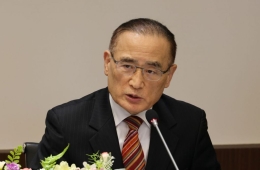
Song Sangyun, head of the Employment Analysis Team at the Research Department of the Bank of Korea, stated on the 17th in the "Analysis of Characteristics of Changes in Korea's Employment Structure, Focusing on Inter-Industry Mobility" (BOK Issue Note) that "the expansion of the service sector is a structural phenomenon that appears at the stage of economic development, so efforts are required to minimize structural unemployment increases and productivity declines that may result." This means unemployment may rise during the transition from the service sector to manufacturing and other industries.
According to the analysis results, the rate of decline in labor productivity growth in the service sector is actually accelerating. In 2018, labor productivity in the service sector fell to 53.2% of that in manufacturing and construction. This level is significantly lower than the OECD average of 85.8%.
The report stated, "The simultaneous occurrence of a slowdown in labor productivity growth and an increase in employment share in the service sector is largely due to the inflow of low-productivity workers into the service sector," adding, "In particular, among those who changed jobs to the service sector, older workers aged 50 and above and workers who shifted from wage employment to self-employment are estimated to have been greatly influenced by supply factors."
Furthermore, it analyzed that the inflow of workers with productivity lower than that of continuing service sector employees is acting as a factor slowing down labor productivity in the service sector.
The Bank of Korea emphasized that high-productivity service sectors must be fostered to minimize such side effects.
The report added, "It is necessary to foster high-productivity service sectors such as information services and scientific and technological research and development to induce the inflow of high-productivity workers into the service sector."
Hot Picks Today
 "Now Our Salaries Are 10 Million Won a Month" Record High... Semiconductor Boom Drives Performance Bonuses at Major Electronic Component Firms
- Experts Already Watching Closely..."Target Price Set at 970,000 Won" Only Upward Momentum Remains [Weekend Money]
- "Heading for 2 Million Won": The Company the Securities Industry Says Not to Doubt [Weekend Money]
- Did Samsung and SK hynix Rise Too Much?... Foreign Assets Grow Despite Selling [Weekend Money]
- "Chanel Open Run? I Get a Free Pass"... The World of the Top 0.1% That Money Alone Can't Enter [Luxury World]
To this end, it stressed the need to strengthen inter-industry linkages so that knowledge from manufacturing can also be utilized in the service sector. Additionally, since workers changing industries may lack job knowledge for new positions, it also emphasized minimizing productivity losses through enhanced vocational training.
© The Asia Business Daily(www.asiae.co.kr). All rights reserved.