"Head of the Group May Be Detained" Key Issues of the Serious Accident Punishment Act Approaching
Unclear if responsible parties include owners... Ambiguous meaning of safety 'securing'
Management responsible faces over 1 year imprisonment, strongest punishment among major countries
Sharp rise in industrial accident lawsuits expected, investigation capacity and manpower severely lacking

[Asia Economy Reporter Changhwan Lee] The Serious Accidents Punishment Act (Serious Accidents Act), which includes provisions that allow employers or management officials to face criminal penalties in the event of a worker's death, will be enforced starting on the 27th.
Although it was promoted to strengthen worker protection, many unclear concepts and excessive punishment regulations have sparked controversy, raising concerns about the contraction of corporate activities and social confusion. With the law's enforcement imminent, we have checked some of the still-debated issues.
Ambiguity of Obligated Parties under the Serious Accidents Act
△Compared to the existing Industrial Safety and Health Act, where the obligated party responsible for legal liability in the event of an accident was the employer, the Serious Accidents Act expands this to "employer or management official, etc."
The management official defined in the Serious Accidents Act is a person who represents the business and has the authority and responsibility to oversee the business, or a person responsible for safety and health tasks equivalent to that. The Ministry of Employment and Labor explained that this refers to the CEO of a company, the chairman of an organization, or the head of an institution.
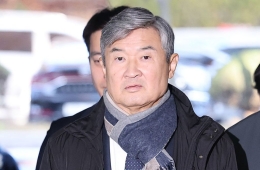
However, the business community and academia point out that the definition of management official remains ambiguous. For example, if the recent collapse accident at a newly constructed apartment site in Gwangju falls under the Serious Accidents Act, there is a possibility that Chung Mong-gyu, chairman of HDC Hyundai Development Company, the construction company, could be identified as the final responsible party and face criminal penalties even if he did not directly manage the site.
Additionally, it remains unclear whether multiple CEOs would both be subject to punishment.
Professor Jinwoo Jung of the Department of Safety Engineering at Seoul National University of Science and Technology explained, "The Serious Accidents Act has been criticized not only by the business sector but also by legal experts for many issues. In particular, it is unclear whether the head (chairman) or vice chairman of a group composed of multiple affiliates, or the president of a national university, qualifies as a person who represents and oversees the business as defined by the law."
![Around 4 p.m. on the 11th, the exterior wall of a high-rise apartment under construction collapsed in Hwajeong-dong, Seo-gu, Gwangju. [Image source=Yonhap News]](http://www.asiae.co.kr/news/img_view.htm?img=2022011313415998466_1642048919.jpg)
Around 4 p.m. on the 11th, the exterior wall of a high-rise apartment under construction collapsed in Hwajeong-dong, Seo-gu, Gwangju. [Image source=Yonhap News]
View original imageAmbiguity of the Obligation to Secure Safety and Health
△The Industrial Safety and Health Act stipulates that the responsible party must take necessary measures to prevent hazards or risks to workers' safety and health, but the Serious Accidents Act contains a more comprehensive obligation to "secure" workers' safety and health.
The term "secure" is broader and implies greater responsibility than simple measures. Companies have pointed out that the word "secure" is too vague.
In particular, there are concerns that the safety and health measures that management officials must implement are not just general oversight but extend to detailed aspects throughout the workplace, making management itself practically impossible.
For example, in large-scale workplaces such as shipyards or steel mills with tens of thousands of employees, it is virtually impossible for the responsible party to directly manage natural disaster-level accidents or accidents caused solely by the worker's own fault, no matter how strong their compliance will is. Nevertheless, the responsible party may be judged as having failed to secure safety and health and be subject to punishment.
Excessive Punishment Provisions
△The Serious Accidents Act significantly strengthens punishment provisions compared to the Industrial Safety and Health Act. Under the Industrial Safety and Health Act, if a worker dies from an industrial accident, the employer may face imprisonment of up to 7 years or a fine of up to 100 million KRW, and corporations may be fined up to 1 billion KRW.
In contrast, the Serious Accidents Act stipulates that in the event of a worker's death, the employer or management official may be sentenced to imprisonment of at least one year or fined up to 1 billion KRW, and corporations may be fined up to 5 billion KRW.
The business community expressed concerns that Korea's punishment level is very high compared to overseas standards, which could severely restrict business activities.
According to a recent survey by the Korea Employers Federation targeting 12 major advanced countries, Korea had the highest level of industrial safety-related penalties.
According to the Federation, among the surveyed countries, imprisonment for employers in cases of death was up to 3 years, and fines were around 10 million KRW. Additionally, some countries such as France, Japan, and Austria apply criminal negligence causing death only under criminal law, not under industrial safety and health laws.
A representative from the Federation said, "Korea's legal system regarding employer punishment is already stronger than any other country in the world, raising concerns about the contraction of business activities. We should focus on establishing and implementing industrial safety policies centered on prevention rather than strengthening punishment."
Expected Increase in Social Costs Due to Lack of Investigation Capacity, Manpower, and Excessive Litigation
△With the significant strengthening of penalties for industrial accidents, the government's capacity to manage this must also increase. However, the legal community says that the Ministry of Employment and Labor and the judiciary are not yet prepared to handle this. The Ministry of Employment and Labor, which conducts the initial investigation, is criticized for lacking capacity.
The prosecution, which receives cases from the Ministry to decide on indictment, is also experiencing manpower shortages.
There are also concerns about increased social costs due to a flood of lawsuits. As corporate responsible parties become subject to criminal penalties, lawsuits are expected to continue, and investigations and trials are anticipated to take several years. Small and medium-sized enterprises without sufficient resources may face bankruptcy due to litigation.
Hot Picks Today
 "Now Our Salaries Are 10 Million Won a Month" Record High... Semiconductor Boom Drives Performance Bonuses at Major Electronic Component Firms
- Experts Already Watching Closely..."Target Price Set at 970,000 Won" Only Upward Momentum Remains [Weekend Money]
- "Heading for 2 Million Won": The Company the Securities Industry Says Not to Doubt [Weekend Money]
- Did Samsung and SK hynix Rise Too Much?... Foreign Assets Grow Despite Selling [Weekend Money]
- "Chanel Open Run? I Get a Free Pass"... The World of the Top 0.1% That Money Alone Can't Enter [Luxury World]
According to a survey conducted last month by the Korea Federation of SMEs targeting 322 small and medium manufacturing companies with 50 or more employees, 53% of the surveyed companies responded that they are not adequately prepared for the Serious Accidents Punishment Act.
© The Asia Business Daily(www.asiae.co.kr). All rights reserved.