Insurance Stocks That Struggled to Rise... Making a Strong Comeback as Early-Year Leaders
KRX Insurance Index Soars 13.33% This Year
Surge in Government Bond Yields Fuels Investor Sentiment
Favorable Decision on 14.2% Rate for Indemnity Insurance

[Asia Economy Reporter Minji Lee] Insurance stocks, which showed lukewarm reactions despite the interest rate hike benefits in the second half of last year, have heated up since the beginning of the year.
According to the Korea Exchange on the 13th, the KRX Insurance Index rose 13.33% from 1277.87 to 1448.20 as of the day before, marking the largest increase among all KRX indices. Among the index components, Meritz Fire & Marine Insurance saw the largest rise, increasing by 34% during this period. Both non-life and life insurers showed upward trends, including DB Insurance (19.81%), Hyundai Marine & Fire Insurance (13%), Hanwha Life Insurance (13%), Samsung Fire & Marine Insurance (6.6%), Samsung Life Insurance (4.81%), and Korean Reinsurance (4.25%).
In the fourth quarter of last year alone, insurance stocks fell by 9.6% despite expectations of interest rate hikes and attractive high dividends. This decline was larger than that of other financial stocks such as banks (-5.4%) and securities (-2.3%). This situation reversed sharply recently as the U.S. Federal Reserve's tightening pace accelerated, causing a rapid rise in government bond yields. In particular, insurance stocks tend to be linked to long-term interest rate trends, and the 10-year Treasury bond yield showed a steep upward trend from 2.2% to 2.45% since the beginning of the year.
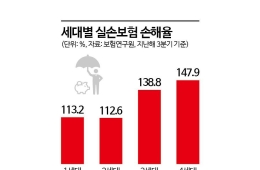
Institutional support also influenced the expansion of investment sentiment in insurance stocks. Especially, non-life insurers saw a notable rise in stock prices as the rate increase for actual loss insurance was set at 14.2% this year, the highest since 2018. Insurers face regulations on premium increase rates despite high loss ratios, but this year the allowable premium increase rate has expanded. Additional rate adjustments for new actual loss insurance in April this year are also expected. Seunggeon Kang, a researcher at KB Securities, said, "With the application of IFRS17 in 2023, retroactive application is inevitable for new actual loss insurance, so the possibility of rate normalization is high," adding, "If premium increases extend to new actual loss insurance, the long-term risk loss ratio could improve again in 2024."
Hot Picks Today
 Even with High Oil Price Relief Payment, Additional 300,000 Won Per Person to Be Provided... Applications Open from the 18th in This Region
- "Invested 95% in Hynix and Reached 10 Billion Won"... Japanese Investor's Proof Post Goes Viral
- "Why Is the Korean Stock Market Surging?"... Even Italy Is Astonished by the KOSPI Rally
- "You Don't Need to Go to the Gym": The Best Exercises for Lowering Hypertension
- "That Thing Wakes Up Every Night" ... Suspicious Object Covers Rural Village
Automobile insurance is also expected to benefit from institutional improvements. Payment standards for high-level hospital rooms and oriental medicine, where insurance payouts had been leaking significantly, are being specified, which is expected to have a positive impact on performance in the long term. Baeseung Jeon, a researcher at eBest Investment & Securities, analyzed, "The financial authorities anticipate an annual reduction effect of 540 billion KRW in excessive medical treatment, so even if future rate increases are limited, the increase in loss ratios will not be significant."
© The Asia Business Daily(www.asiae.co.kr). All rights reserved.