KOSPI and KOSDAQ Entering Increased Volatility 'Rising Anxiety'... Foreigners and Institutions Selling Together
![[Image source=Yonhap News]](http://www.asiae.co.kr/news/img_view.htm?img=2022011015575294109_1641797872.jpg)
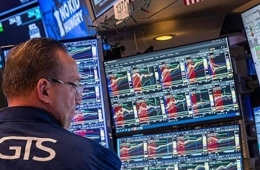
[Asia Economy Reporter Lee Seon-ae] The domestic stock market declined due to the burden of US tightening and rising uncertainty. Increased volatility is expected to be inevitable for the time being.
On the 10th, the KOSPI index closed at 2,926.72, down 0.95% (28.17 points) from the previous day. The index started at 2,947.37, down 7.52 points (0.25%), fluctuated throughout the day, and ultimately remained around the 2,920 level.
Overnight, the New York stock market fell across the board. The Nasdaq index showed a decline for four consecutive trading days since the new year. The US stock market's downward trend was due not only to expectations of poor corporate Q4 earnings but also to the increased burden and uncertainty of tightening by the Federal Reserve (Fed). The Wall Street Journal (WSJ) forecasted that the net profit growth rate of S&P 500 companies for Q4 last year would be 21.7%, signaling a sharp decline in net profit growth for two consecutive quarters. The net profit margin of the S&P 500 index soared to 91.1% in Q2 last year but fell to 39.8% in Q3 last year.
In the domestic market that day, individuals were net buyers of 573.4 billion KRW, but foreigners and institutions were net sellers of 86.2 billion KRW and 500.1 billion KRW respectively, pulling the index down.
By sector, banks (-4.76%), textiles and apparel (-2.82%), and medical precision (-2.29%) showed weakness, while insurance (3.87%), telecommunications (0.76%), and finance (0.36%) closed higher.
Most of the top market capitalization stocks ended lower. Samsung Electronics closed at 78,000 KRW, down 0.38% from the previous day, and SK Hynix (-1.97%), Samsung Biologics (-0.95%), NAVER (-0.89%), and Hyundai Motor also closed in the red.
On the same day, the KOSDAQ index closed at 980.38, down 1.49% (14.78 points) from the previous day. The index started at 992.49, down 2.67 points (0.27%), and widened its losses. Foreigners and institutions were net sellers of 119.6 billion KRW and 213.6 billion KRW respectively, while individuals were net buyers of 336.8 billion KRW.
By sector, all sectors except distribution (0.67%) showed weakness. Notable declines were seen in broadcasting services (-2.73%), IT components (-2.65%), semiconductors (-2.49%), IT hardware (-2.40%), telecommunications and broadcasting services (-2.35%), and chemicals (-2.08%).
The top market capitalization stocks showed mixed trends. Significant declines were seen in EcoPro BM (-3.08%), Pearl Abyss (-2.76%), L&F (-5.29%), Kao Games (-0.13%), Trion Pharma (-0.37%), and Chunbo (-3.65%).
Park Sang-hyun, a researcher at Hi Investment & Securities, said, "The burden of the US triple tightening seems to have adversely affected the domestic stock market, and the continued net selling by institutions in terms of supply and demand also appears to have acted as a negative factor for the market."
Hot Picks Today
!["Stock Set to Double: This Company Smiles Every Time a Data Center Is Built [Click e-Stock]"](https://cwcontent.asiae.co.kr/asiaresize/93/2026050416112750184_1777878687.jpg) "Stock Set to Double: This Company Smiles Every...
"Stock Set to Double: This Company Smiles Every...
- "Is Yours Just Gathering Dust at Home? Millennials & Gen Z Rediscover Digicams O...
- "SK hynix GDRs Trade at a Premium...Global Demand Set to Surge"[Click e-Stock]
- "High-Net-Worth Investors Managing 10 Trillion Won: 'Gangnam Wealthy Also Feel F...
- “She Shouted, ‘The Rope Isn’t Tied!’... Chinese Woman Falls from 168m Cliff ...
Seo Sang-young, a researcher at Mirae Asset Securities, analyzed, "Despite the weak US employment data, the ongoing interest rate hike stance increased the burden, and foreigners expanded their selling of cash and futures, leading the index decline."
© The Asia Business Daily(www.asiae.co.kr). All rights reserved.